The Puzzle
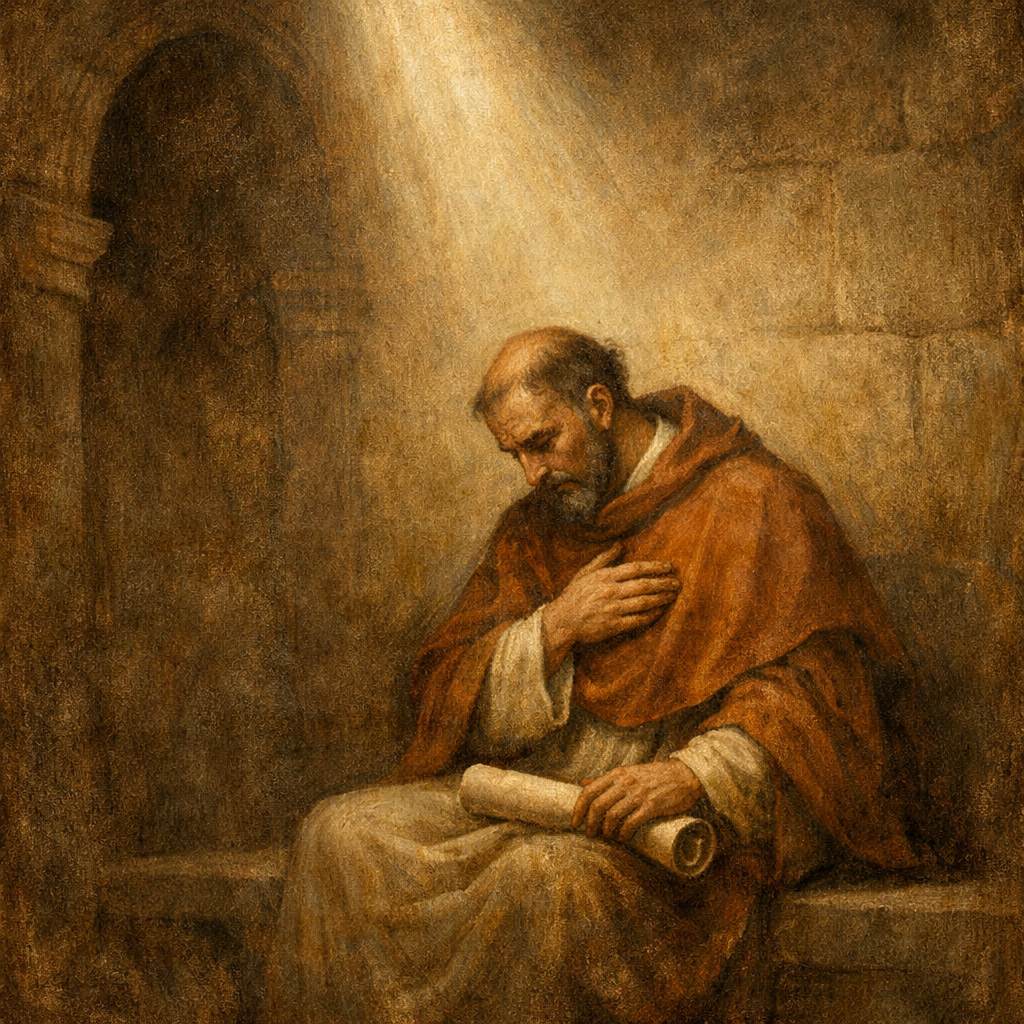
Augustine's starting point is the apparent unreality of time. The past is gone — it no longer exists. The future is not yet — it does not exist yet. And the present, strictly speaking, has no duration: as soon as any moment arrives, it passes. So where is time? When we say a period of time is "long" or "short," what are we measuring, if past and future have no being?
This is not a merely verbal puzzle. It touches on the deepest questions about what exists. If only the present moment exists, then almost nothing exists — and yet we navigate a world that has depth in time, where the past is real in its effects and the future is real as an object of anticipation and planning.
Three Presents
Augustine's solution is to locate time in the mind. What we call "the past" exists now as memory. What we call "the future" exists now as expectation. What we call "the present" exists now as attention or direct perception. Time is not a feature of the external world — it is a distension of the soul, a stretching of the mind across what-has-been and what-is-anticipated.
there be three times; a present of things past, a present of things present, and a present of things future.
Time as the Mind's Own Measure
This means that when we measure time — when we say one interval is longer than another — we are measuring something in ourselves. The impression that a passing event leaves on the mind is what is measured, not the event itself, which has already gone. Time, in Augustine's account, is the mind's own mode of existence: to be minded is to be temporal, spread across past and future while existing only in a present that is itself always slipping away.
It is in thee, my mind, that I measure times.
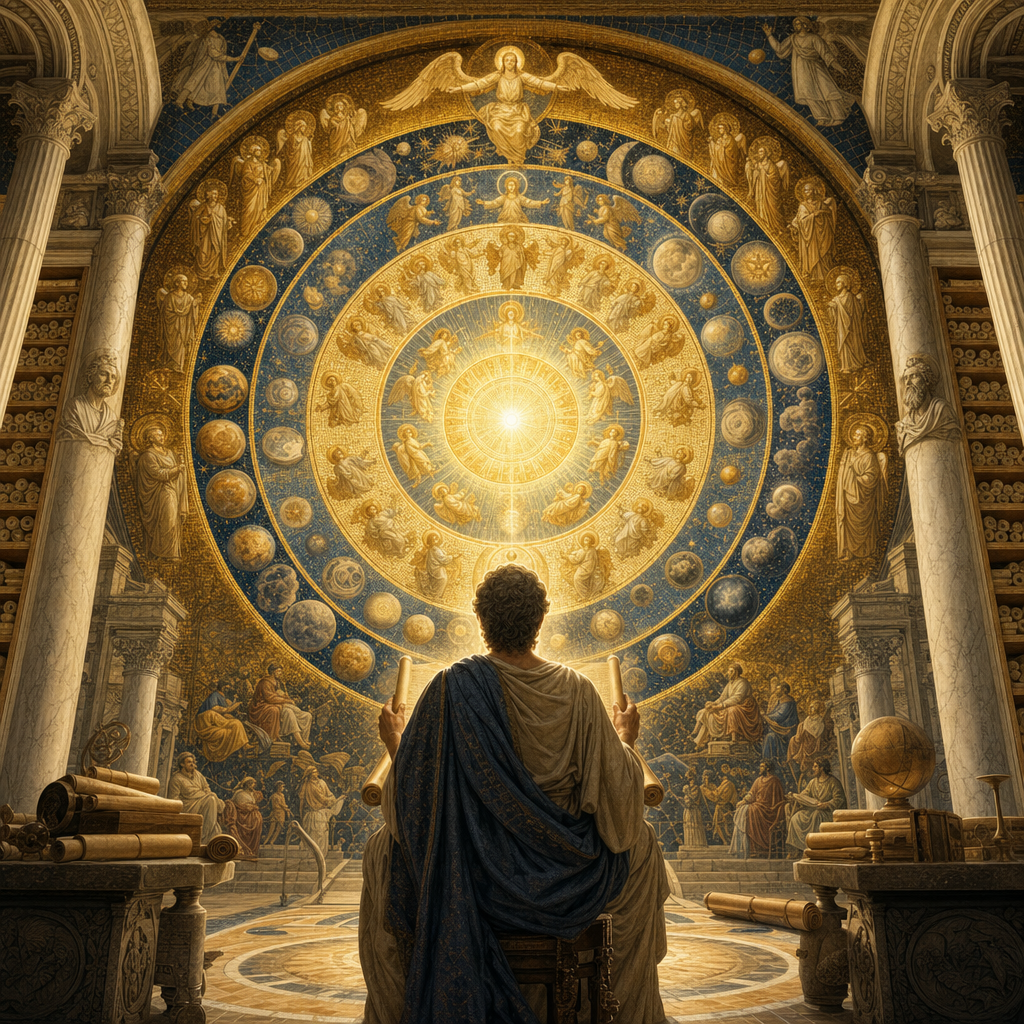
The theological point behind the philosophy is that God exists outside time altogether — in an eternal present that does not pass and does not anticipate, because for God nothing is past and nothing is future. This is the contrast that motivates the whole analysis: if we are to understand what it means for God to be eternal, we must first understand what it means for us to be temporal. And that means understanding time — which turns out to mean understanding ourselves.
Augustine's analysis of time occupies the whole of Book XI. It was the primary ancient source for medieval discussions of time and eternity, and directly influenced Kant's treatment of time as a form of inner intuition.
Related Concepts