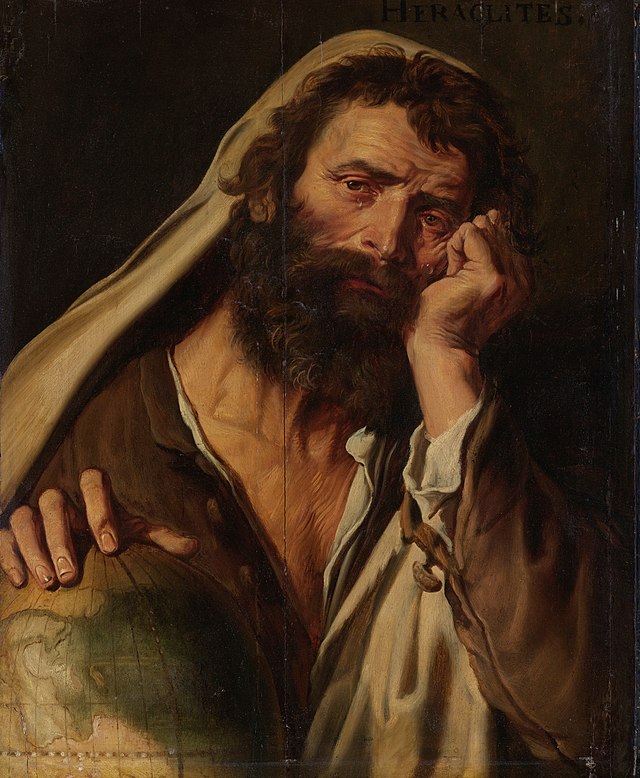
Fire as First Principle
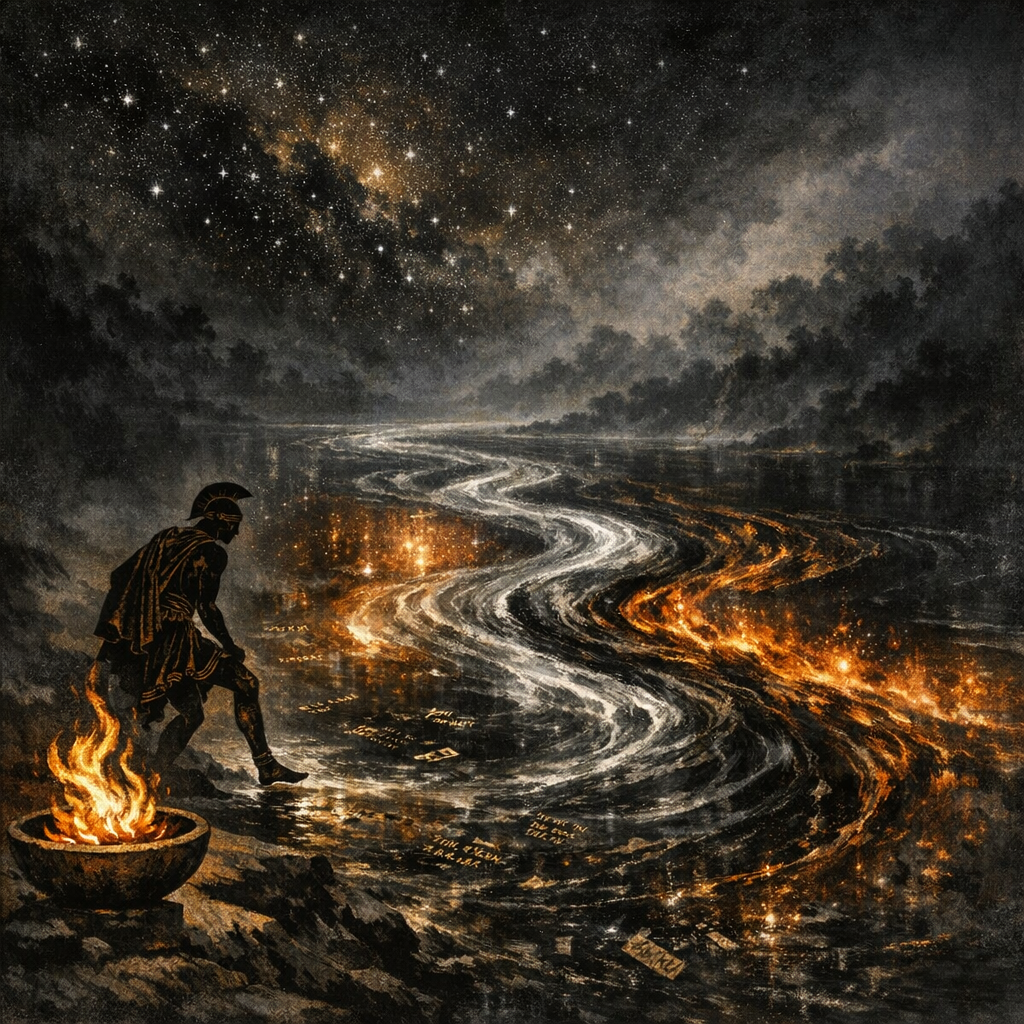
Earlier Greek thinkers had nominated various substances as the arche — the primary stuff: water for Thales, air for Anaximenes, the Boundless for Anaximander. Heraclitus chose fire, but not as a simple material substance. Fire is the element of constant transformation — it consumes, converts, and never stays the same while always being fire. It was thus ideally suited to represent a reality constituted by flux.
This world, the same for all, neither any of the gods nor any man has made, but it always was, and is, and shall be, an ever living fire, kindled in due measure, and in due measure extinguished.
Cosmic Exchange
Heraclitus describes a great cycle: fire turns into sea, sea into earth, earth back into sea, sea back into fire. But crucially, the total quantity is conserved. This is an early formulation of something like conservation of energy — the universe is a closed system in which the total amount of reality is constant, even though its forms change endlessly.
All things are exchanged for fire and fire for all things, just as wares for gold and gold for wares.
The Thunderbolt
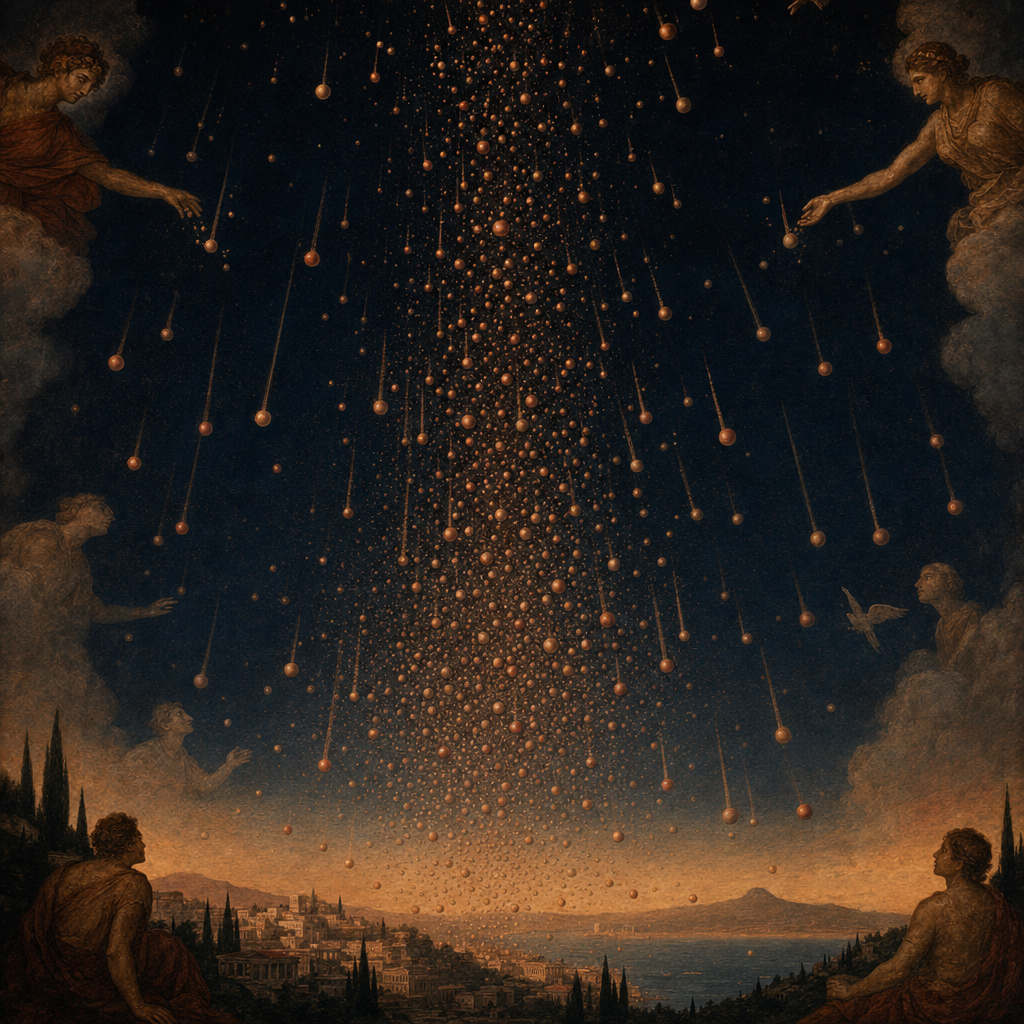
At one extreme, Heraclitus invokes lightning as the symbol of fire at its most active and concentrated: "Lightning rules all." This divine flash is both a natural phenomenon and a metaphor for the logos — the sudden, illuminating strike of reason that reveals the unity beneath apparent opposites. Fire, logos, and the divine are not three separate things in Heraclitus but three aspects of the same underlying reality.
Aristotle read Heraclitus as a materialist who simply believed fire was the fundamental element, as Thales believed in water. Most modern scholars think this misses the point: Heraclitean fire is more like a process or a principle than a substance. The distinction determines whether he was just another early cosmologist or something genuinely original.
Related Concepts