Before God, the Abyss
The Ungrund is pure potentiality — the "eternal nothing" that contains all possibility without having determined any. Böhme insists that this groundlessness precedes God as Father, Son, or Spirit. It is not a void but a pregnant silence, the condition for all subsequent being. Most strikingly, Böhme locates the Ungrund prior to God's own self-knowing: before God knows himself as anything, there is this groundless, undetermined depth.
The Turn of Will
The drama begins when the Ungrund turns toward itself in an act of will. This turning is the first contraction, the first desire. For Böhme, desire — Sucht, literally "seeking" — is the metaphysical motor of all existence. Nothing becomes something only because the groundless abyss wills to ground itself. Crucially, there is no reason prior to this act that could explain it. The Ungrund's self-willing is radical, uncaused, the origin of all causation.
Eternal Nature
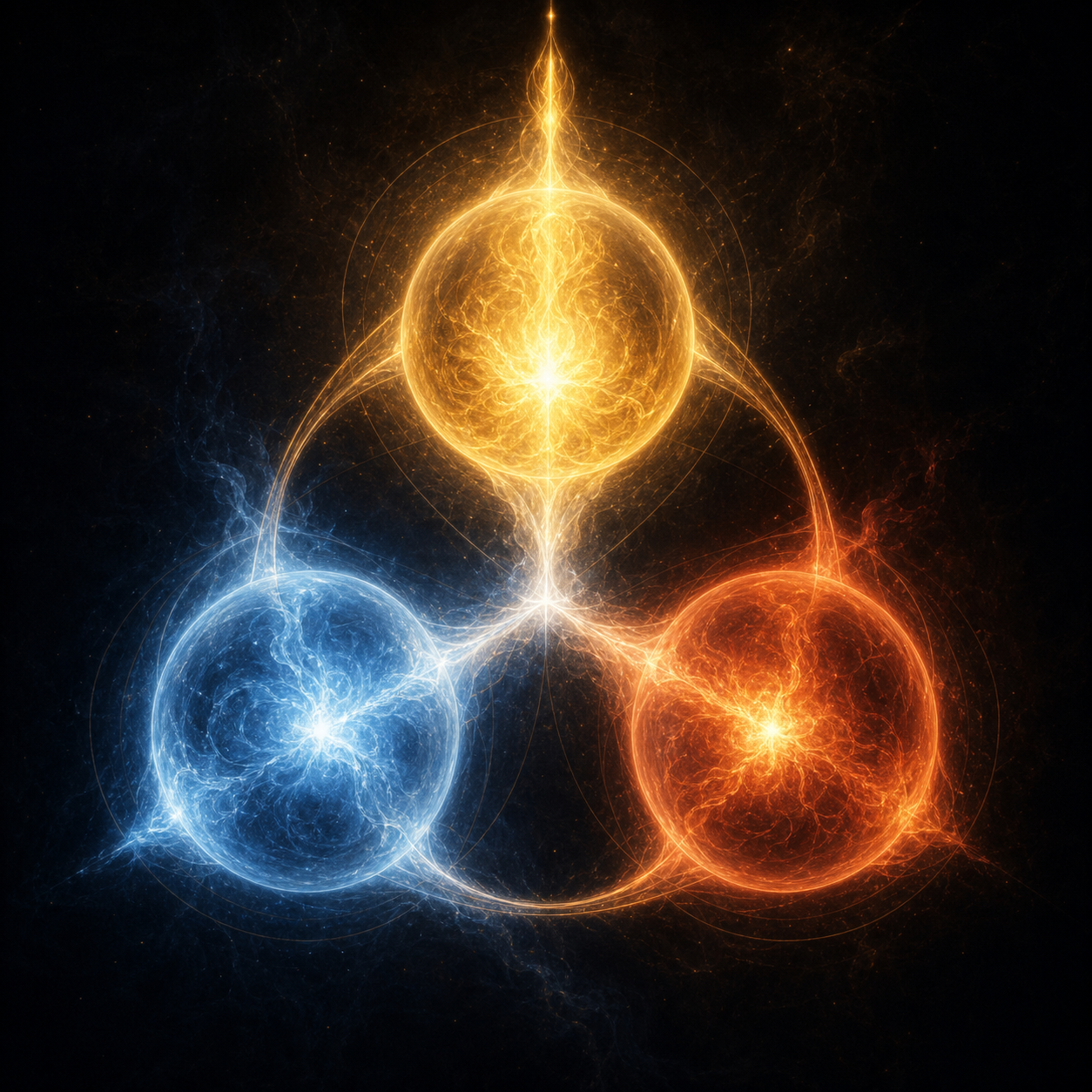
From this primordial self-willing emerges what Böhme calls Eternal Nature — the first stirring of dark fire, the harsh, astringent power that is the first principle. The Ungrund is not left behind but remains the inexhaustible source from which all subsequent determinations flow. This distinguishes Böhme sharply from Neoplatonism, where the One emanates the world by overflow; for Böhme, existence requires the primal act of will, desire, contraction.
Böhme's Legacy
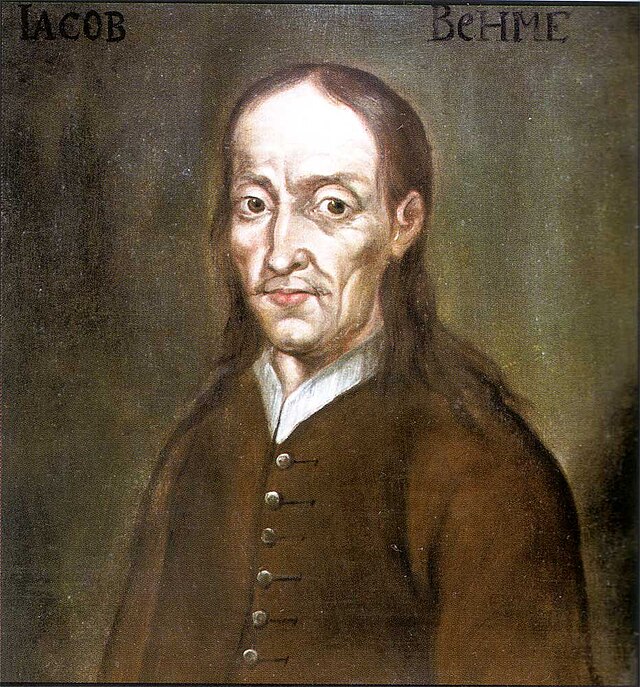
The Ungrund became one of the most generative concepts in German Idealist and Romantic philosophy. Schelling absorbed it directly into his Naturphilosophie and his Philosophical Inquiries into the Essence of Human Freedom, where the "groundless will" becomes the indifferent ground prior to all predication. Hegel's dialectic of nothing and being in the Science of Logic echoes the same structure, though Hegel would systematise where Böhme mythologised.
The term Ungrund appears throughout Böhme's mature works but is most systematically developed in The Signature of All Things (1621) and the Clavis (1624). It should not be confused with the "ground" (Grund) of Böhme's positive theology, which refers to the divine nature as it has already determined itself.
Related Concepts