Not Self-Preservation
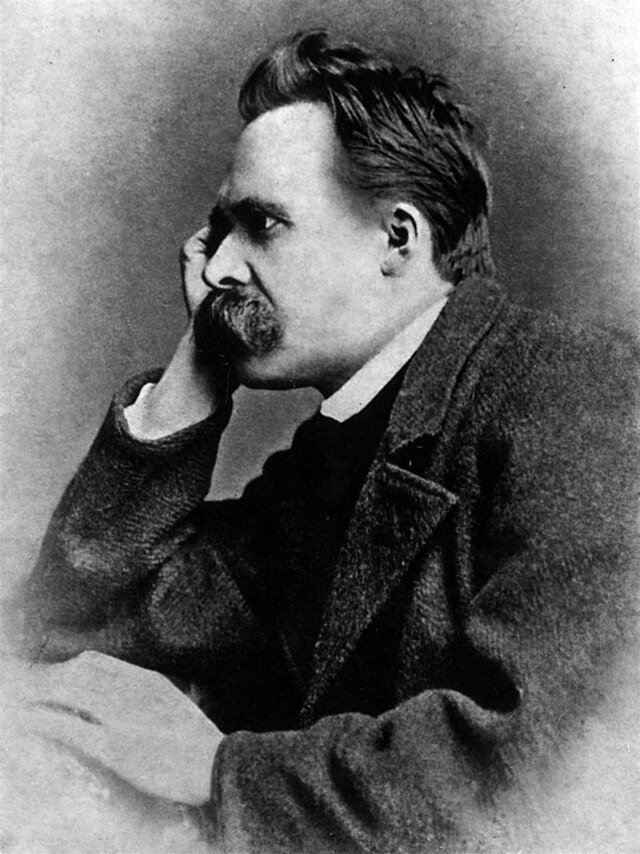
Nietzsche breaks sharply with Schopenhauer and the Darwinians who place self-preservation at the centre of life. Survival is merely a consequence, not an end. What every living thing actually seeks is discharge of its strength, the expression of power — and that expression may just as readily be self-expenditure as self-preservation. The weak preserve; the strong overflow.
Life as Appropriation
The most precise formulation of will to power comes in Chapter IX, where Nietzsche treats exploitation not as a social pathology but as a biological fact. Any living body — individual, community, or organism — that refrains from acting on its strength is in decline. The will to power is not cruelty for its own sake but the natural expression of vitality: to organise, to incorporate, to give form.
life itself is ESSENTIALLY appropriation, injury, conquest of the strange and weak, suppression, severity, obtrusion of peculiar forms, incorporation, and at the least, putting it mildest, exploitation
Beyond Biology
Nietzsche extends will to power beyond physiology into psychology, epistemology, and art. The philosopher who seeks truth, the artist who creates form, the priest who interprets suffering — all are expressions of will to power, differing only in direction and quality. Even asceticism, the apparent denial of power, is a will turned inward, a power over oneself. The question Nietzsche presses is not whether one has will to power, but what kind.
The will to power should not be confused with political authoritarianism; Nietzsche explicitly opposes the state and treats the desire for mere political dominance as a symptom of weakness rather than strength.
Related Concepts