The Series: Alienated Togetherness
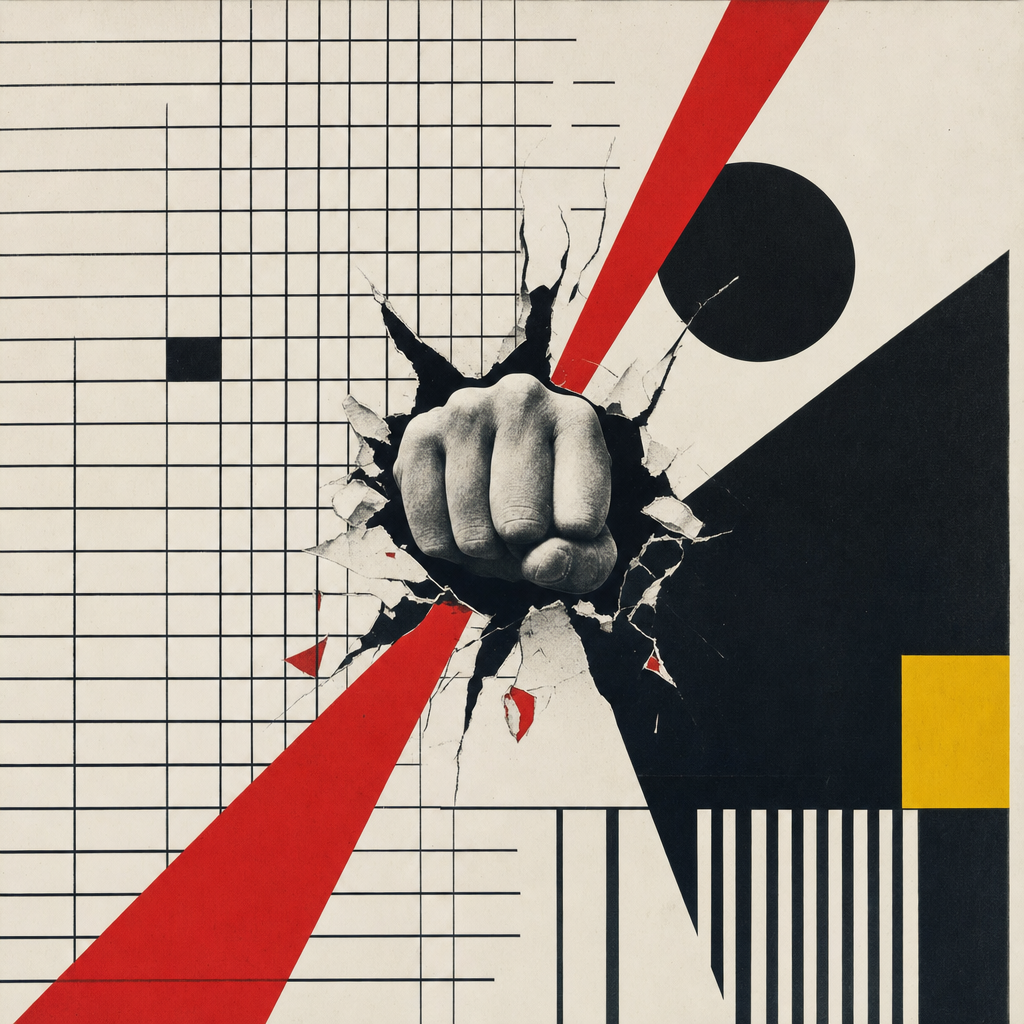
Seriality is not isolation but a specific form of collectivity in which individuals are gathered by their relation to the same object (the radio broadcast, the bus queue, the market price) while remaining fundamentally separated. The serial individual acts in terms of how Others like herself will act — she buys when she believes Others will buy, flees when she believes Others will flee — but this alterity pervades her action from within: she experiences herself as interchangeable with any other member of the series, as replaceable, as defined by her position in a statistical aggregate rather than by her individual project. Seriality is the normal form of social life under capitalism: the solitude of the crowd.
The Fused Group and the Apocalyptic Moment
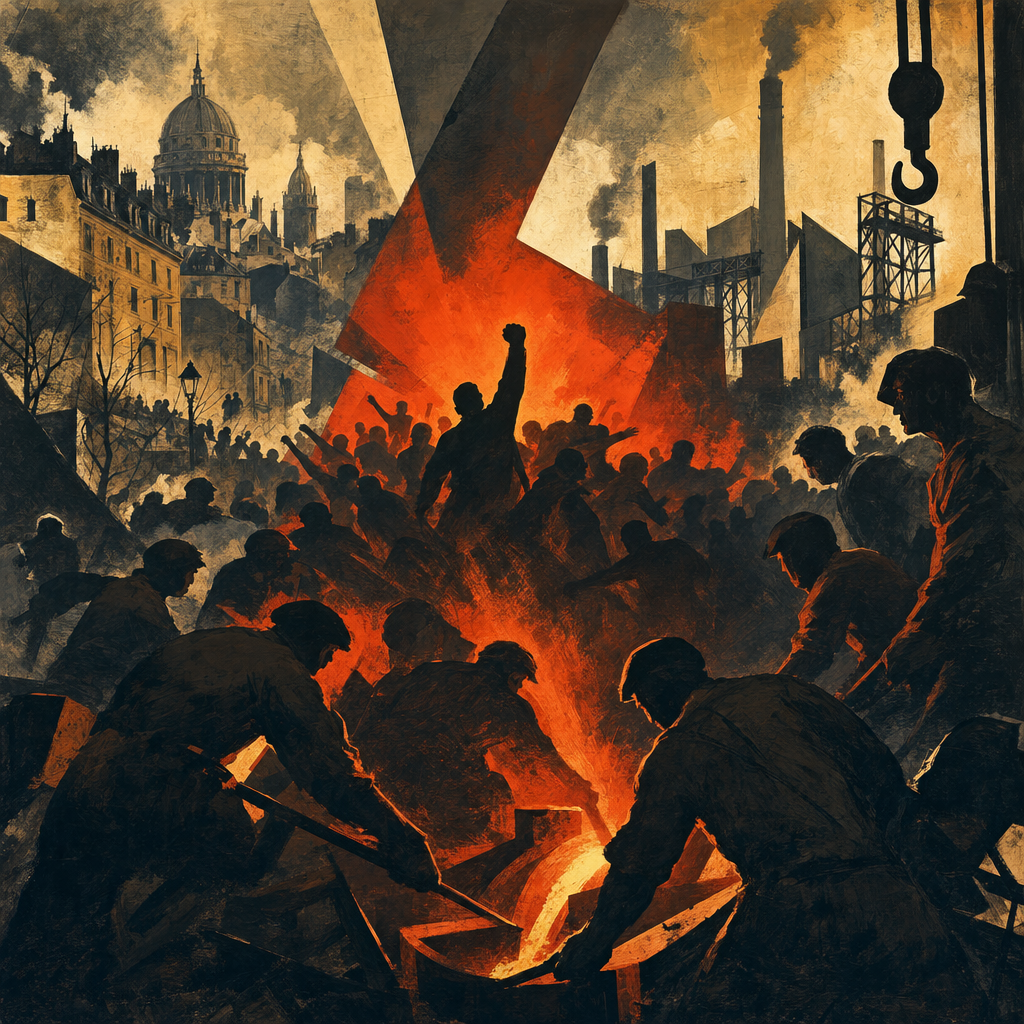
Against seriality, Sartre places the fused group: the moment — paradigmatically the storming of the Bastille — when individuals experiencing a common threat simultaneously apprehend that their survival requires collective action and that their neighbours are not obstacles or competitors but fellow agents of the same project. The fused group is not organised; it has no leader, no division of labour, no institutional structure. It is a pure reciprocity of freedoms, each recognising the other as indispensable to the common enterprise. It is the existentialist analogue of revolutionary consciousness — the moment when alienation is suspended and human beings act as genuine agents of their own history.
From Fusion to Institutionalisation
The fused group, however, cannot sustain itself. The threat that called it into being recedes; the group needs to persist, coordinate, and divide its labour. It generates the oath — the pledge of mutual commitment that binds group members against future defection. But the oath introduces terror: the group now polices its own members, and the freedom that fused them becomes the freedom to be punished for desertion. This is the beginning of institutionalisation — the transformation of the fused group into a pledged group, a statutory group, an organisation, and finally a bureaucratic institution that reproduces seriality at a higher level. The dialectic of fusion and seriality is Sartre's account of why revolutionary moments fail to sustain themselves.
The analysis of seriality and the fused group in the Critique draws on Sartre's earlier political writings, particularly the essay on the Hungarian uprising and the critique of the Communist Party in The Ghost of Stalin. The storming of the Bastille is Sartre's central example of the fused group throughout.
Related Concepts