The Thought Experiment
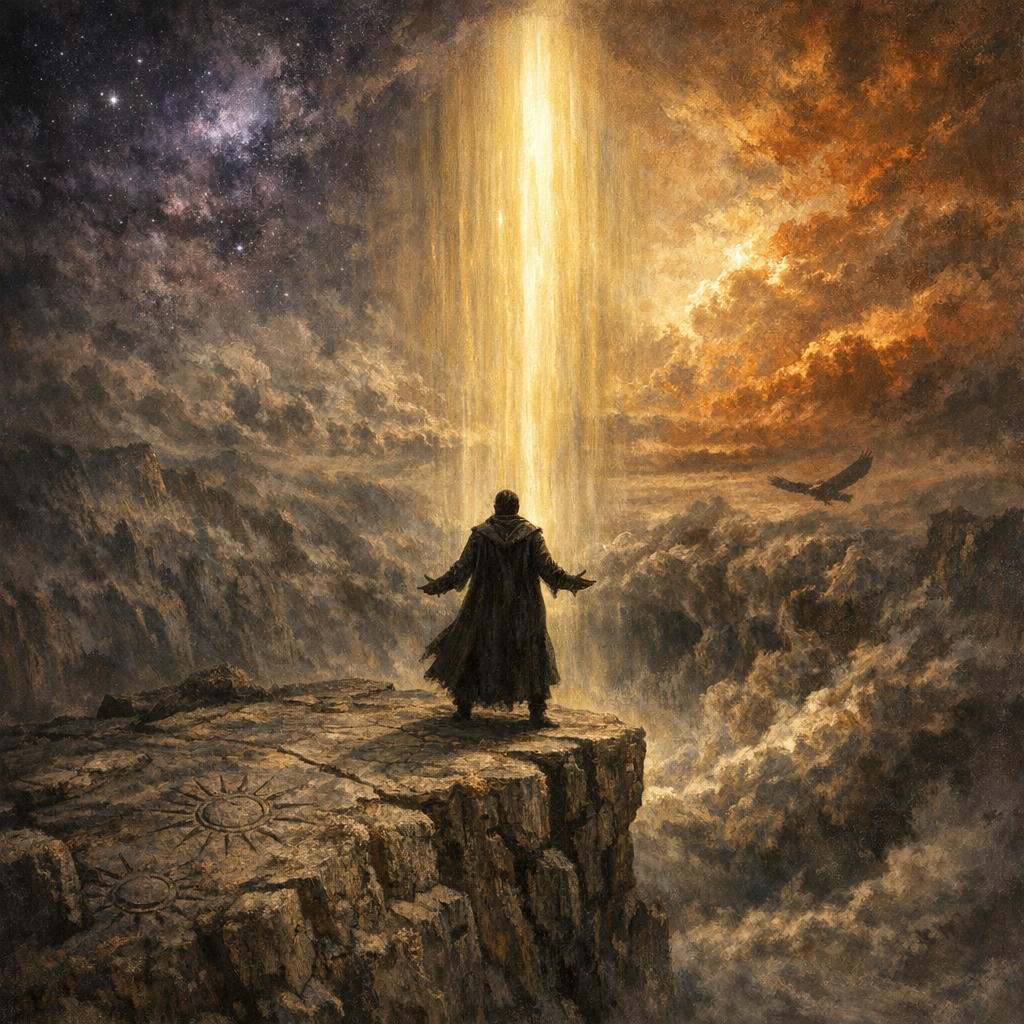
Eternal recurrence is introduced not as a scientific claim but as a test. Zarathustra's animals declare him the teacher of the eternal return and describe the thought: that all things eternally return, and that we have already existed times without number. The question is whether you can will this, whether you can say yes to your life so completely that you would choose its infinite repetition.
Everything goeth, everything returneth; eternally rolleth the wheel of existence. Everything dieth, everything blossometh forth again; eternally runneth on the year of existence.
Not Physics but Ethics
Eternal recurrence is not primarily a cosmological hypothesis. Whether it is literally true matters less than its function as a criterion. It asks you to live in such a way that you would affirm the infinite repetition of this very life. It is the sharpest possible form of amor fati applied to every detail of existence: not merely accepting what happens, but willing it eternally.
The Heaviest Thought
Zarathustra's encounter with the thought is described as a sickness, a near-collapse. The heaviest thing about eternal recurrence is not the thought of your own return but the return of the small man: the pettiness, the tedium, the recurring failures of those who will not overcome themselves. This disgust is what Zarathustra must conquer before he can truly affirm.
Behold, we know what thou teachest: that all things eternally return, and ourselves with them, and that we have already existed times without number, and all things with us.
Some scholars, notably Maudemarie Clark, argue Nietzsche did not hold eternal recurrence as a literal doctrine but used it as a thought experiment. The question remains contested.
Related Concepts