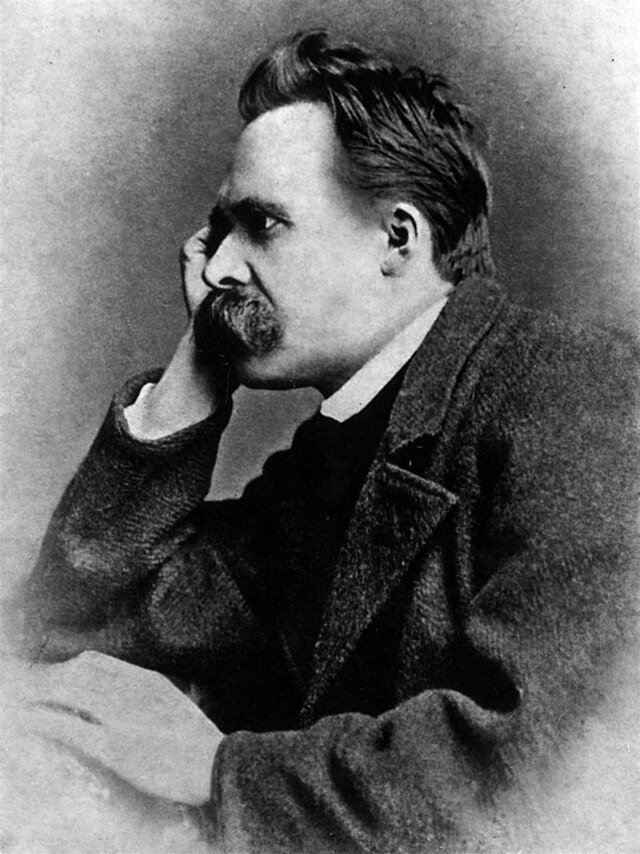
The Noble Valuation
For the aristocratic type, value begins from within. The noble declares himself good first, and only afterwards, as a secondary contrast, calls those beneath him "bad." This "bad" carries no moral condemnation; it simply means low, common, not-us. The noble creates values from fullness and self-affirmation, not from hatred of another.
the judgment "good" did not originate among those to whom goodness was shown. Much rather has it been the good themselves, that is, the aristocratic, the powerful, the high-stationed, the high-minded, who have felt that they themselves were good
The Priestly Inversion
The slave type reverses this sequence entirely. Unable to act against the powerful, the slave begins from a "no" directed outward: you are evil. Only then does "good" emerge, as the opposite of the enemy. This inversion is not a sign of weakness alone; it is a kind of genius. The priestly type, in particular, possesses a tremendous psychological ingenuity for transmuting weakness into moral superiority.
Rome Against Judaea
Nietzsche frames the history of Western morality as a long battle between these two systems, with the slave revolt having been, so far, largely victorious. The Roman aristocratic values were gradually overturned by the Jewish and Christian revaluation, which made the meek blessed, the poor righteous, and the powerful damned. The outcome, Nietzsche insists, is not yet final.
Nietzsche's distinction between master and slave morality should be read as a psychological type, not a social class. He explicitly denies that the powerful are always noble, or that those who suffer are always possessed by ressentiment.
Related Concepts