Against Dualism and Idealism
Both Cartesian dualism — which posits mind and matter as wholly distinct substances — and idealism — which reduces matter to mind — face severe difficulties. Dualism cannot explain how entirely different kinds of substance causally interact; idealism strains credulity when it denies the independent existence of the physical world. Neutral monism avoids both problems by declining to give either term priority. There is one fundamental kind of stuff; what we call "mental events" and "physical events" are different cross-sections or groupings of the same underlying elements. A sensation, for instance, belongs to psychology when grouped with other events in a person's mental history, and to physics when grouped with the events that constitute the external object perceived.
The Role of Structure
The key to neutral monism is that mind and matter differ not in their ultimate constituents but in the structural laws that govern how those constituents are grouped. Physics groups events by spatial-temporal proximity and causal law; psychology groups them by memory, association, and purposive behaviour. The same event can feature in both groupings. This structural approach anticipates functionalist accounts of mind: what makes something a mental state is not what it is made of but its causal and structural role within a larger system.
Consciousness Without a Subject
One of the most radical implications of neutral monism is the dissolution of the traditional "subject" of experience — the Cartesian ego or Kantian transcendental self that stands behind all mental events as their owner. For Russell, there is no self over and above the series of experiences themselves; the self is a logical construction from the stream of mental events, not an independently existing entity that has those events. This move anticipates Buddhist no-self doctrines and Humean bundle theory: the self is not a thing but a pattern — a way of grouping events.
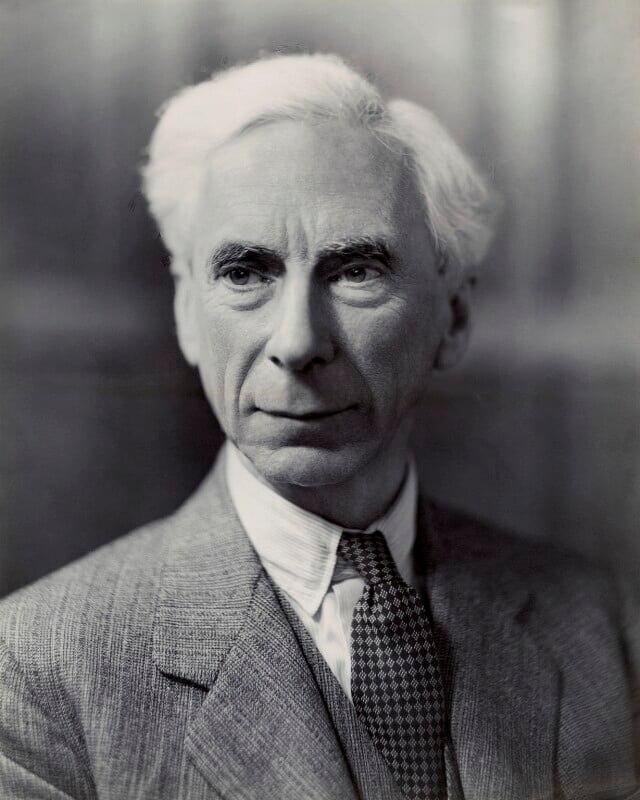
The Analysis of Mind (1921) was based on lectures delivered at Morley College, London. Russell's neutral monism was directly inspired by William James's "Does 'Consciousness' Exist?" (1904), which argued that consciousness is not an entity but a function.
Related Concepts