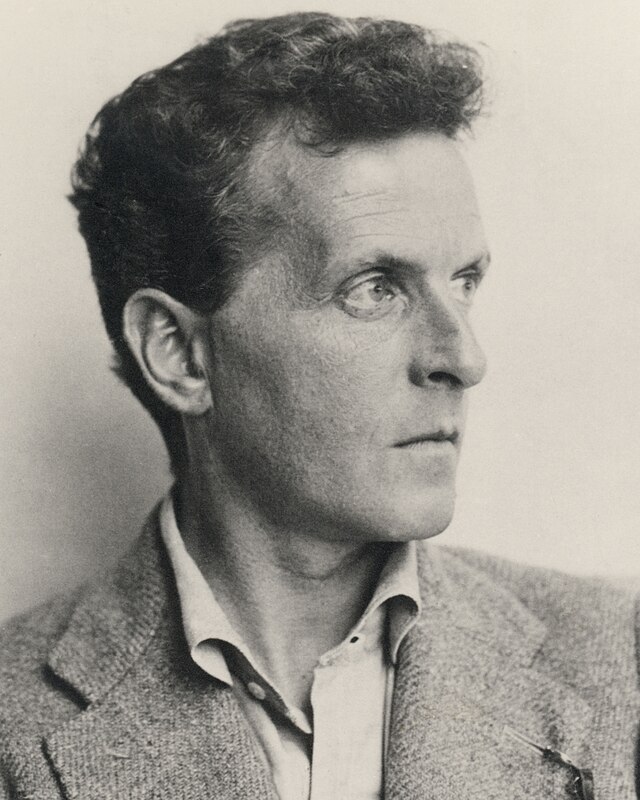
Propositions as Logical Pictures
The world is the totality of facts, not of things. A fact is a combination of objects in a particular configuration — a state of affairs that obtains. Language pictures these facts by arranging names in a configuration that mirrors the possible arrangement of the objects they name. The logical form of a picture is what it must share with reality in order to be a picture at all. This shared form cannot itself be said; it is shown by the picture in the very act of depicting.
Elementary Propositions and Atomic Facts
At the foundation of language lie elementary propositions — combinations of names that cannot be further decomposed. Each elementary proposition corresponds to a possible atomic fact. All other propositions are truth-functions of elementary propositions: they combine, negate, and quantify over them without adding any new logical content. The world, correspondingly, is the complete set of atomic facts that obtain. Everything else — the laws of nature, the self, value — falls outside the world of fact.
The Limits of the Picture
The picture theory carries its own limitation within it. A picture can depict any possible state of affairs, but it cannot depict its own pictorial relationship to reality. That relationship — the logical form it shares with the world — is shown but not said. This is why the Tractatus culminates not in a doctrine but in a silence: the book's own propositions, having served as a ladder, must be thrown away. What matters cannot be said; it can only be shown.
The picture theory draws on Wittgenstein's insight, reportedly triggered by a newspaper account of a Paris courtroom accident reconstruction using scale models, that depiction works by structural isomorphism. The key statements appear in propositions 2.1–2.225 and 4.01–4.12 of the Tractatus.
Related Concepts