Objects, States of Affairs, Facts
Objects are what is simple and unalterable. They can combine into states of affairs — configurations that either obtain (facts) or do not. The world is the totality of obtaining states of affairs. Objects themselves do not change; only their configurations do. This picture of reality as a mosaic of atomic facts, each independent of all others, reflects Wittgenstein's logical inheritance from Frege and Russell while pushing it into new metaphysical territory.
The Independence of Atomic Facts
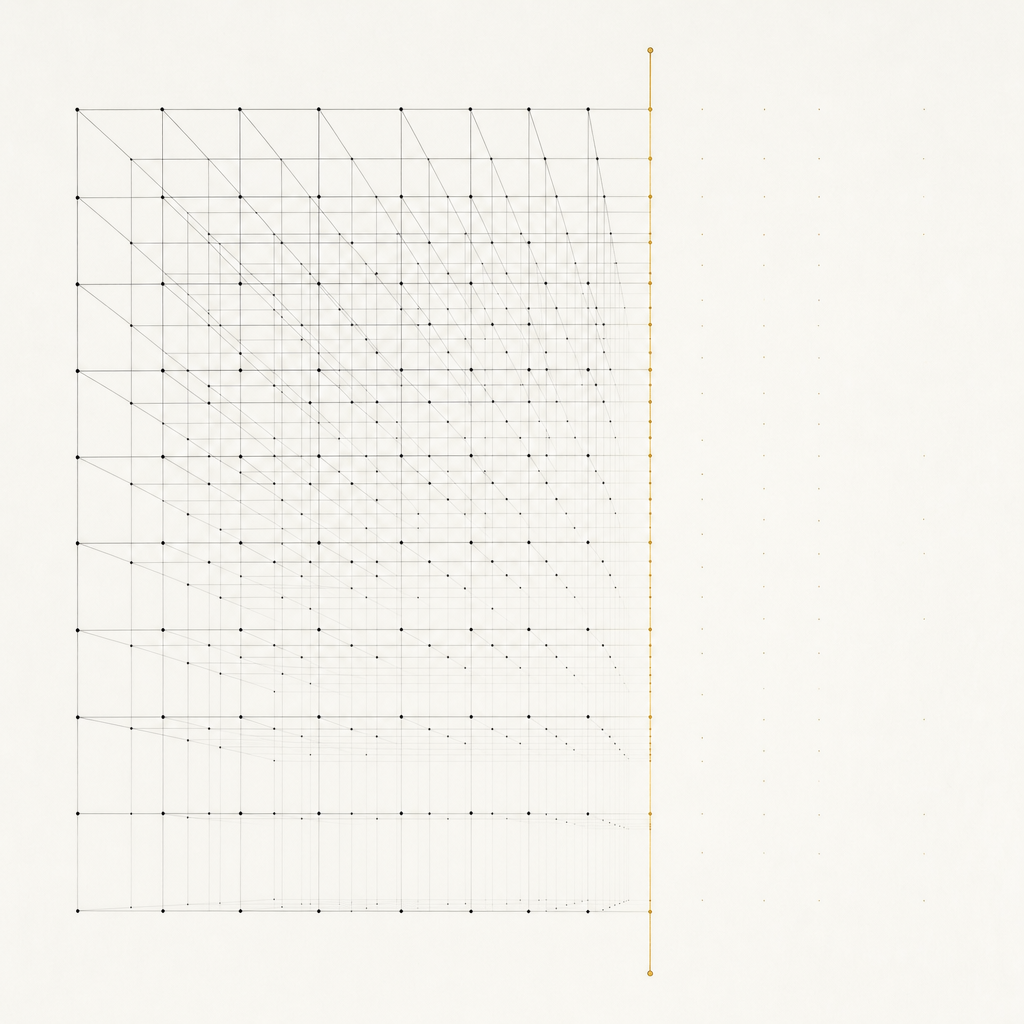
A key feature of the Tractatus ontology is the logical independence of atomic facts. No atomic fact logically entails or excludes any other: the obtaining of one tells us nothing about whether another obtains. This independence mirrors the independence of elementary propositions, which can each be true or false without affecting the truth-value of any other. It is a metaphysics built in the image of propositional logic — the world modelled on a truth table.
The Limits of Logical Atomism
Wittgenstein later repudiated logical atomism entirely. In the Investigations, the demand for simple, unalterable elements underlying all complexity appears as a philosophical fantasy — the result of being held captive by a picture of how language must work. The world, it turned out, does not come pre-articulated into atomic facts; it is articulated differently within different language games, for different purposes, with different results. The scaffolding was always already part of the building.
The ontology of the Tractatus is laid out in propositions 1–2.063. The account of objects and states of affairs draws heavily on Frege's concept-script and Russell's work in logical analysis. Wittgenstein's self-criticism appears throughout the Philosophical Investigations, particularly §§46–50.
Related Concepts