The Argument for Distinction
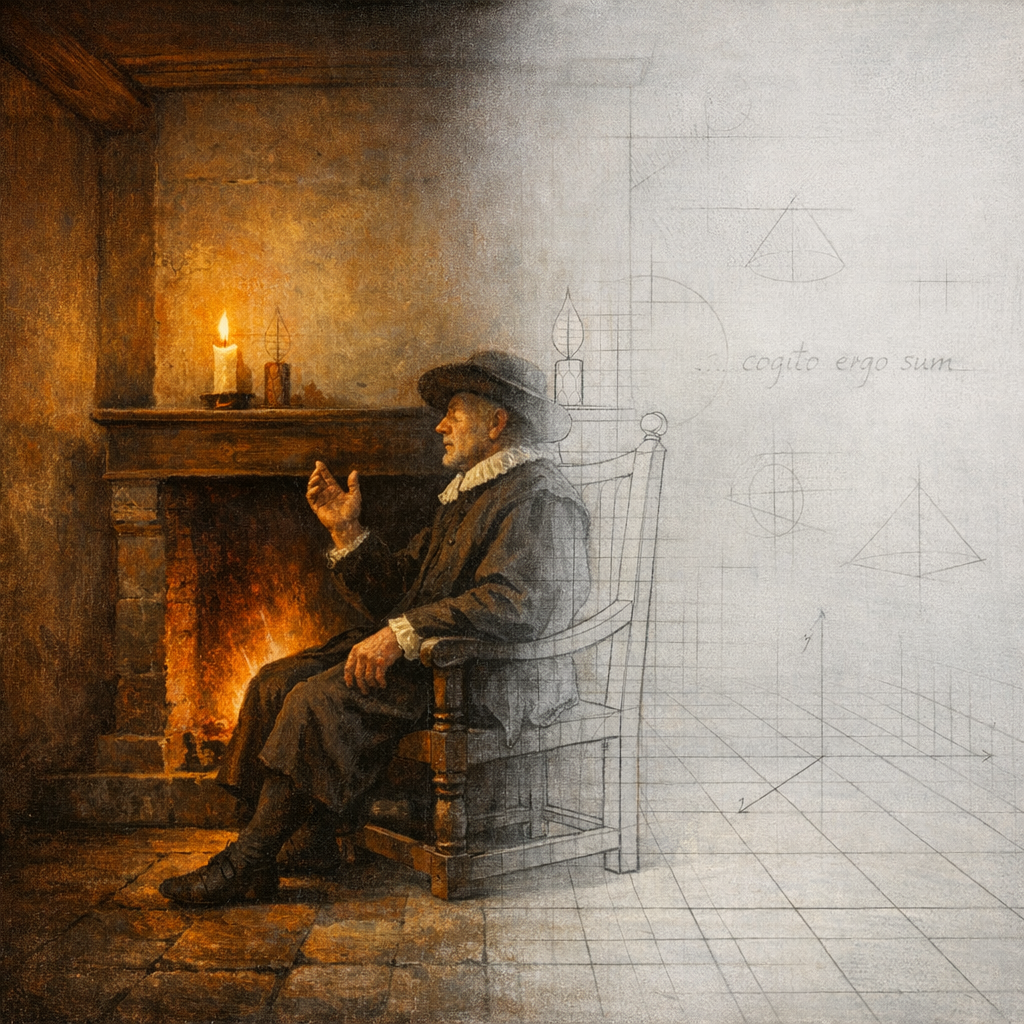
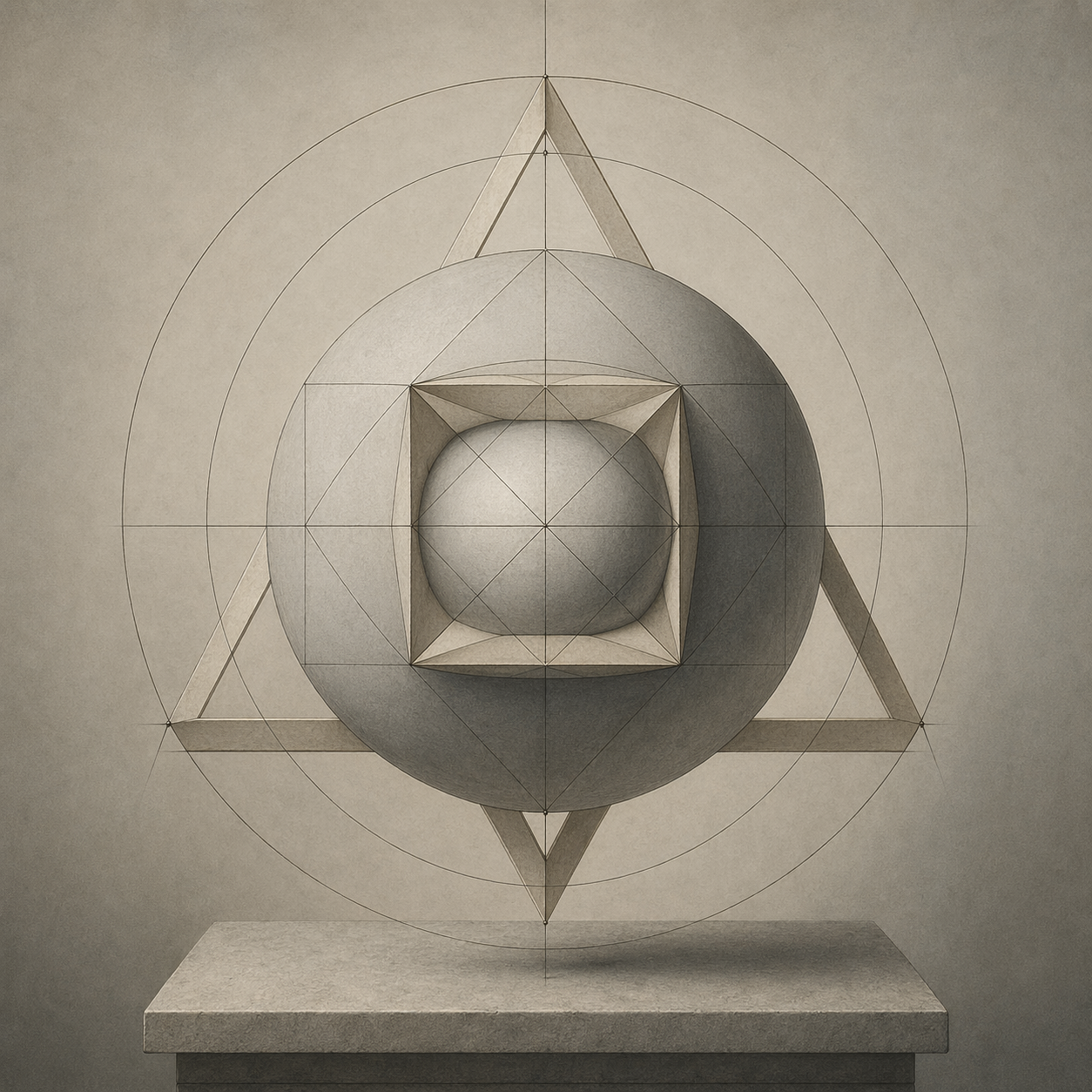
Descartes has a clear and distinct idea of himself as a purely thinking thing — without extension or spatial dimensions. He also has a clear and distinct idea of his body as purely extended — without thought. Since he can conceive each without the other, and since God can make whatever he clearly conceives, they must be genuinely distinct substances.
But now that I begin better to know my self and the Author of my Original, I do not think, that all things, which I seem to have from my senses are rashly to be admitted, neither are all things so had, to be doubted.
The Union Problem
Descartes insists, however, that mind and body are not merely alongside each other, like a sailor in a ship. They are blended — mixed together so that feelings of pain, hunger, and thirst arise from the union itself, not merely from a mind perceiving bodily states from a distance.
Now there is nothing that this my Nature teaches me more expresly then that I have a Body, Which is not Well when I feel Pain, that this Body wants Meat or Drink When I am Hungry or Dry, etc.
The Problem That Remains
This creates the problem Descartes never solved: if mind and body are truly distinct substances, how do they interact at all? Pain requires that a physical event in the body causes a mental event. But two fundamentally different substances — one extended, one purely thinking — should have no causal commerce. The occasionalists denied any direct interaction. Spinoza argued the only coherent response was to deny the distinction entirely. The hard problem of consciousness, in its modern form, descends directly from this impasse.
Princess Elisabeth of Bohemia pressed Descartes on this in their celebrated correspondence (1643–49). His replies are widely considered unsatisfying. Spinoza, working from Cartesian premises, concluded that thought and extension are attributes of a single substance — what he called God or Nature.
Related Concepts