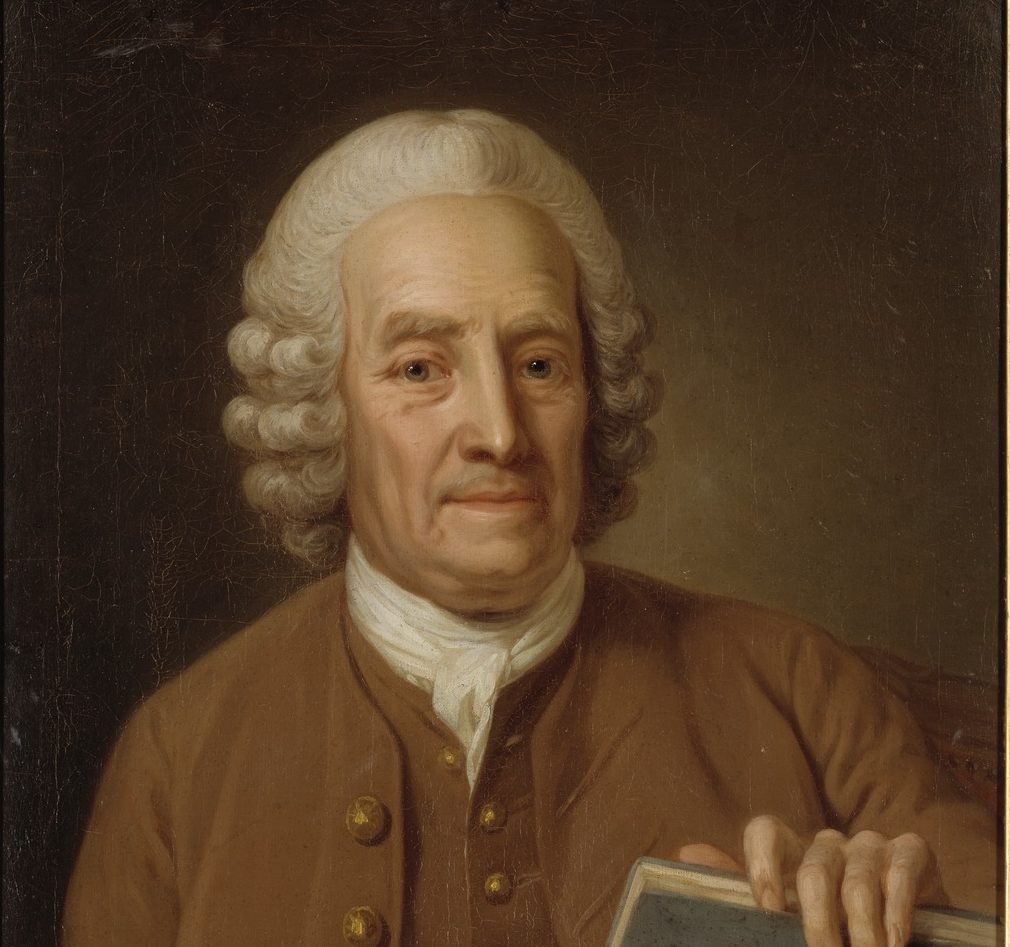
The Grand Man
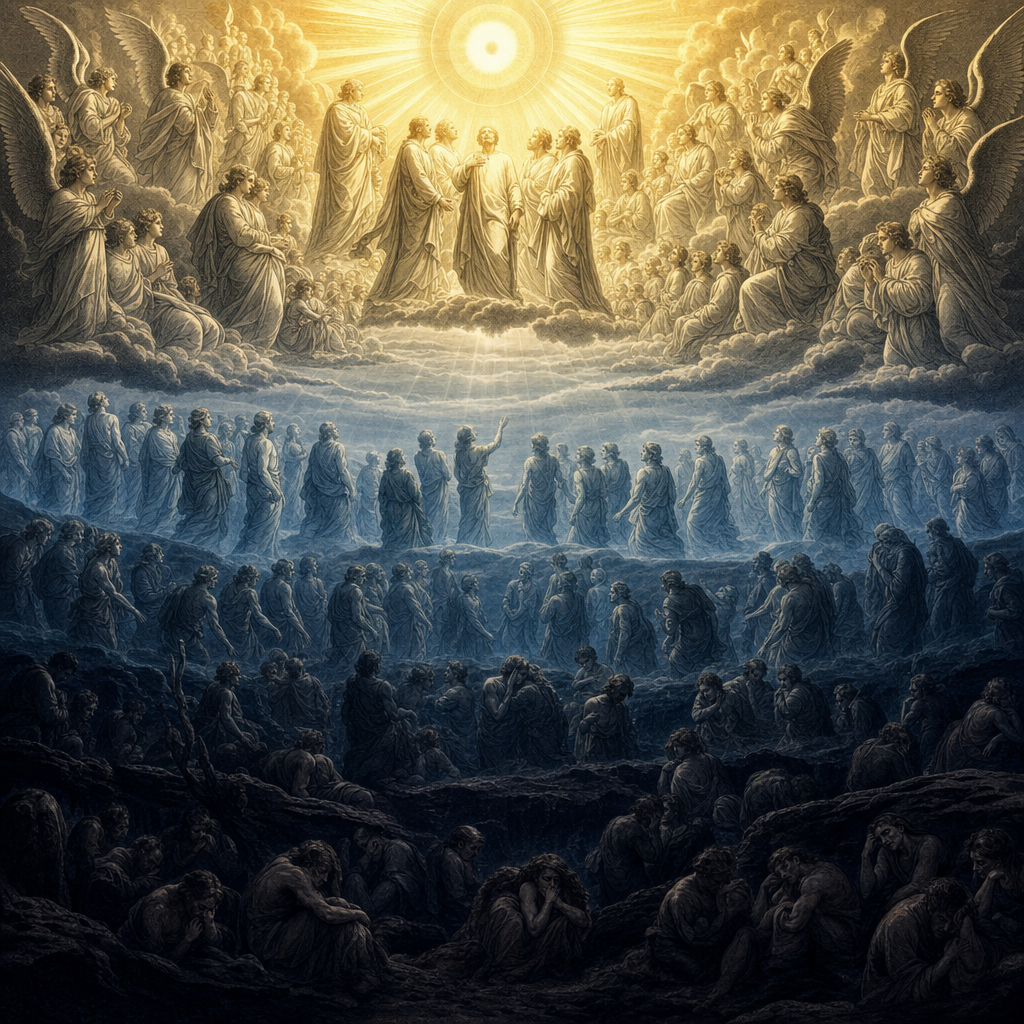
In Swedenborg's account, the entire heavenly realm is organised into a single human shape — not metaphorically but structurally. Angels closest to the divine correspond to the head and heart; those in outer heavens to the limbs and extremities. Each community of angels performs a function in the whole that mirrors the function of the bodily part it corresponds to. The community that corresponds to the lungs, for instance, is engaged in the kind of spiritual activity that corresponds to breathing — the reception and distribution of truth.
That heaven in its whole complex reflects a single man is an arcanum hitherto unknown in the world, but fully recognized in the heavens. To know this and the specific and particular things relating to it is the chief thing in the intelligence of the angels there, and on it many things depend which without it as their general principle would not enter distinctly and clearly into the ideas of their minds. Knowing that all the heavens with their societies reflect a single man they call heaven the Greatest Man and the Divine Man;--Divine because it is the Divine of the Lord that makes heaven.
Implications for Death and Afterlife
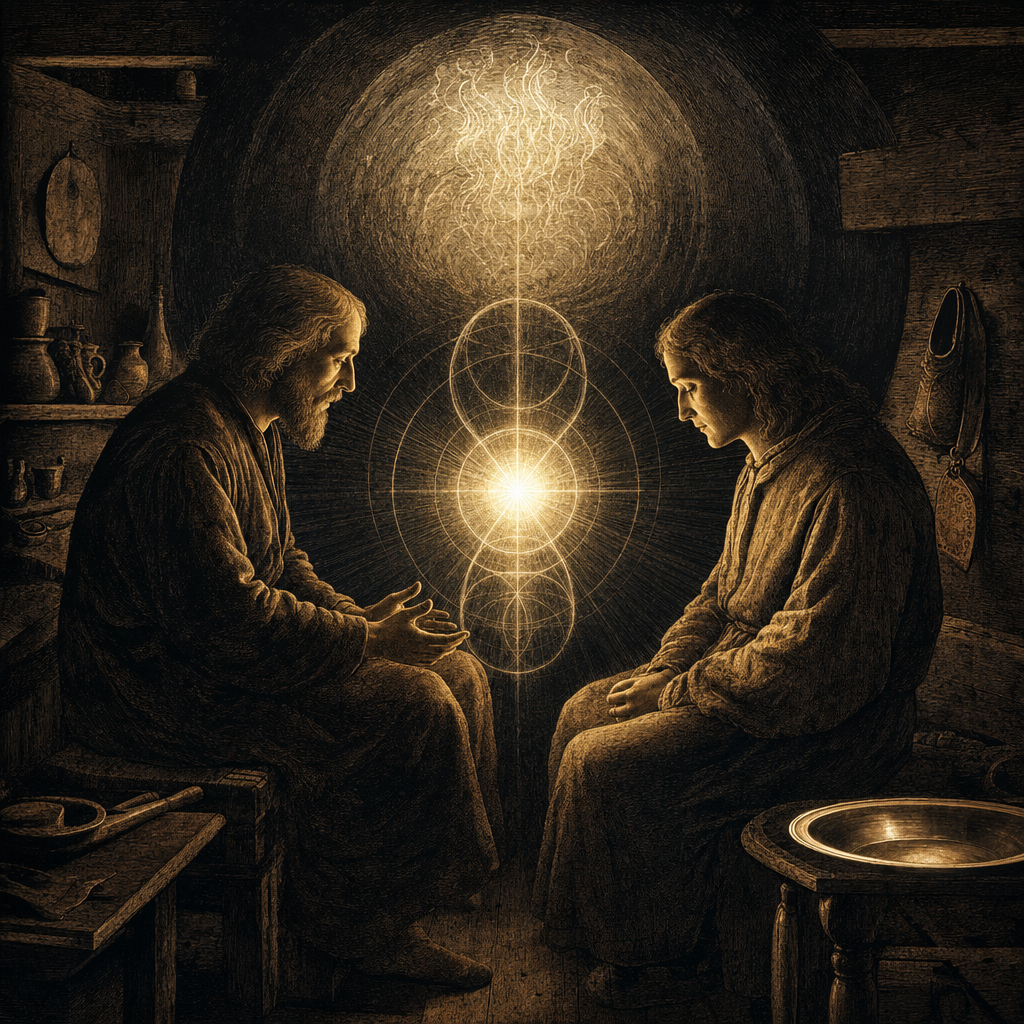
This is not decoration but ontology. Swedenborg holds that the human form is the form of God himself — that God is the Divine Human, and that creation at every level is the progressive embodiment of that form. Heaven is human-shaped because God is human-shaped because the human form is the form of love and wisdom themselves. The consequence for Swedenborg's account of death and the afterlife is striking. Angels are not a different order of being from humans but humans who have completed the process of spiritual formation. After death, the spirit sheds the material body but retains everything inward — memory, personality, characteristic loves, habitual thoughts.
each one is a man in the measure of his reception of the Lord. By receiving the Lord they understand receiving good and truth which are from Him, since the Lord is in His good and in His truth, and this they call wisdom and intelligence.
The spiritual body that remains after death is more fully human than the natural one, not less: more vivid in sensation, more coherent in identity, more completely what the person always most deeply was. The Grand Man is therefore not a poetic metaphor but the literal destination of human development — the community of all who have become fully themselves through love.
The doctrine of heaven as the Grand Man runs throughout Heaven and Hell and is elaborated systematically in Divine Love and Wisdom. Swedenborg claims this was communicated to him directly by angels during his spiritual experiences rather than deduced philosophically.
Related Concepts