Nature as Spiritual Language
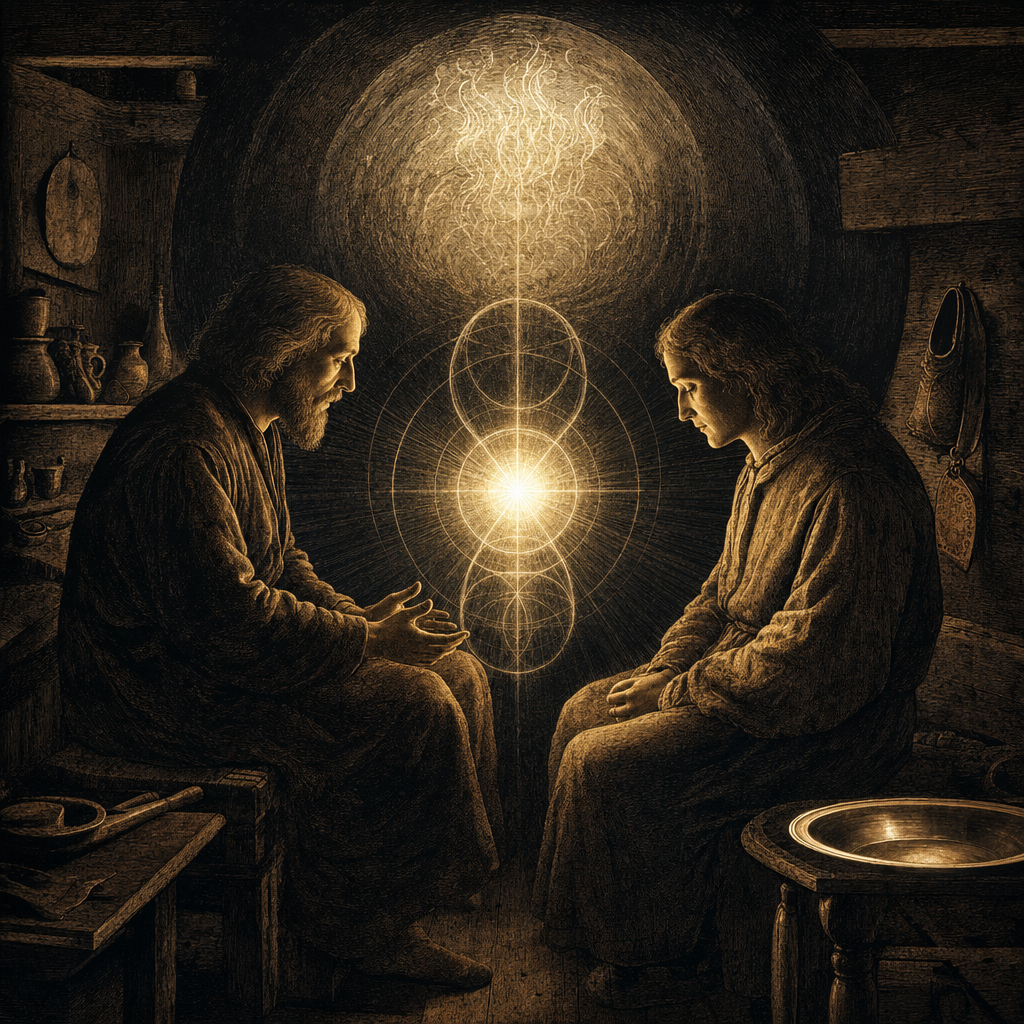
The correspondence between natural and spiritual is, for Swedenborg, causal in both directions. Spiritual realities flow into natural ones and produce them; at the same time, natural things affect the spiritual world through a kind of resonance. Fire corresponds to love; light to wisdom; warmth to the affection of charity; cold to its absence. Sight corresponds to understanding; hearing to obedience; smell to perception. Each sense, each element, each creature has its spiritual counterpart, and knowing these correspondences unlocks the inner meaning of everything visible.
The whole natural world corresponds to the spiritual world, and not merely the natural world in general, but also every particular of it; and as a consequence everything in the natural world that springs from the spiritual world is called a correspondent. It must be understood that the natural world springs from and has permanent existence from the spiritual world, precisely like an effect from its effecting cause.
A Lost and Recovered Knowledge
This principle is the hermeneutic key to Swedenborg's scriptural interpretation. In the Arcana Caelestia, he works through Genesis and Exodus word by word, identifying the spiritual sense of each term. Egypt corresponds to natural knowledge; Canaan to the heavenly state; the Israelites to those in whom the church is being formed; Pharaoh to the natural mind resisting spiritual influx. The stories are literally true but spiritually they are maps of interior transformation.
What correspondence is is not known at the present day, for several reasons, the chief of which is that man has withdrawn himself from heaven by the love of self and love of the world. For he that loves self and the world above all things gives heed only to worldly things, since these appeal to the external senses and gratify the natural longings; and he does not give heed to spiritual things, since these appeal to the internal senses and gratify the mind, therefore he casts them aside, saying that they are too high for his comprehension.
Correspondences in Heaven
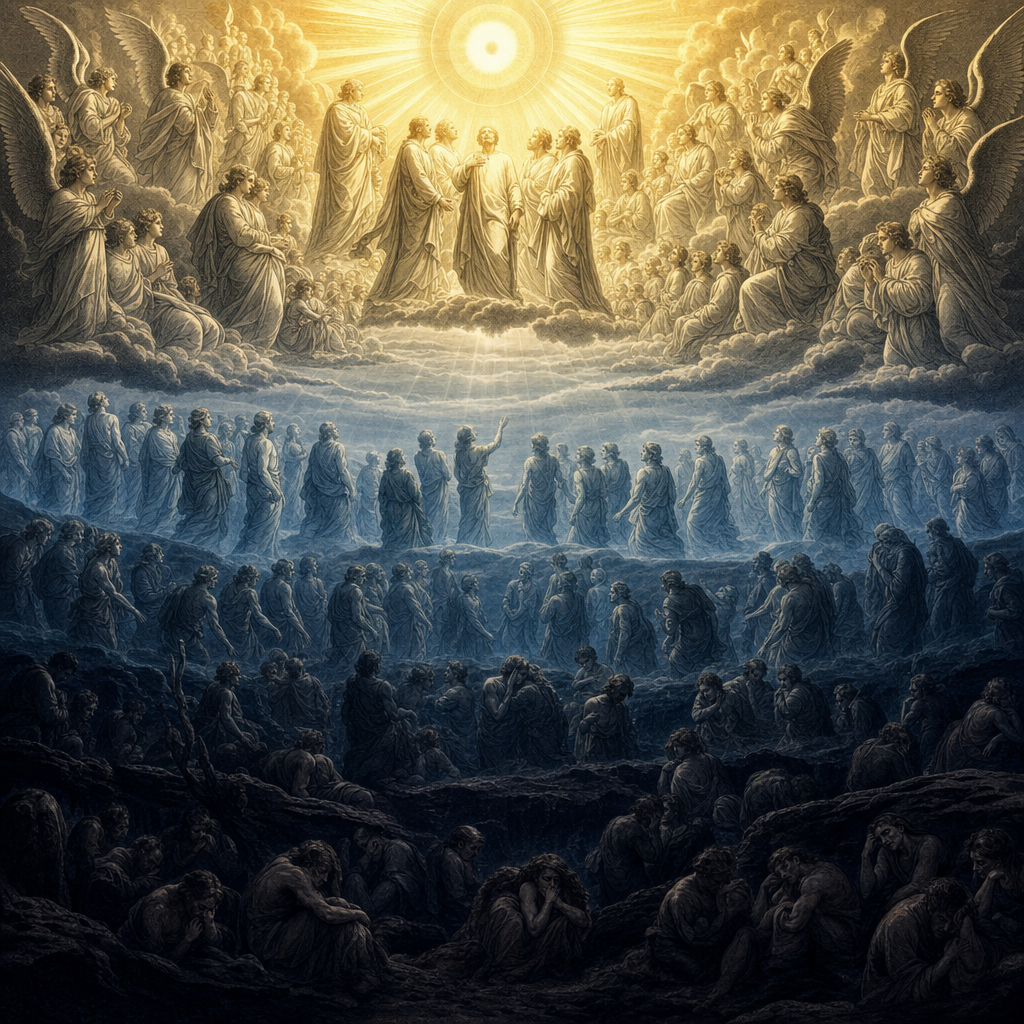
In heaven, Swedenborg reports, the landscape and environment correspond exactly to the inner state of the angels who inhabit them. The gardens, architecture, light, and clothing of a heavenly community are the outward expression of the community's collective loves and wisdom — they are, in a sense, those loves made visible. An angel who moves to a community that suits a different love will find the landscape changing around them accordingly. There is no gap between inner and outer in heaven; what you are is what you see.
The doctrine of correspondences is the interpretive backbone of the Arcana Caelestia and is described in Heaven and Hell in chapters specifically devoted to the subject. Swedenborg was familiar with earlier correspondence traditions (Neoplatonic, Paracelsian) but claimed his own version was received by direct angelic communication rather than derived from them.
Related Concepts