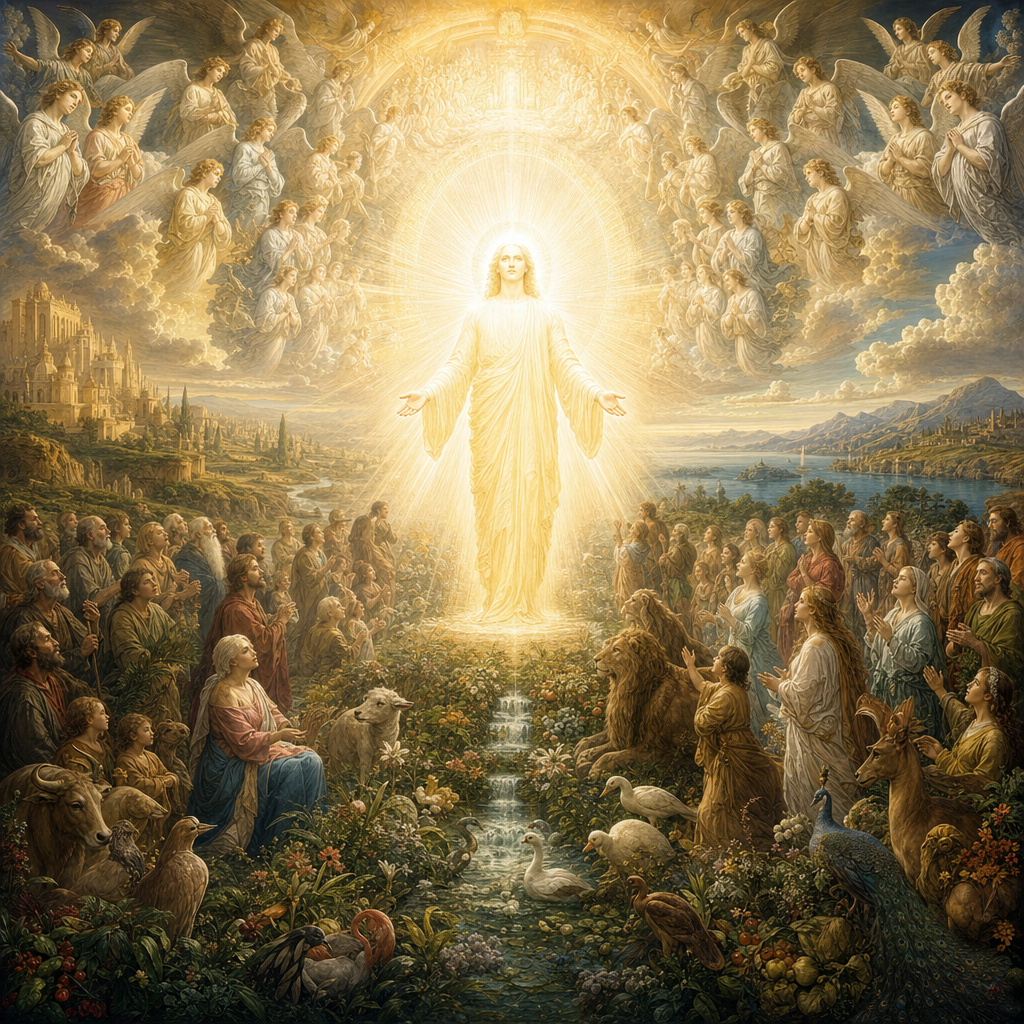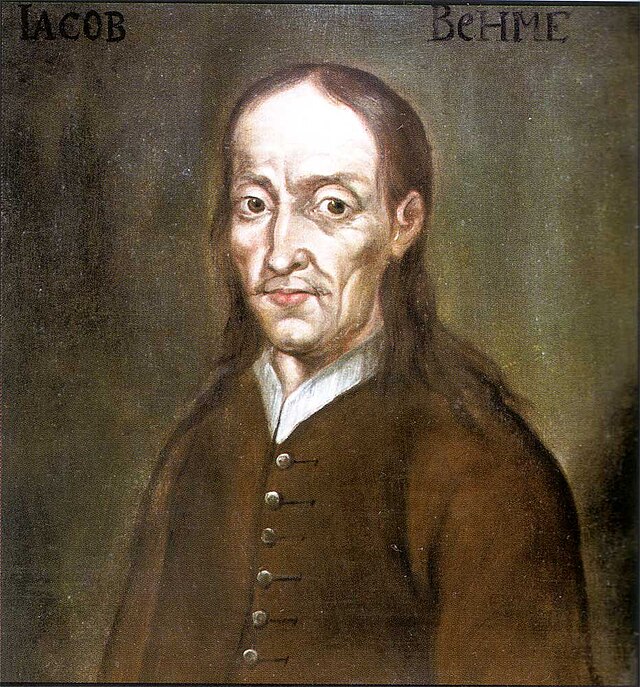
The Virgin of Wisdom
In Böhme's mythology, Sophia is not the second person of the Trinity but a kind of mirror of the divine nature — the luminous, transparent image in which God sees himself. She is pure receptivity and perfect reflection, containing all possibilities without grasping any. The Fall, for Böhme, is partly the story of Adam's turning away from Sophia toward a creaturely substitute; redemption is partly the restoration of the soul's union with her.
Wisdom as Mirror
The image of the mirror is central. Sophia does not generate or create; she reflects. The divine fire sees itself in her and, in seeing itself, becomes light rather than mere heat. Without Sophia, God's power would remain enclosed in its own dark fire; through her, it becomes self-knowing, luminous, and relational. She is the principle of divine self-revelation — the point where the groundless abyss first becomes aware of itself.
The Soul's Bride
For the individual soul, Sophia plays the role of a spiritual bride — the inner wisdom that the soul must recover and unite with. Böhme's mysticism here is explicitly erotic in the medieval tradition of bridal mysticism, but with his distinctive twist: the union is not the soul dissolving into God but the dark will of the self being enlightened and transformed by wisdom. The goal is not annihilation but transfiguration.
Böhme's Sophia influenced later Sophiological traditions significantly, particularly Russian religious philosophy of the nineteenth and twentieth centuries — Solovyev, Bulgakov, and Florensky all drew on his framework. His feminisation of divine wisdom also prefigures later feminist theological reclamations of Sophia as a name for God.
Related Concepts