Lucifer Before the Fall
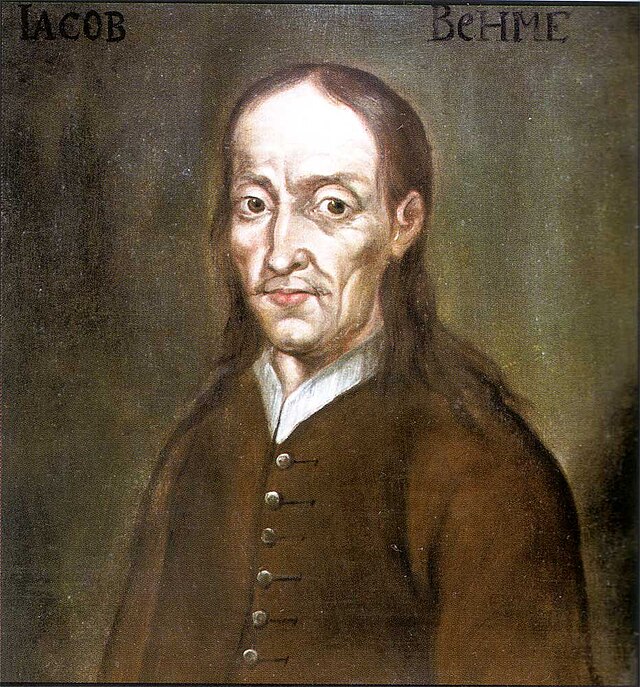
In Böhme's account, Lucifer was the greatest of all created beings — the one in whom all three principles were most perfectly balanced, the most luminous expression of the divine fire. This is crucial: Lucifer's greatness is what makes his fall both possible and devastating. An ordinary creature could not have fallen as he did because it did not contain within itself the same intense concentration of the first principle, the dark fire that, misdirected, becomes consuming.
The Turning Inward
The fall occurs not through any external temptation but through a kind of metaphysical pride — Lucifer's turning of the first principle in upon itself, willing to be his own ground rather than remaining open to the second principle of love. He becomes, as Böhme says, a "selfful" being: self-enclosed, self-delighting, cut off from the source that sustained him. The light does not disappear but hardens into darkness; the fire does not go out but becomes consuming rather than illuminating.
Hell as Inner Condition
Hell, for Böhme, is not primarily a place of punishment but the inner condition of the self-enclosed first principle — the experience of the dark fire without the light of love. Lucifer does not go anywhere; he becomes something. This becoming is irreversible not because God refuses to forgive him but because the self-enclosed will cannot accept the very light it needs: to receive the light would mean surrendering the self-will, and it is precisely the self-will that refuses. Hell is locked from the inside.
Böhme's account of Lucifer directly influenced Milton's Satan in Paradise Lost (1667). Milton's Satan — proud, self-enclosed, carrying hell within himself — is recognisably Böhme's Lucifer transposed into epic poetry: "Which way I fly is Hell, myself am Hell."
Related Concepts