The Turning In of the Will
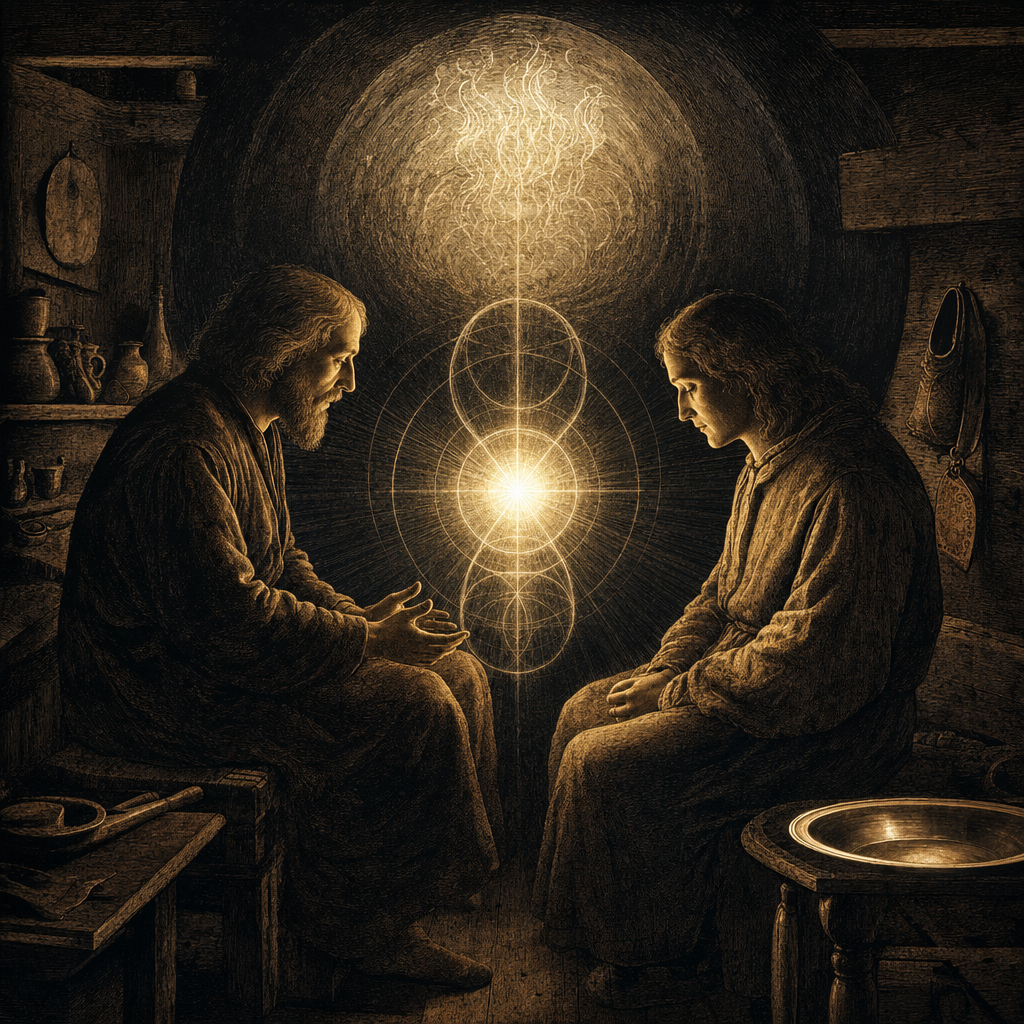
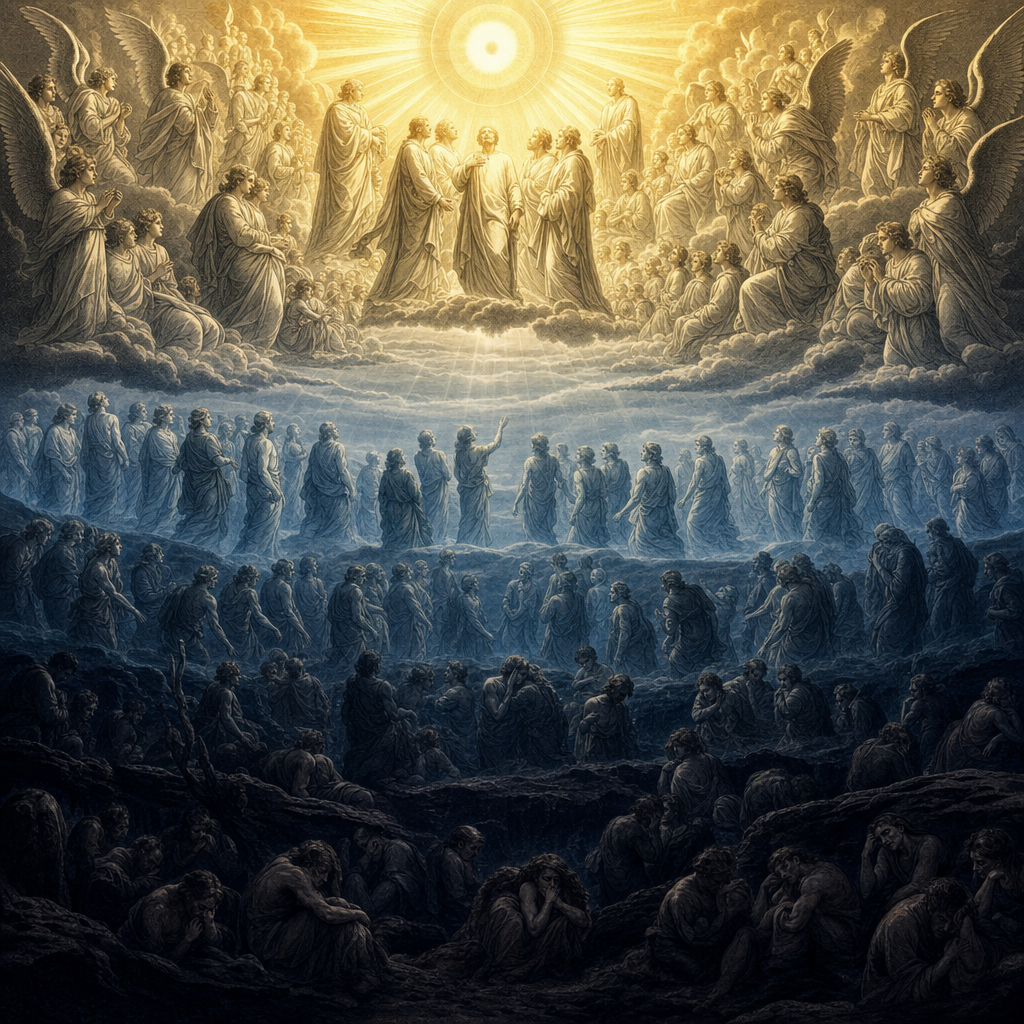
Theophorus, the master figure of Dialogue III, dismantles the spatial picture of the afterlife with a single structural claim. Heaven is not a location that souls travel to; it is what happens when the will turns into the love of God. Hell is not a destination of punishment; it is what happens when the will turns into the wrath of God. Both are real, both are efficacious, and both are available at every moment to every soul still living in a body. The geography of Christian eschatology becomes, in Böhme, a map of inward states.
So that it is but the turning in of thy will either into his Love, or into his Anger; and thou art accordingly either in Heaven or in Hell.
Heaven as Omnipresent Manifestation
If heaven is a state rather than a place, where is it? Everywhere, Böhme answers — or rather, it is not in space at all. Heaven is the manifestation of God wherever his love is operative, which means it is co-extensive with the created world and simultaneously beyond it. The master's description has a formal beauty: heaven fills all things, is within all things, is outside all things, without division or location. It does not move or spread because it cannot leave itself.
Heaven is throughout the whole World, and it is also without the World over all, even everywhere that is, or that can be even so much as imagined. It filleth all, it is within all, it is without all, it encompasseth all; without division, without place;
Where Angels and Devils Dwell
The same logic applies to the inhabitants of these realms. Angels dwell wherever the soul has emptied itself of self-seeking — that vacated space becomes their natural home. Devils dwell wherever the soul has turned inward to its own will, filling itself with self-generated desire. The question of whether angels and devils are metaphors for psychological states or independent beings is one Böhme does not fully resolve; he seems to intend both simultaneously. What matters is that the soul's own orientation determines which company it keeps.
This interiorisation of heaven and hell has radical implications. It means the condition that defines eternal life is not principally a future event but a present one — and it means the soul cannot reach heaven by journeying after death to a place it has never visited, but only by deepening and completing a turn it has already begun.
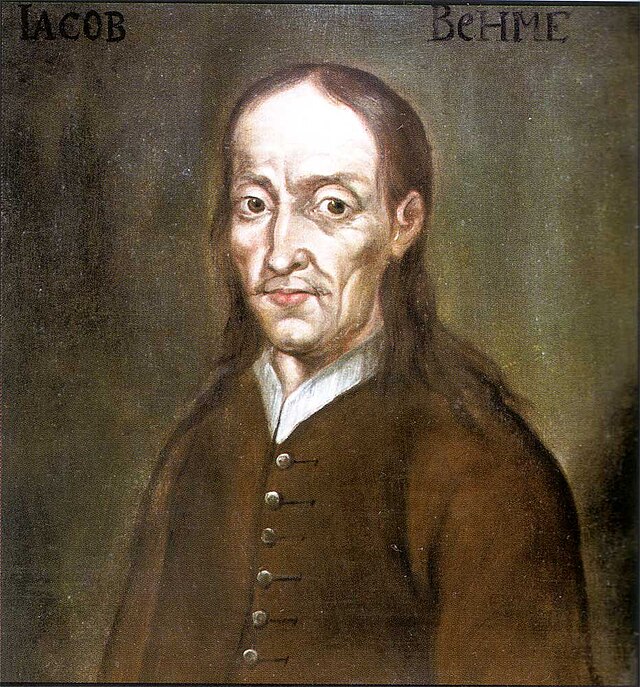
Dialogue III is the most theologically systematic of the four dialogues and draws on Böhme's mature cosmology. The interior location of heaven and hell appears also in his earlier treatise "Heaven and Hell" (part of The Way to Christ). Theophorus, the master's name in this dialogue, means "God-bearer."
Related Concepts