The Levels of Being
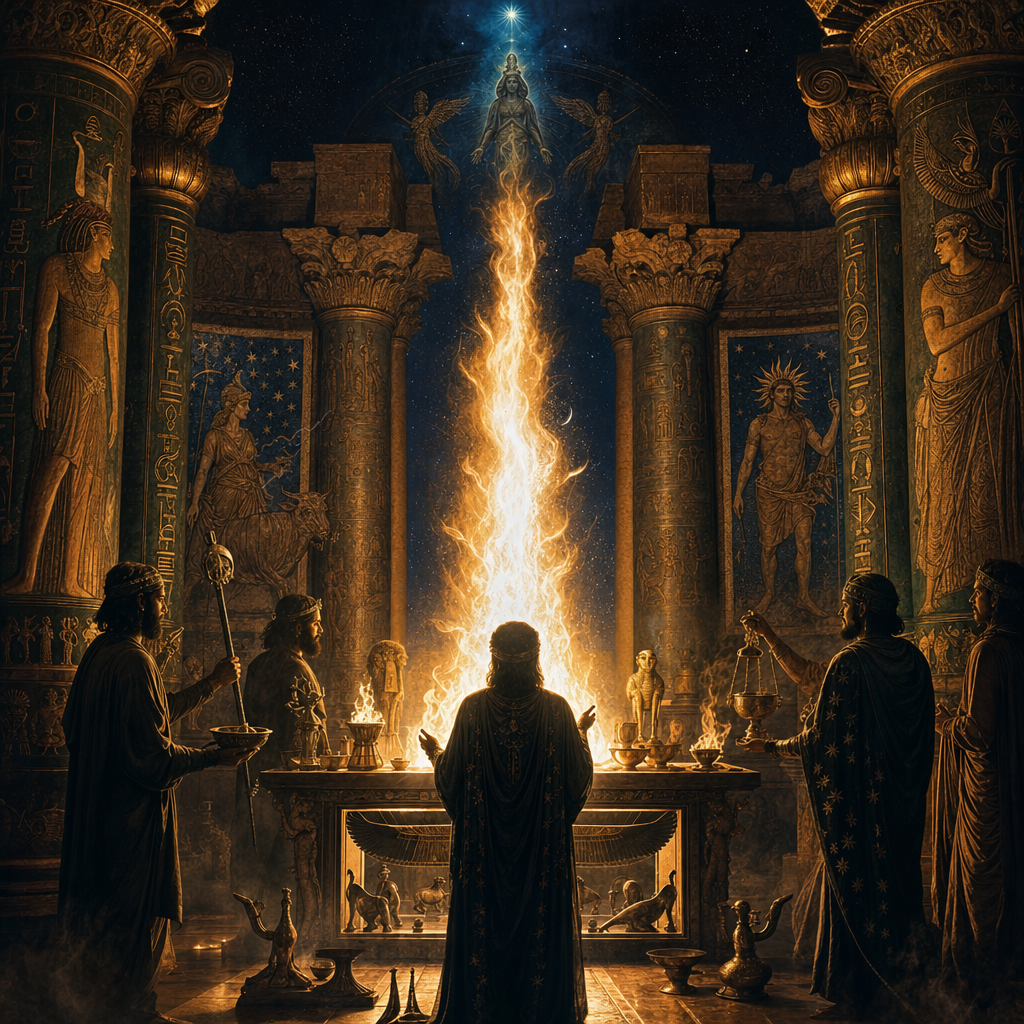
Iamblichus distinguishes the following principal levels in descending order: gods proper (completely transcendent, pure causes), archangels (who mediate between gods and lower beings), angels (who execute divine commands and communicate between levels), daimones (who administer particular aspects of the natural and human worlds), heroes (elevated souls who serve as intermediaries for human concerns), material or chthonic daimones (who manage the lowest level of the material world). Each level is characterised by specific degrees of unity, eternity, goodness, and power, and each has appropriate ritual forms by which it can be approached.
How to Recognise Each Level
A distinctive and practically oriented section of De Mysteriis concerns the phenomenology of divine appearances: how can the practitioner tell which level of being has appeared in response to a ritual? Iamblichus gives careful descriptions: gods appear with a dazzling, perfectly steady light that does not diminish even when accompanied by other divine beings; archangels with great but not overwhelming brightness; angels with a serene and ordered light; daimones with a darker, fluctuating light mixed with shadow; heroes with a still more varied and earthly appearance. The practitioner must be able to distinguish these appearances to avoid confusing lower manifestations with higher ones — a dangerous error.
Multiplicity as Religious Necessity
Iamblichus's proliferation of divine levels was not arbitrary scholasticism but served a religious purpose: it explained how a transcendent supreme principle could have any contact at all with the material world. Plotinus had left this connection philosophically problematic; Iamblichus solved it by multiplying intermediaries, each level bridging a smaller ontological gap than the vast chasm between the One and matter. Each step in the divine hierarchy is close enough to the one below it to make genuine communication possible. This solution shaped all subsequent Neoplatonism and became, through Pseudo-Dionysius, a major element of Christian angelology and mystical theology.
Iamblichus's hierarchical theology was systematised and extended by Proclus in his Elements of Theology and Platonic Theology, which remain the most rigorous formulations of late Neoplatonic metaphysics. The hierarchy of divine beings was transmitted to medieval Christian thought primarily through Pseudo-Dionysius the Areopagite, whose Celestial Hierarchy draws on Neoplatonic sources including Iamblichus.
Related Concepts