What Theurgy Is
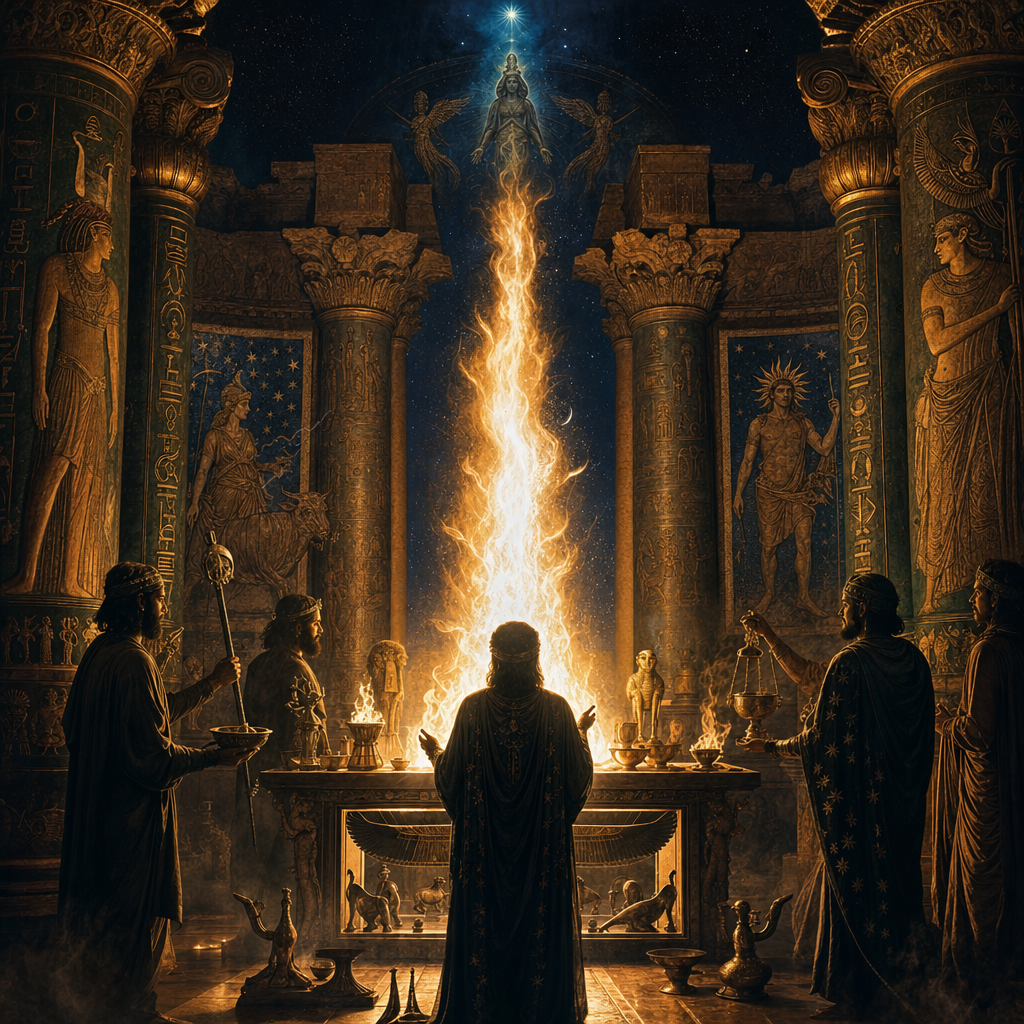
Theurgical practice includes a wide range of ritual operations: hymns and prayers in sacred languages, the use of specially prepared material objects (stones, plants, animals) that are "sympathetic" with specific divine powers, sacrifices, invocations, oracles, and the manipulation of sacred fire and light. These operations do not compel the gods — the gods cannot be compelled — but they create the conditions under which divine power can descend into the practitioner. The key concept is sympathy: certain material things share in the nature of higher beings and therefore serve as links in a chain connecting earth to heaven.
Against Pure Contemplation
Iamblichus's immediate target in De Mysteriis is Porphyry's view, derived from Plotinus, that the soul ascends to the divine through philosophical contemplation alone — through the purification of intellect and the turning of the soul away from matter. For Iamblichus, this view fundamentally misunderstands the soul's situation. The soul is not a pure intellect temporarily imprisoned in a body; it is genuinely and deeply embedded in the material order, and any path of return that ignores this embedding will be ineffective. The soul cannot raise itself by its own intellectual efforts because it lacks the power; it needs the gods themselves to lift it.
The Philosophical Foundation
Theurgy rests on a metaphysical foundation: the Neoplatonic doctrine that all things participate in the higher principles from which they derive, and that this participation creates real causal connections running both downward and upward through the hierarchy of being. A stone that participates in the solar principle is not merely a symbol of the sun but genuinely shares in solar power; ritually deploying this stone therefore genuinely engages solar divine power. The ritual works not by human intention alone but by the objective connections in the order of nature — connections that the theurgist knows how to activate.
De Mysteriis was written as a reply to Porphyry's letter to the Egyptian priest Anebo, probably around 300 CE. It is the foundational document of the Syrian and later Athenian Neoplatonism that followed Iamblichus, and its influence on Proclus, Julian the Apostate, and the Renaissance Hermeticists (particularly Ficino) was profound.
Related Concepts