The Soul's Descent
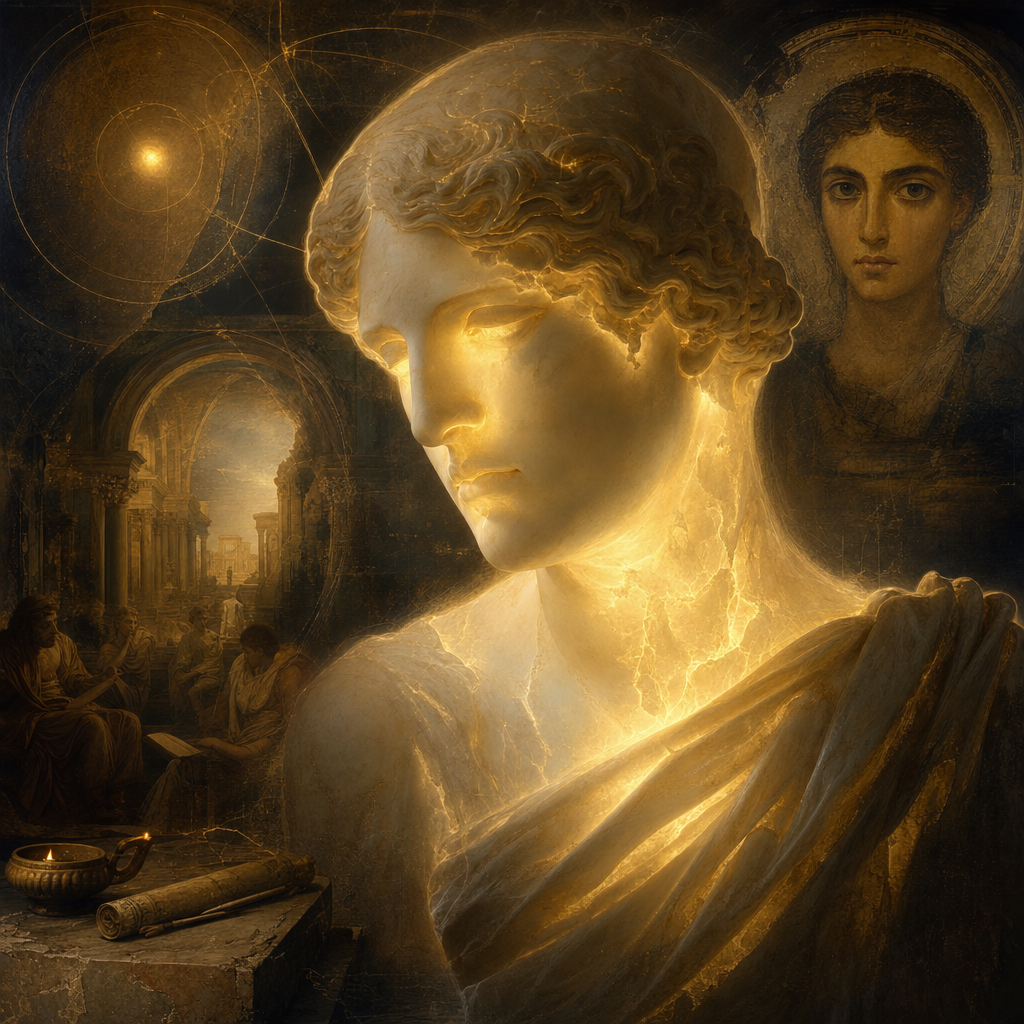
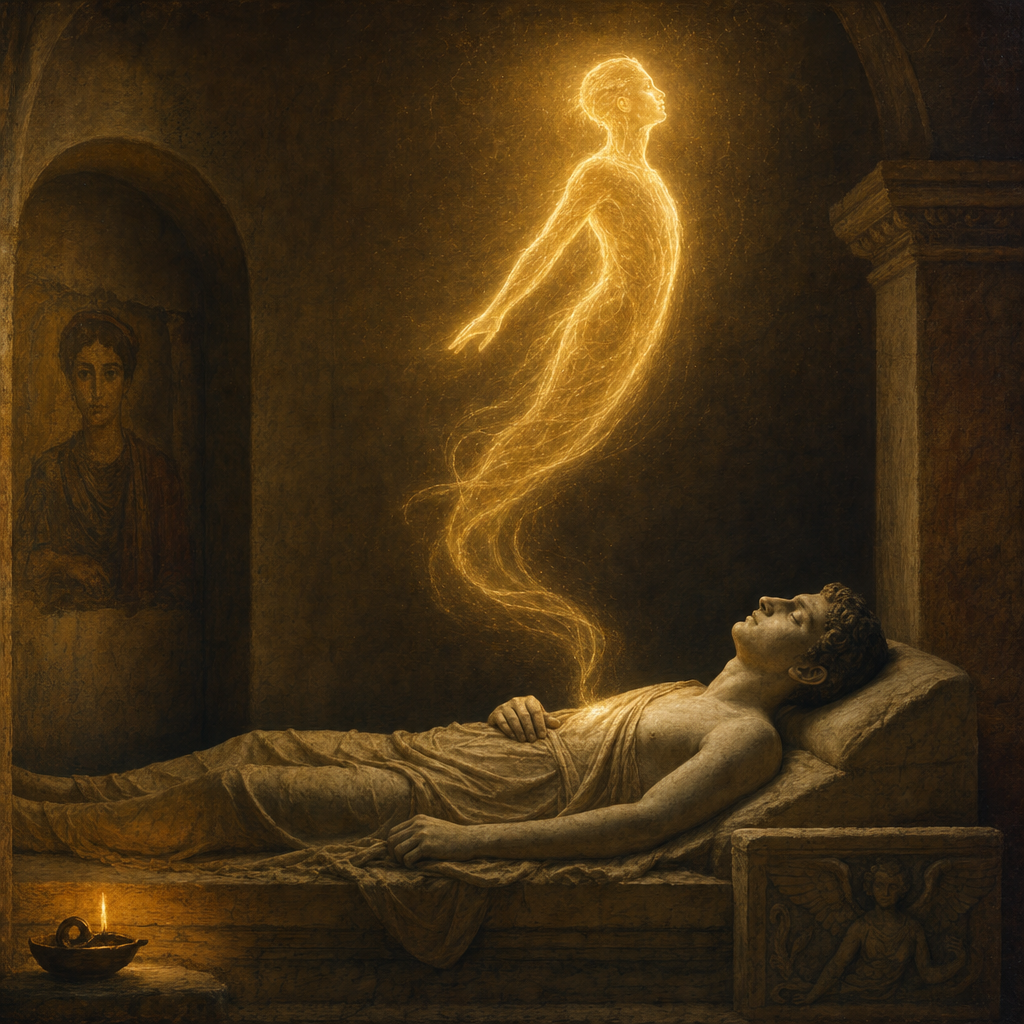
In the Neoplatonic tradition, all souls descend from a higher principle into the material world, taking on a body and becoming subject to the passions, limitations, and distractions of embodied existence. But Iamblichus radicalises this account: where Plotinus held that some part of the soul always remains above — never fully descending into matter — Iamblichus insists on a total descent. The human soul is genuinely and wholly embodied; there is no untainted rational part that remains in contact with the divine and can simply turn to look upward. The soul has been thoroughly captured by matter, and its liberation requires an agency greater than its own.
The Problem of Self-Elevation
This doctrine of total descent is the philosophical ground of Iamblichus's insistence on theurgy. If some part of the soul remained divine and untouched by matter, then contemplation — the soul's self-directed turning toward its higher nature — might suffice to achieve reunion with the divine. But if the soul has genuinely become material, its contemplative efforts are themselves contaminated by its material condition. The soul's intellectual activity is not pure nous but nous mixed with imagination, sensation, and passion. Such a faculty cannot, by its own power, reach the genuine nous above it, let alone the One. External intervention — divine grace, in effect — is required.
Liberation Through Ritual
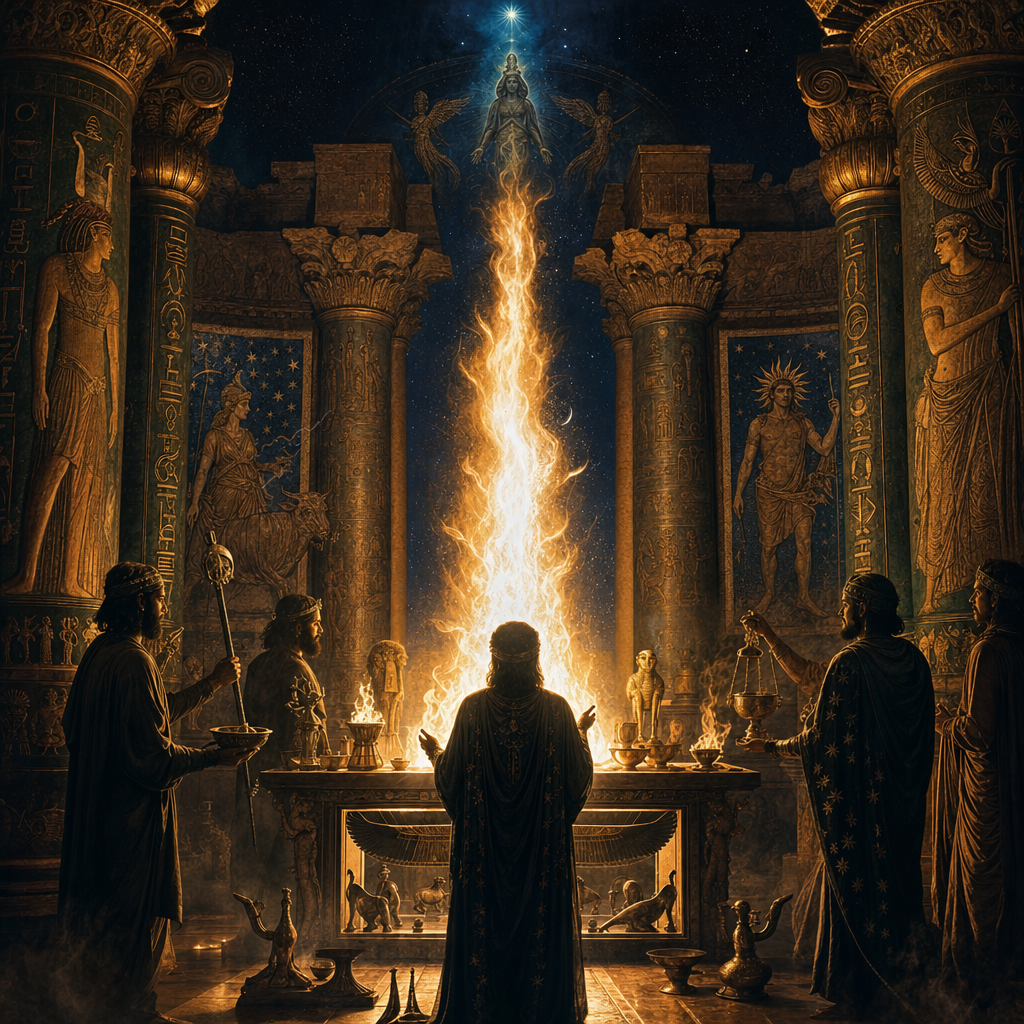
Theurgical practice works on the soul's liberation by engaging the objective connections between material things and divine powers — connections that operate regardless of the soul's own condition. The ritual creates a situation in which divine power can enter and purify the soul from without. This is not a passive process on the soul's part: it requires preparation, purity of life, and sustained practice. But the initiative comes from above — from the gods who descend in response to the ritual — not from below. The soul prepares the vessel; the gods fill it. This structure anticipates, in a non-Christian idiom, the Christian doctrine of grace.
Iamblichus's doctrine of the soul's total descent into matter was one of the most consequential departures from Plotinian Neoplatonism and was disputed within the school. Porphyry and later Plotinus himself were among those who maintained that part of the soul always remains above. The dispute about the soul's degree of descent had direct consequences for questions about the nature of embodied consciousness, the role of the emotions in philosophical life, and the sufficiency of contemplation for salvation.
Related Concepts