Fortune Speaks
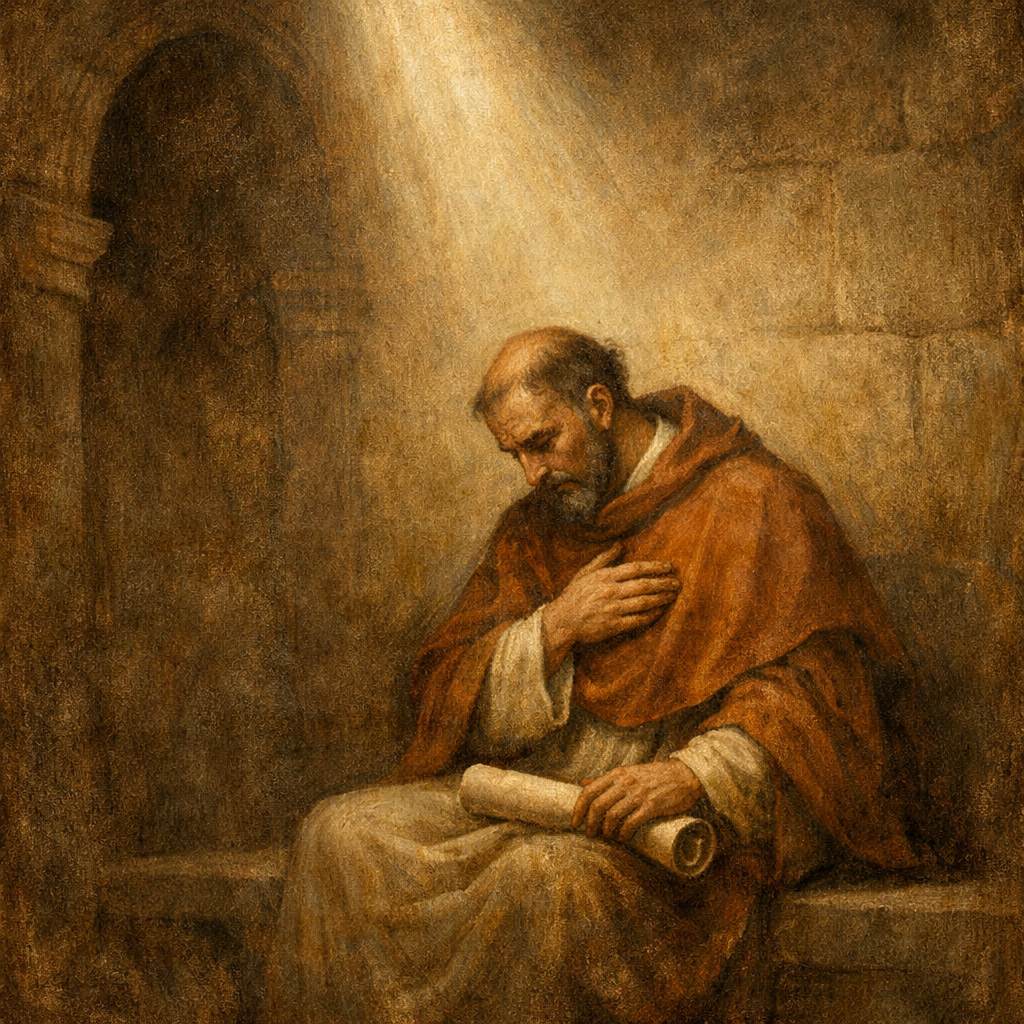
In Book II, Philosophy grants Fortune a voice and lets her speak in her own defence. The speech is remarkable: Fortune does not apologise. She insists that instability is her nature, that those who prosper under her have always done so on loan, and that to complain of her turning is to misunderstand the contract entirely. Her argument is both ruthless and, in its way, entirely consistent.
This is my art, this the game I never cease to play. I turn the wheel that spins. I delight to see the high come down and the low ascend.
The Logic of Instability
Fortune's defence rests on a single claim: constancy would destroy her. A wheel that stops is no longer a wheel. The man who climbs aboard Fortune freely, who courts her gifts and builds his happiness upon them, cannot coherently demand that she behave otherwise than she always has. Boethius had himself enjoyed extraordinary success—twice consul, master of offices, his sons both consuls on the same day—and Fortune is quick to remind him. The gifts were real. The wheel was always visible.
Philosophy does not simply endorse Fortune's speech; she uses it to drive her central argument. True goods—rational insight, virtue, the knowledge of the highest good—lie outside Fortune's domain. They cannot be given or taken by the wheel. This is why the consolation of philosophy is possible at all: there exists a good that Fortune cannot reach.
The Wheel's Legacy
The wheel became one of the great icons of medieval and Renaissance thought—painted on cathedral walls, depicted in illuminated manuscripts, and deployed by Chaucer, Dante, and Shakespeare. It gave a philosophical frame to the observation that power and prosperity collapse. Boethius's contribution was to make this collapse not a tragedy but a demonstration: the instability of worldly goods is evidence that the true good lies elsewhere.
Fortune's speech in her own voice appears in Book II, prose section II. The wheel image recurs throughout medieval European art and literature, from Dante's Inferno to the Wheel of Fortune card in the Tarot.
Related Concepts