The Dream as Philosophical Argument
The Butterfly Dream is not merely a charming anecdote. It is the conclusion of Zhuangzi's sustained argument in Chapter II about the identity of contraries. He has just finished showing that affirmative and negative, subjective and objective, this and that, are always relative to a standpoint. No standpoint is more real than any other in an absolute sense. The dream crystallises this: our certainty that we are awake is itself a product of the waking standpoint. From within a dream, the dream is reality.
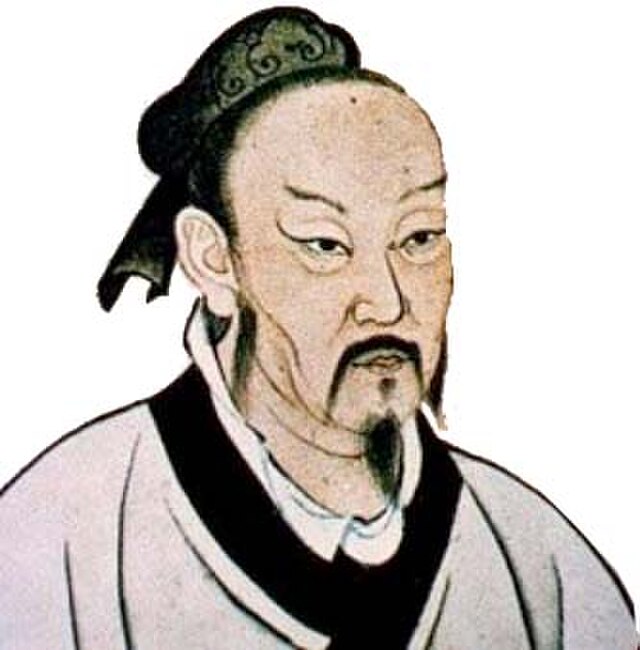
Once upon a time, I, Chuang Tzŭ, dreamt I was a butterfly, fluttering hither and thither, to all intents and purposes a butterfly. I was conscious only of following my fancies as a butterfly, and was unconscious of my individuality as a man. Suddenly, I awaked, and there I lay, myself again. Now I do not know whether I was then a man dreaming I was a butterfly, or whether I am now a butterfly dreaming I am a man.
Metempsychosis and the Barrier Between States
Zhuangzi notes that between a man and a butterfly there is "necessarily a barrier." He names this transition Metempsychosis — not in the strict Pythagorean sense of reincarnation, but to indicate that the crossing between states involves a genuine discontinuity. There is no neutral vantage point from which to adjudicate. The text does not offer anxiety or nihilism — it offers release. If no single perspective is the absolute truth, the obsessive defence of one's own viewpoint loosens its grip.
The Butterfly Dream remains among the most discussed passages in all Chinese philosophy. It anticipates Descartes's dreaming argument by nearly two millennia, but arrives at the opposite conclusion: not the isolated certainty of the cogito, but the open recognition that self and other, waking and dreaming, are transformations of one continuous flux.
Chapter II of the Zhuangzi (Giles, 1889). The dream argument has been compared with Descartes's First Meditation, though the philosophical implications point in opposite directions.
Related Concepts