The Asymmetry of Evidence
The defenders of female subjection argue from the naturalness and universality of the arrangement. Mill points out the logical problem: if the subordination of women is the result of legal compulsion and social pressure applied from birth, it cannot be used as evidence of what women are naturally suited for, any more than the submissiveness of slaves is evidence of their natural inferiority. The arrangement has never been tried on equal terms; the experiment of equality has not been conducted. All existing evidence is contaminated by the very inequality it is supposed to justify.
Custom as a Conservative Fallacy
The persistence of an institution is not evidence of its rationality. Mill argues that most of what appears natural to any given generation is simply what has been familiar from infancy: people's strongest feelings attach to what they have always known, and they mistake familiarity for necessity. The feudal subjection of serfs, the absolute power of fathers over children, the divine right of kings — all once felt equally natural and equally well-grounded. Their abolition showed that what had seemed inscribed in human nature was merely inscribed in human law.
The Burden of Proof
Mill argues that in the modern age — which has progressively replaced ascribed status with individual merit and voluntary contract — the burden of proof lies entirely on those who would make sex a permanent, hereditary qualification for social position and political power. Every other form of ascribed status has been abolished or is under challenge; the subjection of women is the last remnant of an older world, and it requires a rational justification it has never been given.
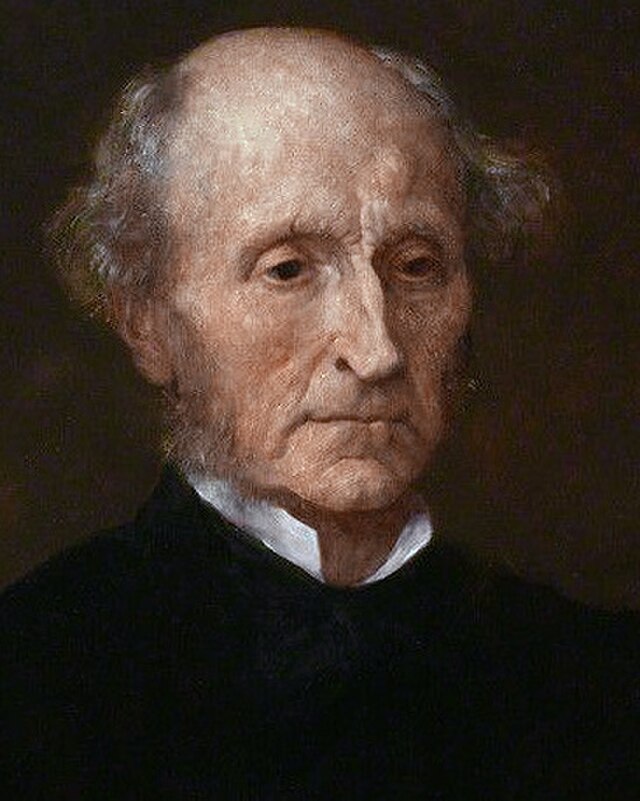
Chapter 1 of The Subjection of Women develops the argument from custom and the critique of naturalness. Mill wrote the work in 1861 but delayed publication, at his wife Harriet Taylor Mill's suggestion, until conditions were more favourable.
Related Concepts