The Anatomy of the City
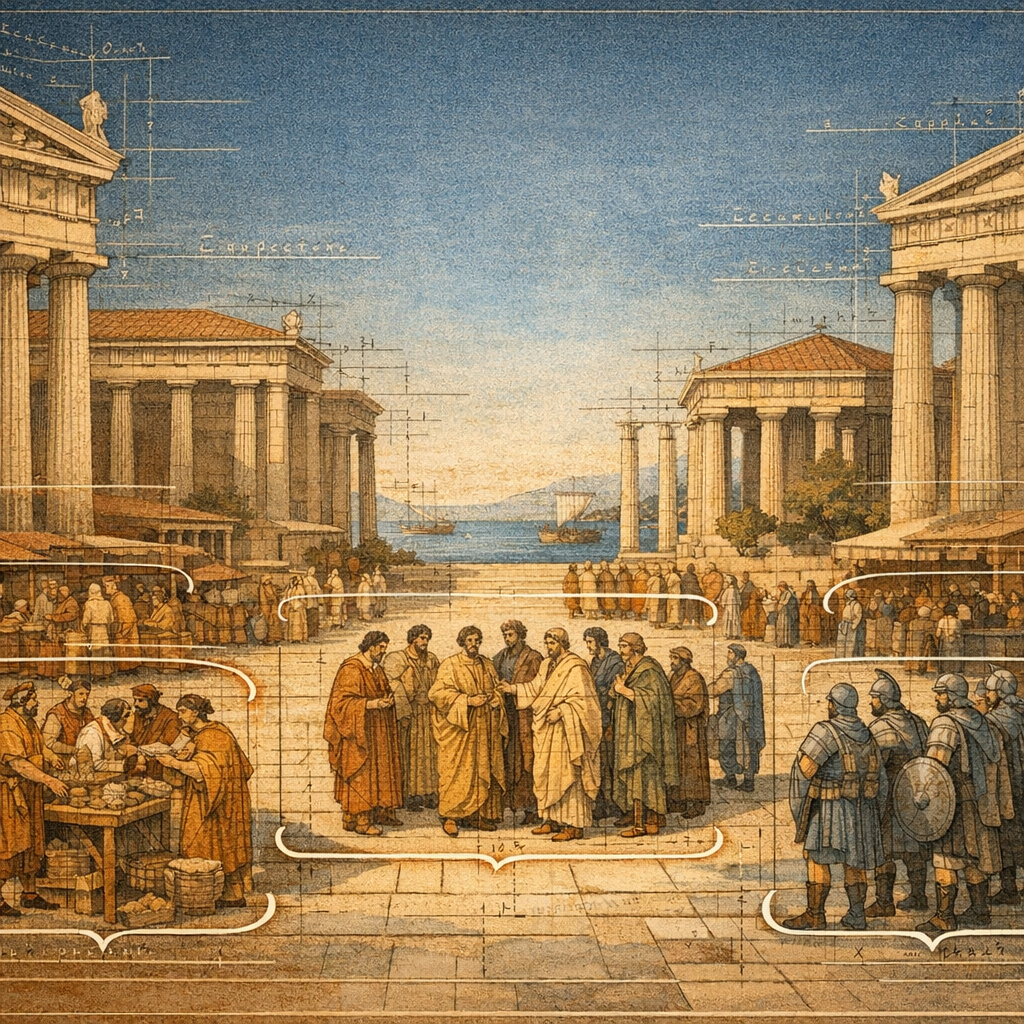
Aristotle begins from an empirical observation: every city contains the very wealthy, the very poor, and those of middling fortune. This is not merely an economic fact but a political one. Extreme wealth produces arrogance — an inability to obey. Extreme poverty produces servility — an inability to command. Neither class is fit to govern well.
We see also, that some of the common people are husbandmen, others attend the market, and others are artificers.
Why the Middle Is Best
The middle class possesses, in Aristotle's account, the virtues of both extremes without their vices. They are accustomed neither to commanding absolutely nor to obeying without reserve. They can be governed and govern in turn — which is, recall, the defining characteristic of political life. They have enough to live decently but not so much that they use wealth to evade accountability.
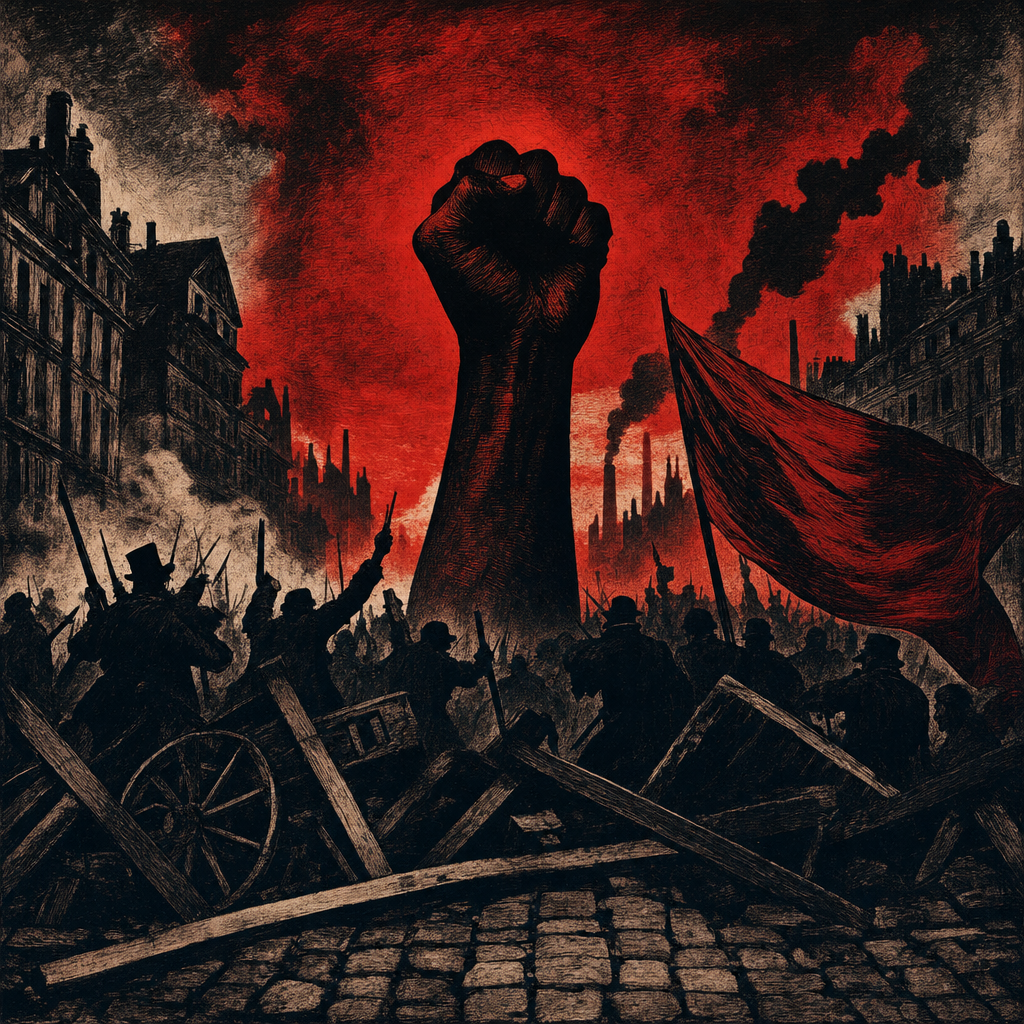
Where the middle class is large and strong — stronger, if possible, than the rich and poor combined, or at least stronger than either alone — the city is most stable. Factions, Aristotle argues, arise from the conflict between rich and poor. Where the middle can mediate between the extremes, factional conflict becomes manageable.
The Practical Implication
This is not merely an observation about what tends to happen. It is a prescription. The legislator who wants to build a durable constitution should favour policies that strengthen the middle class and prevent extreme concentration of wealth or extreme impoverishment. The best achievable constitution — polity — is precisely the constitution that reflects middle-class values: moderate, law-governed, capable of sustaining citizen participation.
I mean, to oppose men of account to the common people, the poor to the rich, and to blend both these into one body, and to increase the numbers of those who are in the middle rank; and this will prevent those seditions which arise from an inequality of condition.
An Ancient Argument for Modern Concerns
Aristotle's argument anticipates modern concerns about economic inequality and political stability with remarkable precision. Research in political science consistently finds that high inequality correlates with democratic backsliding and political polarisation. The mechanism Aristotle identified — that extreme economic distance between classes generates irreconcilable political conflicts — remains one of the most robust findings in the study of comparative politics.
The middle class argument is concentrated in Book IV, Chapter 11, which Aristotle himself calls one of the most important chapters in the Politics.
Related Concepts