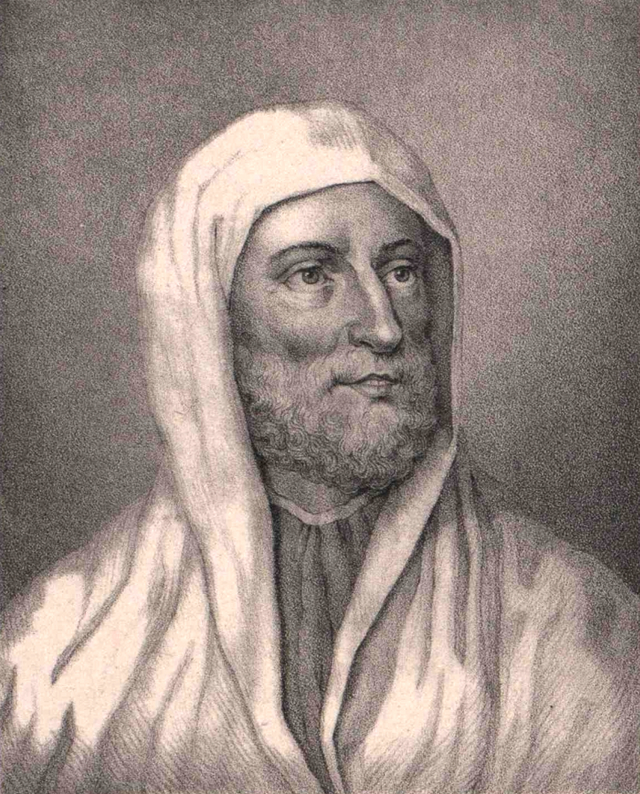
The Thought Experiment
The flying man is not merely asleep or inattentive; the experimental conditions strip away every possible source of self-awareness that might be provided by the body or its environment. The person has no proprioceptive awareness, no awareness of their own limbs, no memory of embodied experience, no sensory data of any kind. In these conditions, Avicenna argues, the person would still be aware of their own existence as a thinking thing — would still be capable of saying "I am." This awareness is not derived from any bodily input; it is immediate, self-presenting, and present prior to all sensory experience.
What the Argument Proves
Avicenna draws from the thought experiment the conclusion that the soul — the thinking self — is not identical to the body or to any bodily faculty. If awareness of self could in principle exist in the complete absence of bodily input, then self-awareness is not constituted by the body and cannot be reduced to it. The flying man would not affirm the existence of hands, legs, or a body; but they would affirm the existence of themselves as a thinking being. The soul's existence, therefore, is not the existence of any bodily thing but of something genuinely distinct — something that can in principle be aware of itself without any mediation by the body at all.
Anticipations and Influence
The comparison with Descartes's cogito is irresistible and has been made by historians of philosophy since the seventeenth century. Both arguments use a kind of methodological stripping-away — suspending all external evidence — to identify a residual self-awareness that cannot be doubted. Avicenna anticipates Descartes by six centuries. The flying man also influenced the Latin Scholastic tradition: Aquinas, Albertus Magnus, and others engaged with it directly. In the Islamic tradition, Avicenna's account of the soul as self-aware was the dominant position until Averroes's Aristotelian challenge, and it shaped the entire subsequent psychology of Islamic philosophy.
The Flying Man thought experiment appears in the Psychology section (Kitab al-Nafs) of the Book of Healing, Chapter 1. A closely related version appears in the Book of Directives and Remarks. The experiment was translated into Latin as the "homo volans" argument and became one of the most widely discussed thought experiments in medieval philosophy.
Related Concepts