Emanation and the Celestial Intellects
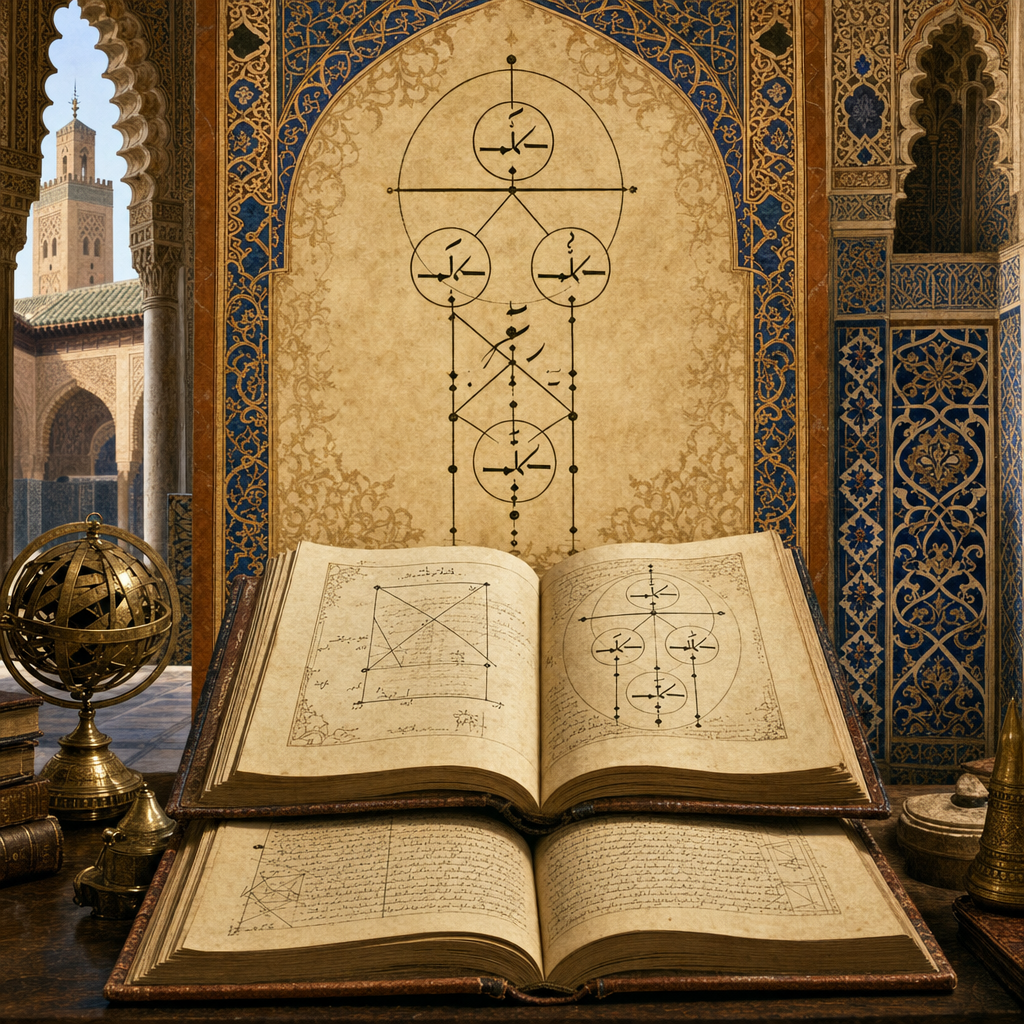
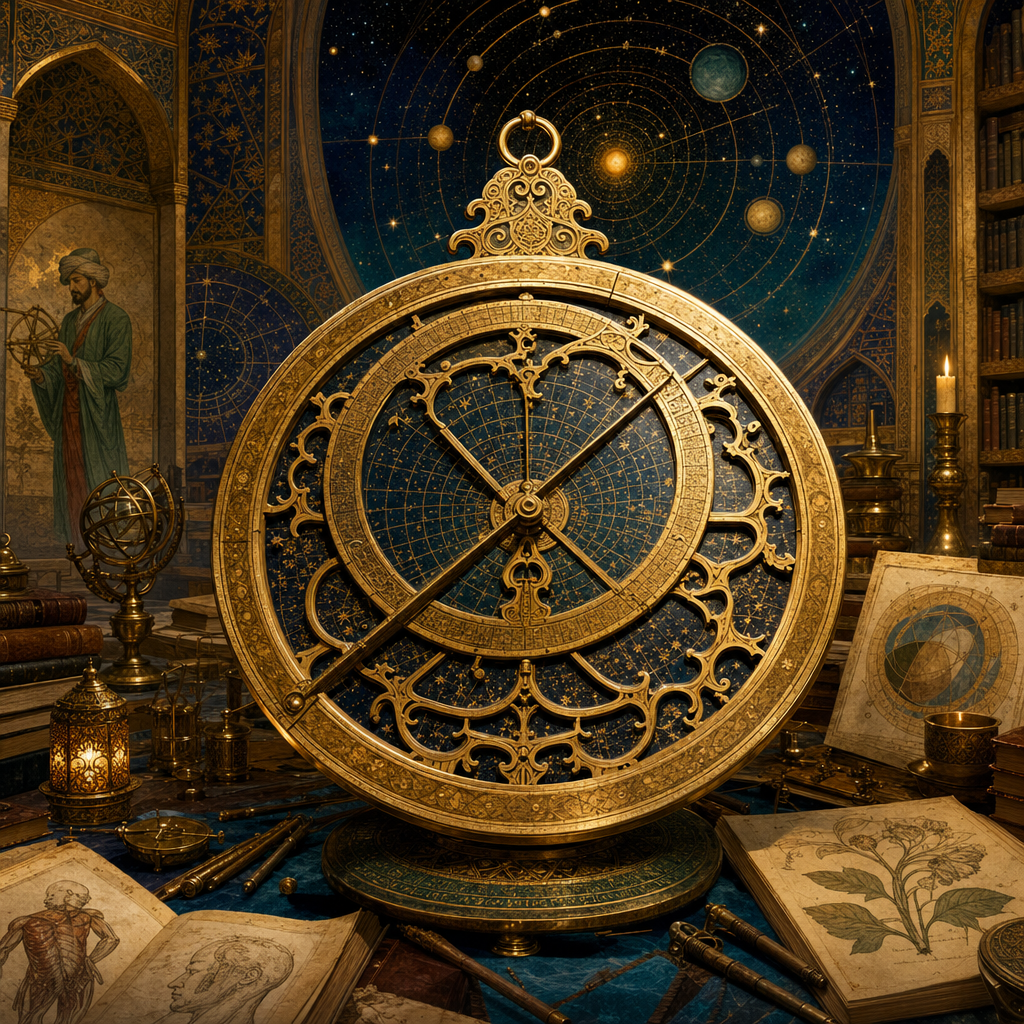
Avicenna's cosmology is emanationist: from the Necessary Existent flows a first intellect, which in thinking itself and God produces a second intellect and the first celestial sphere; the second intellect produces a third, and so on through ten intellects corresponding to the ten celestial spheres of Ptolemaic astronomy. The tenth intellect — the Active Intellect — is the intellect that governs the sublunary world: it is the source of all intelligible forms in the material world, and the illuminating principle that makes human intellect capable of receiving those forms. It is identified in Islamic philosophical tradition with the Angel of Revelation (Gabriel).
Conjunction with the Active Intellect
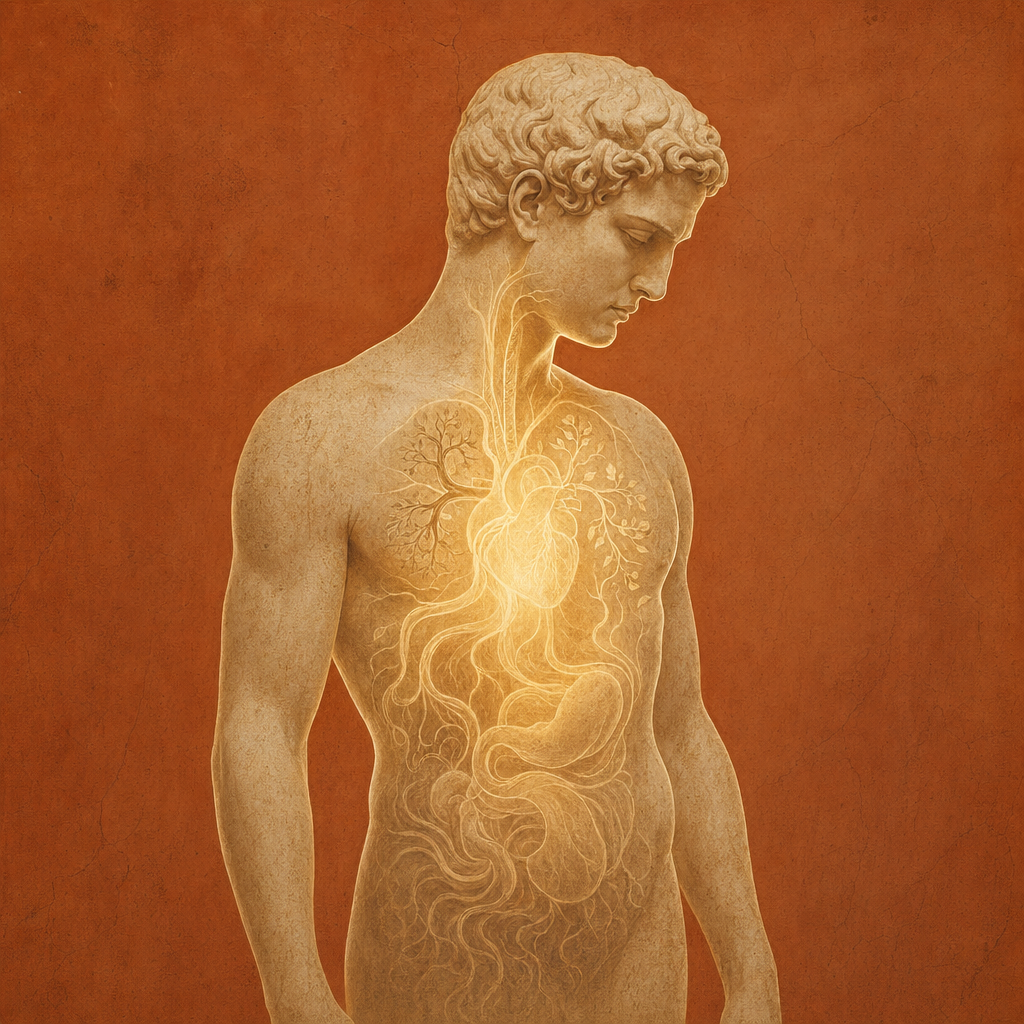
Human knowledge, for Avicenna, consists in the temporary conjunction of the human intellect with the Active Intellect. The human material intellect is in itself a pure potentiality — it has no content of its own but is capable of receiving intelligible forms. When the human intellect is sufficiently prepared — through philosophical education, through the purification of desire, through the elevation of the soul toward spiritual things — the Active Intellect illuminates it with the relevant intelligible forms. This is why genuine intellectual insight feels like discovery rather than construction: we do not make truths, we receive them.
Mystical Knowledge and the Gnostic
In the final sections of the Book of Directives and Remarks, Avicenna extends this epistemology into a mystical psychology. The highest form of conjunction with the Active Intellect — available to the spiritually advanced gnostic ('arif) — is a state of direct, intuitive illumination in which the entire range of intelligible truth becomes accessible simultaneously. This is not discursive reasoning from premises to conclusions but a flash of prophetic intellect that grasps the whole at once. Avicenna's account of prophetic knowledge and mystical gnosis represents his synthesis of Peripatetic epistemology and the Sufi psychology of spiritual ascent — a synthesis that deeply influenced later Islamic mystical philosophy, particularly the Ishraqiyyun or Illuminationist school of Suhrawardi.
The Active Intellect is discussed in the psychology section of the Book of Healing and in the Book of Directives and Remarks, Part VIII. The concept derives from Aristotle's De Anima but was radically transformed through al-Farabi's identification of the Active Intellect with the cosmic intelligence governing the sublunary world. Avicenna's version became the standard account in Islamic philosophy and deeply influenced the Latin Scholastic theory of divine illumination.
Related Concepts