Neither Dualism Nor Materialism
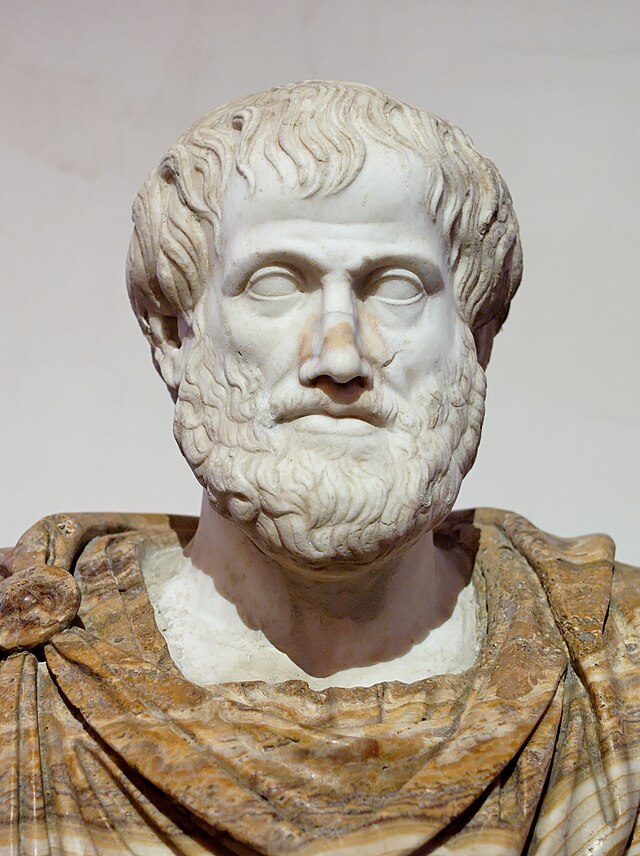
Plato's Phaedo pictured the soul as a distinct, separable substance temporarily housed in the body — a prisoner longing for release. The atomists reduced psychological phenomena to the collisions of fine particles. Aristotle rejects both extremes. The soul is not a thing alongside the body but the body's own actuality — the form that makes the body an organised, living whole. To ask whether the soul and body are one is like asking whether the wax and the shape of the seal are one: the question dissolves once we understand what form is.
The Hierarchy of Souls
Aristotle distinguishes three kinds of soul corresponding to three grades of life. The nutritive soul — possessed by all living things including plants — governs nutrition, growth, and reproduction. The sensitive soul — belonging to animals — adds sensation, desire, pleasure, and pain, along with the capacity for locomotion in many species. The rational soul — unique to human beings — adds the power of thought and deliberate choice. Each higher soul includes and presupposes the lower: an animal cannot lack the nutritive capacities it builds upon.
The Body Made Intelligible
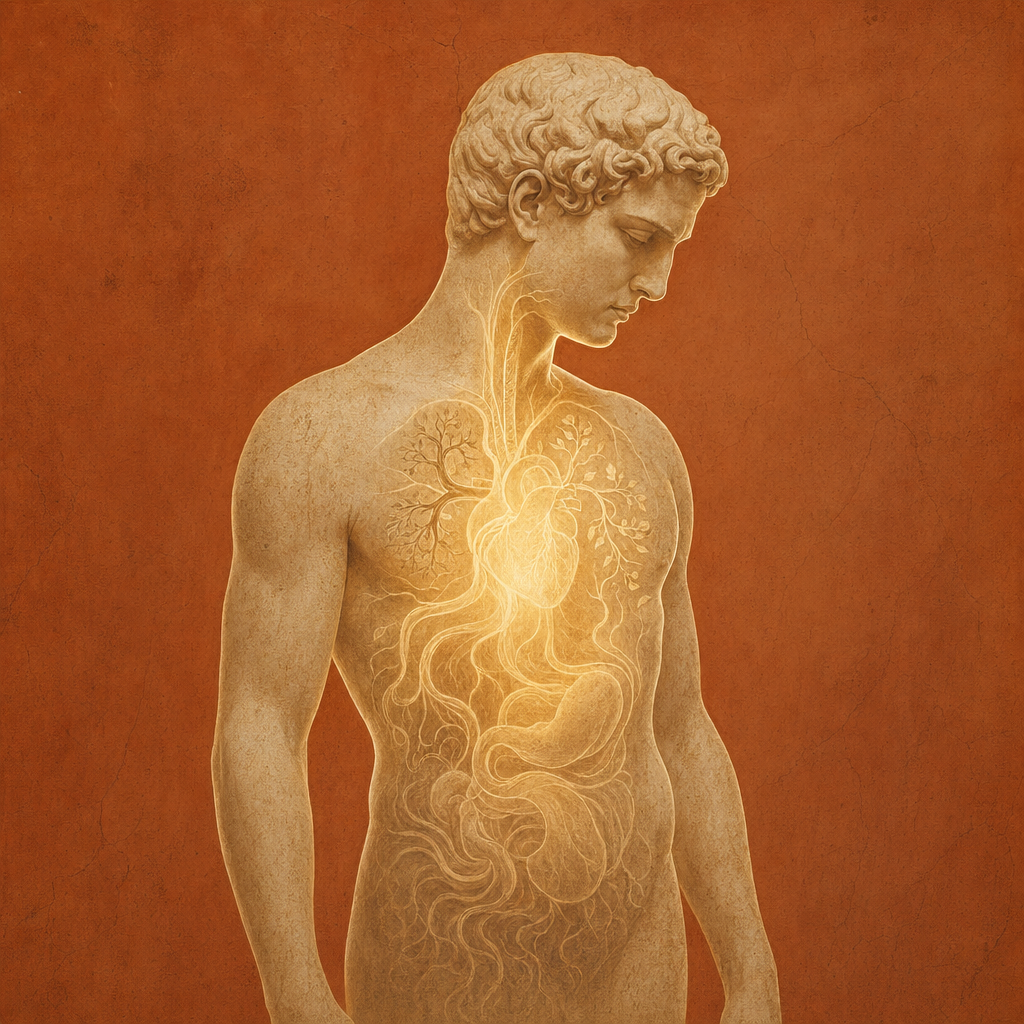
On Aristotle's account, the body is not a container for the soul but an instrument through which the soul's capacities are exercised. The eye is what it is because it has the capacity for sight; a painted eye is not an eye in any meaningful sense. The soul makes the body's parts intelligible — it explains why they are shaped as they are and what they are for. Biology and psychology are inseparable: to understand a living body you must understand the soul it is the matter of.
The definition of the soul as "the first actuality of a natural body that has the potential for life" is given in De Anima II.1. Aristotle argues that a living eye would be one whose form is the capacity for sight — a non-living eye, though resembling it, is an eye only homonymously. The definition remains the most influential alternative to Cartesian dualism in the philosophy of mind.
Related Concepts