The Witness Consciousness
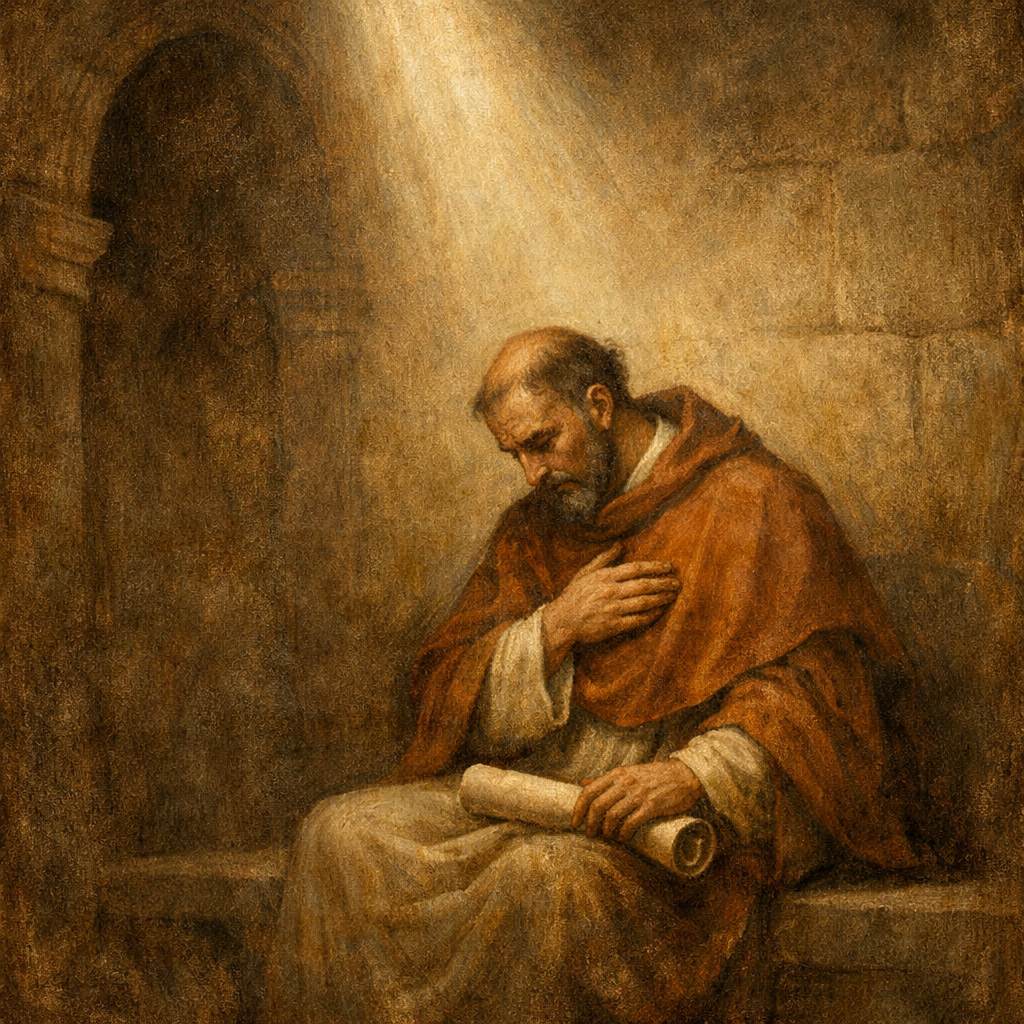
The self, in Shankara's account, is the sakshi — the witness. It is that which is present in waking, dreaming, and deep sleep, unchanged through all three states, observing without being observed, illuminating without being illuminated. In waking life, it is aware of the body and the external world. In dreaming, it is aware of the dream images that the mind projects. In deep sleep, it is aware of the absence of objects — the peace of dreamless rest. But it never becomes any of these things, never takes on their properties, never shares their fate. The body ages; the self does not. The mind is agitated; the self is always still. This invariant witness cannot itself be an object of experience, since it is the very subjectivity in which all objects appear.
The Five Sheaths
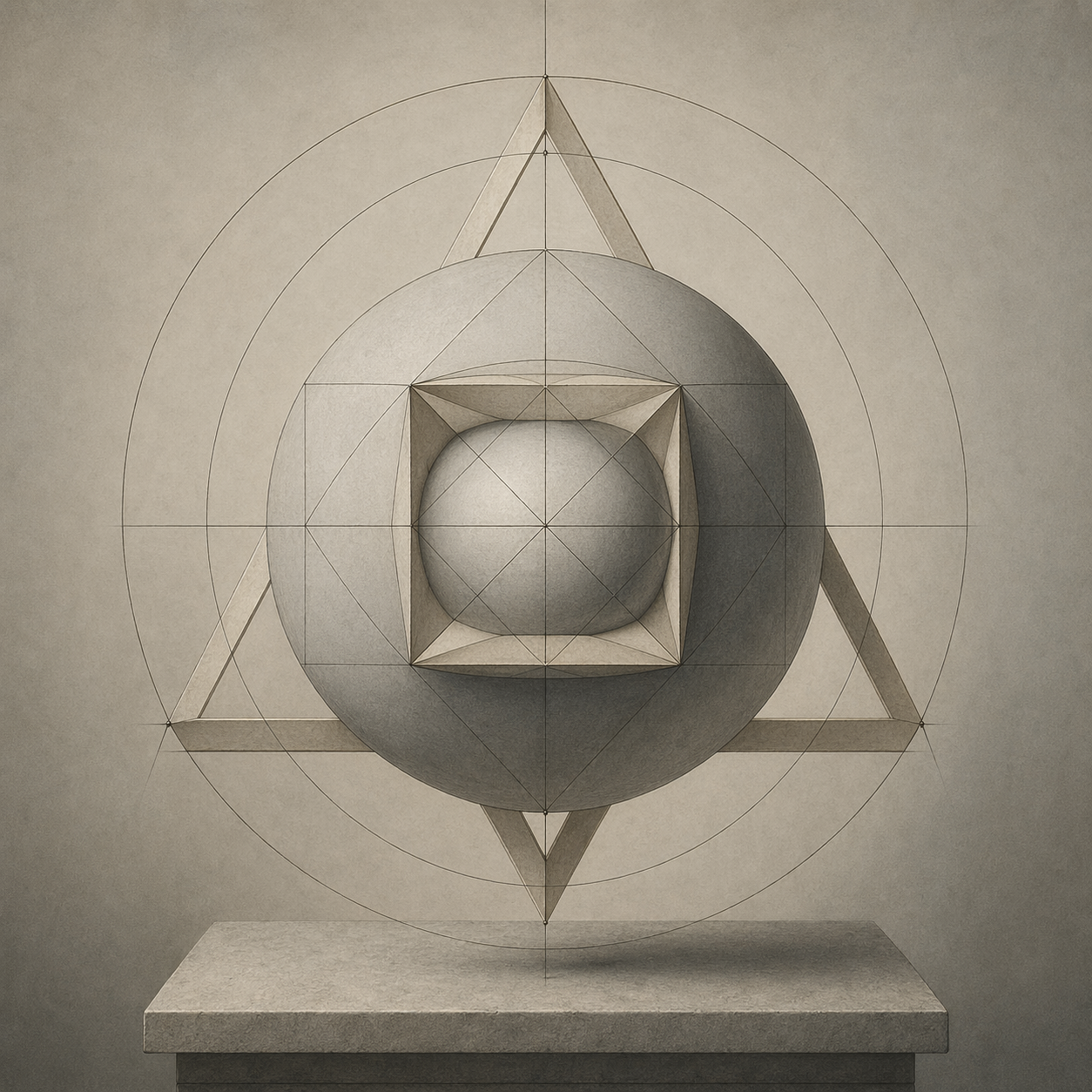
The Taittiriya Upanishad describes the self as enclosed in five successive layers (koshas), each more subtle than the last: the food body (the gross physical form), the vital breath body (the pranic energy that animates the physical), the mental body (the thinking, emoting mind), the intellect body (the discriminating, judging faculty), and the bliss body (the causal body of deep sleep, from which the others emerge and into which they dissolve). Each kosha is progressively more interior and less material — and each can be mistaken for the self. The liberating recognition, in the Ātma Bodha's method, involves systematically recognising each sheath as an object of awareness and therefore not the witness of awareness, until the pure witnessing consciousness that underlies all five sheaths stands revealed.
Infinite and Unborn
The self, Shankara insists in the Ātma Bodha, was never born and will never die. The Katha Upanishad speaks of it: "It is not born, nor does it die at any time. It has not come into being, does not come into being, and will not come into being. It is unborn, eternal, ever-existing, and primeval. It is not slain when the body is slain." What appears as the life and death of a person is the arising and passing of a body-mind complex in pure consciousness — but the consciousness itself neither arises nor passes. This is not a consoling myth about survival after death but a philosophical claim about the timeless character of awareness itself: time is within consciousness, not the other way around. The self is not something that exists in time; time is something that appears in the self.
The Ātma Bodha is one of Shankara's most widely read and memorised works in the Advaita tradition. Its sixty-eight verses cover the complete cycle of Advaita teaching — from the identification of the problem of ignorance through the analysis of the sheaths, the description of Brahman, and the nature of liberation — in the most economical and memorable form. The text is used in traditional Advaita gurukulas as an introductory teaching text for advanced students.
Related Concepts