Words as Forces
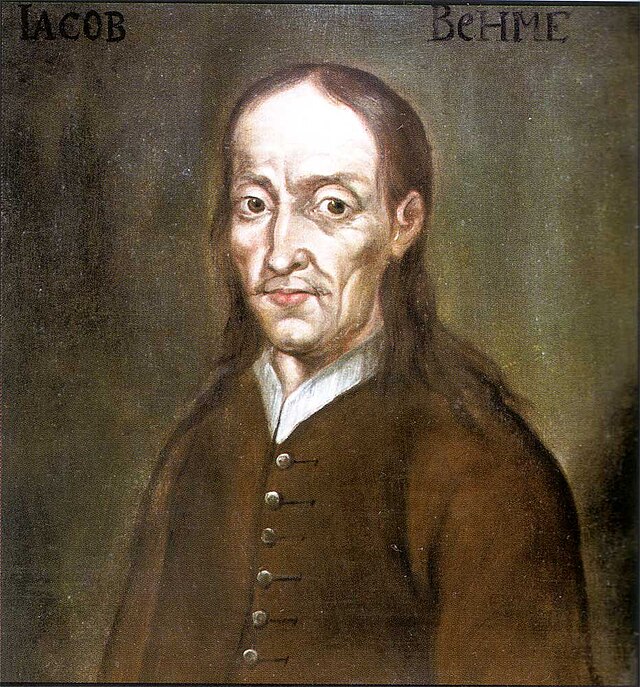
Böhme's philosophy of language begins with a theogonic claim: God's first act of self-revelation is speech. The divine Word is not a designation applied to a pre-existing reality; it is the act by which reality comes to be. To speak, in the fullest sense, is to bring something from potential to actual. Human language is a degraded but real echo of this original creative speech, and the study of words — their sounds, their qualities, their resonances — is for Böhme a path back toward the original.
Adam's Tongue
In Mysterium Magnum, Böhme describes Adam's prelapsarian language as one in which words were perfectly attuned to the nature of their objects. The name did not merely label but expressed — the naming of the animals was an act of genuine knowledge, a reading of their signatures. The Fall corrupted this transparency; the proliferation of languages at Babel is its social expression. Every subsequent language retains something of the original but no longer achieves the pure fit between word and world.
The Recovery of Speech
Böhme does not claim to speak the Natursprache himself, but he believes the regenerated soul moves toward it. His own prose — dense, neologistic, fired with compound nouns and kinetic verbs — is a deliberate attempt to let language do more than label: to make it enact the spiritual forces it describes. His style is, in this sense, a performance of his philosophy. Later thinkers including Novalis and Walter Benjamin would take up this project in very different registers.
Böhme's Natursprache should be distinguished from later universal language projects such as Leibniz's characteristica universalis. Böhme is not concerned with an artificial language that maps concepts systematically but with the recovery of a living, spiritually resonant speech that participates in the reality it names.
Related Concepts