The Teaching of Identity
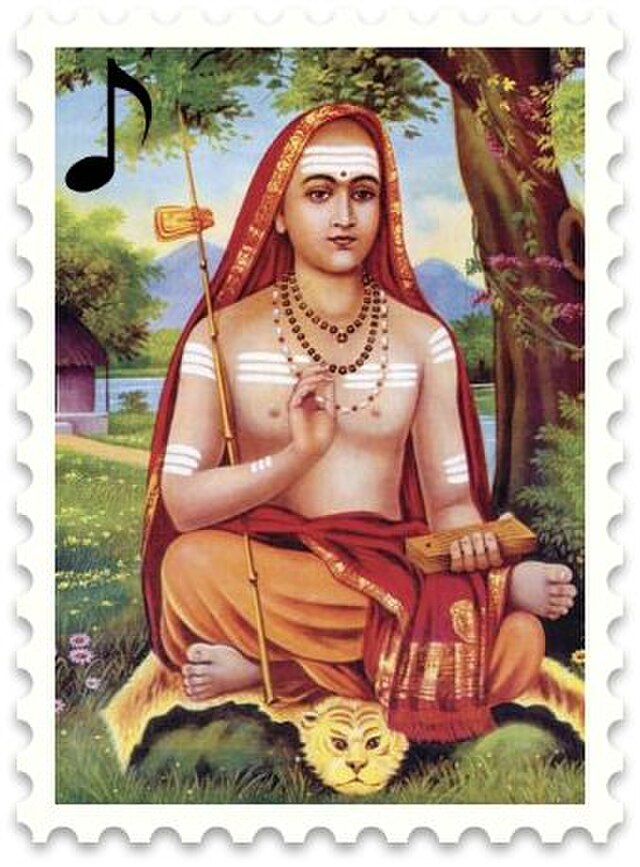
Shankara's commentary on the Chandogya elaborates the structure of the identity claimed in tat tvam asi with great philosophical care. On its surface, the statement appears to identify two different things: Brahman, the infinite absolute, and tvam, the individual person addressing Uddalaka. How can the infinite and the finite be identical? Shankara's answer involves the distinction between the surface meaning (vachyartha) and the implied meaning (lakshyartha) of both terms. "That" does not refer to Brahman in its aspect as creator of the universe — which would make the identity impossible. "Thou" does not refer to the embodied, limited individual — which would make the identity impossible in the opposite direction. Both terms, read at the level of their deepest meaning, refer to the same pure, unbounded, unrelated consciousness. At that level, the identity is not a paradox but a tautology.
The Analogies
Uddalaka prepares Shvetaketu for the great declaration through a series of analogies. The rivers that flow into the ocean lose their individual names and become simply water; the salt that dissolves in water cannot be pointed to but pervades every drop; the seed of a banyan tree, too small to see, contains within it the potential for an enormous tree. Each analogy points to the same structure: a reality that is subtle, all-pervasive, foundational, and apparently absent from ordinary perception but present as the ground of everything that is present. The individual self is to Brahman as a wave is to the ocean, as a spark is to the fire — not in the sense that the individual is a fragment of Brahman but in the sense that what appears as the individual, when seen clearly, is nothing other than Brahman appearing in a particular form.
Hearing, Reflecting, Meditating
The traditional Advaita account of how the mahavakyas produce liberation involves three stages: shravana (hearing the teaching from a teacher), manana (reflecting on it until all logical objections are resolved), and nididhyasana (meditating on it until the recognition becomes unshakeable). Shankara insists that hearing the teaching from a qualified teacher in a single moment can be sufficient for the one whose mind is perfectly purified and ready — but for most, the process of deepening the recognition through reflection and meditation is necessary. The recognition that tat tvam asi is not a belief to be accepted on authority but a seeing: the teacher's words function as fingers pointing at the moon, and the work of the student is to look where they are pointing until the moon is seen directly, not the finger.
The great saying tat tvam asi appears six times in the Chandogya Upanishad (6.8.7 through 6.16.3), each time concluding a new analogy by Uddalaka. Shankara's commentary on this section is among his most celebrated exegetical achievements. The other three principal mahavakyas are: "I am Brahman" (aham Brahmasmi, Brihadaranyaka), "Consciousness is Brahman" (prajnanam Brahma, Aitareya), and "This self is Brahman" (ayam atma Brahma, Mandukya).
Related Concepts