The One Without a Second
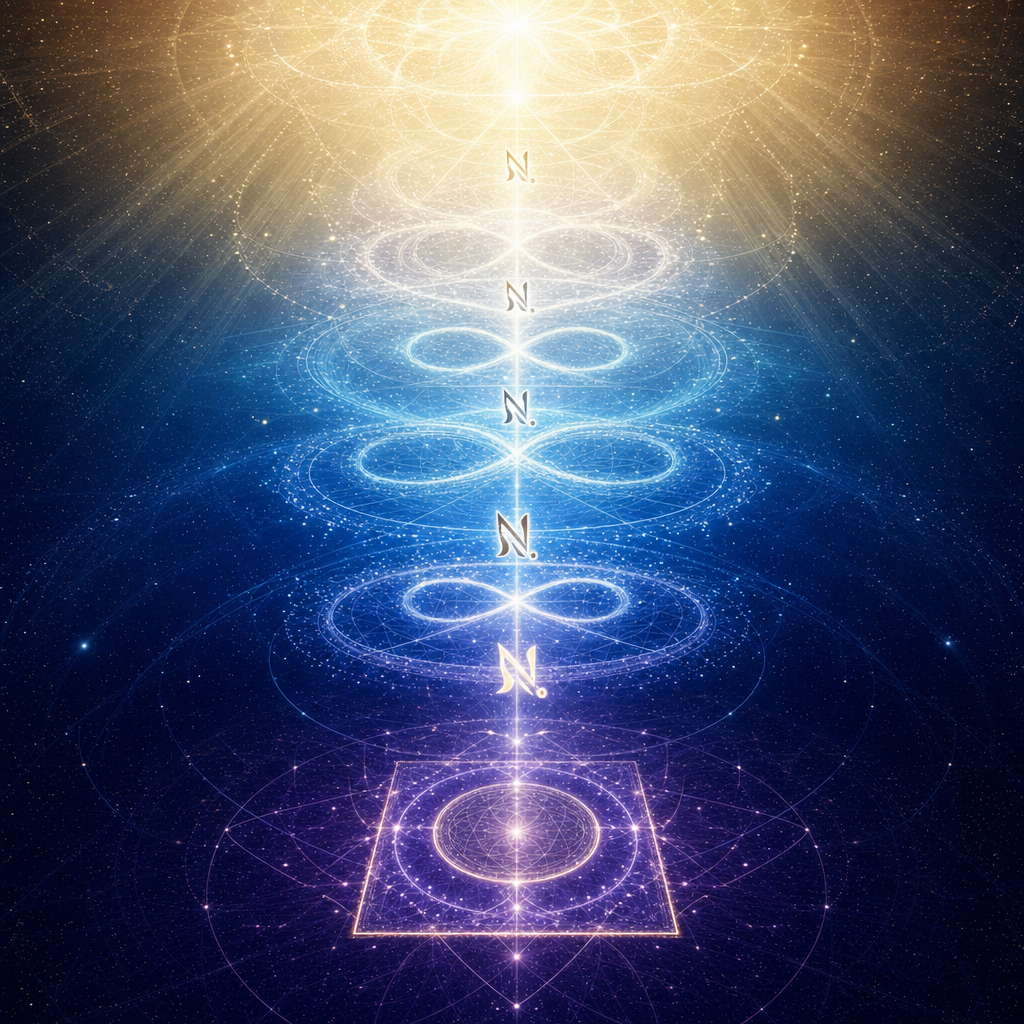
The Chandogya Upanishad declares that before creation there was "existence alone, one only, without a second" — ekam eva advitiyam. Shankara takes this formula as the axiom of all Vedantic reasoning. Brahman, the absolute ground of being, is not the highest among many beings but the only being — the reality in which all apparently distinct things subsist as waves subside in an ocean. What appears as multiplicity is Brahman appearing through the distorting medium of maya, the power of beginningless cosmic ignorance that superimposes distinctions where none ultimately exist. Remove the distortion, and what remains is the non-dual whole that was never actually divided.
Refutation of Dualism
Shankara's refutation of the rival Samkhya school — which posits two ultimate realities, consciousness (purusha) and matter (prakriti) — is among the most technically accomplished arguments in the Brahmasūtra commentary. If consciousness and matter are genuinely distinct, he argues, they cannot interact: what is purely luminous and immaterial cannot be in contact with what is inert and extended. The fact that conscious beings do experience a material world requires a principle that unifies the two — and that unifying principle must be consciousness itself, since consciousness alone is self-establishing while matter is known only through consciousness. The dualist has multiplied entities beyond necessity, and the surplus entity turns out to be explanatorily idle.
Liberation as Recognition
The practical consequence of Advaita metaphysics is that liberation (moksha) cannot be produced by any action or practice, however refined, because the liberated state is not a new condition but the removal of a cognitive error. If the self is already Brahman — always, without exception, without diminishment — then the task of philosophy is not to bring the self closer to Brahman but to destroy the ignorance that makes this identity invisible. This is why Shankara insists that liberation is accomplished by knowledge alone (jnana), not by ritual action, ethical effort, or devotion, however much these may prepare the mind for the transformative recognition. The fire of knowledge, once kindled, burns away the accumulated illusion of a separate self.
The non-dual position is established in the Brahmasūtra Bhāṣya's opening discussion of the first sutra: "Then, therefore, the inquiry into Brahman." Shankara's commentary on the Chandogya and Brihadaranyaka Upanishads develops the same argument in greater textual detail.
Related Concepts