First Principle: Dark Fire
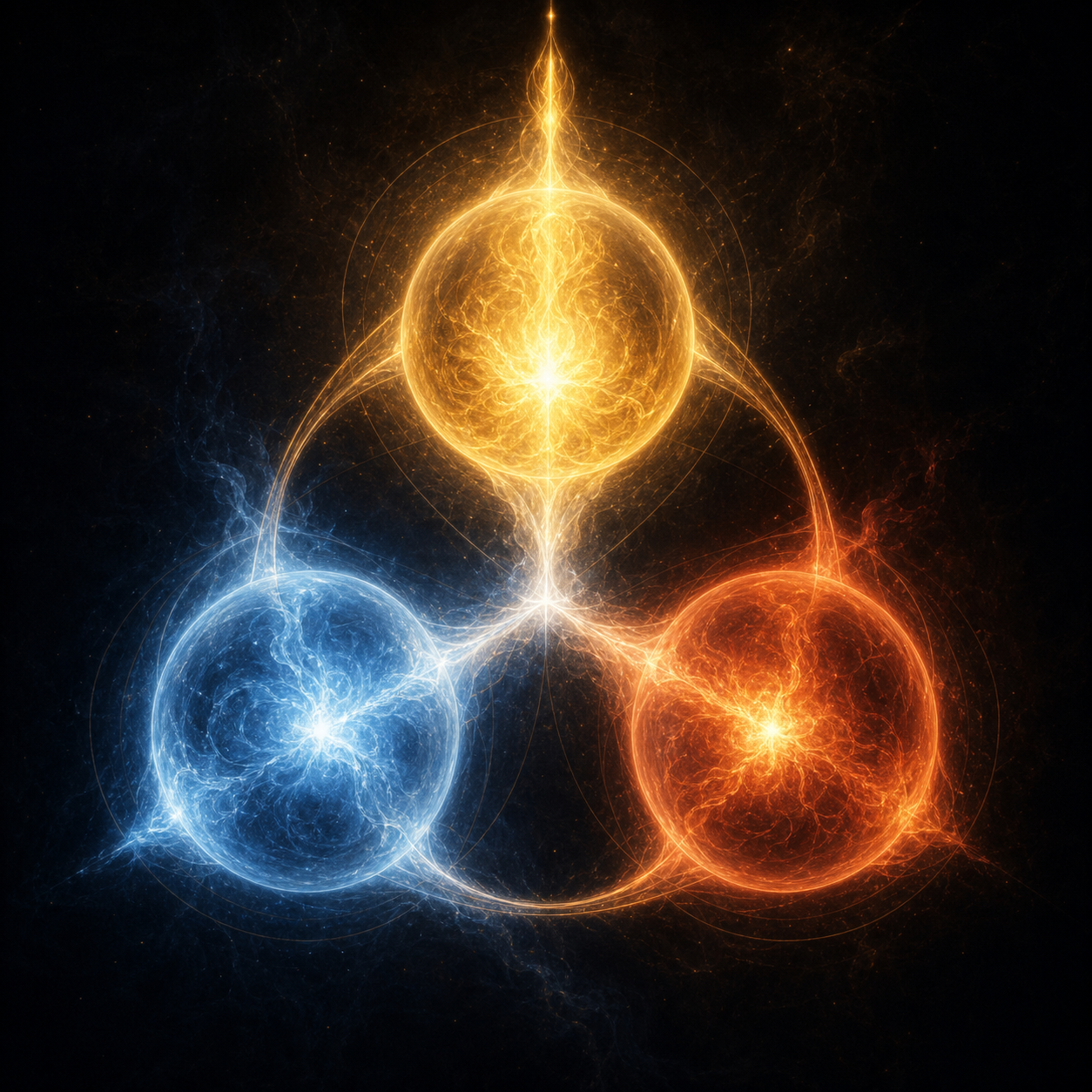
The first principle is the wrath-fire of God — harsh, consuming, astringent, turned inward upon itself. It is associated with the Father, with darkness, with the self-enclosure of pure will. In nature it appears as the dark, heavy, contractile qualities of matter; in the soul, as self-will, pride, and the drive to self-assertion. It is not evil in itself — it is the necessary ground of all strength and life — but when it eclipses the other two principles it becomes the principle of hell.
Second Principle: Light and Love
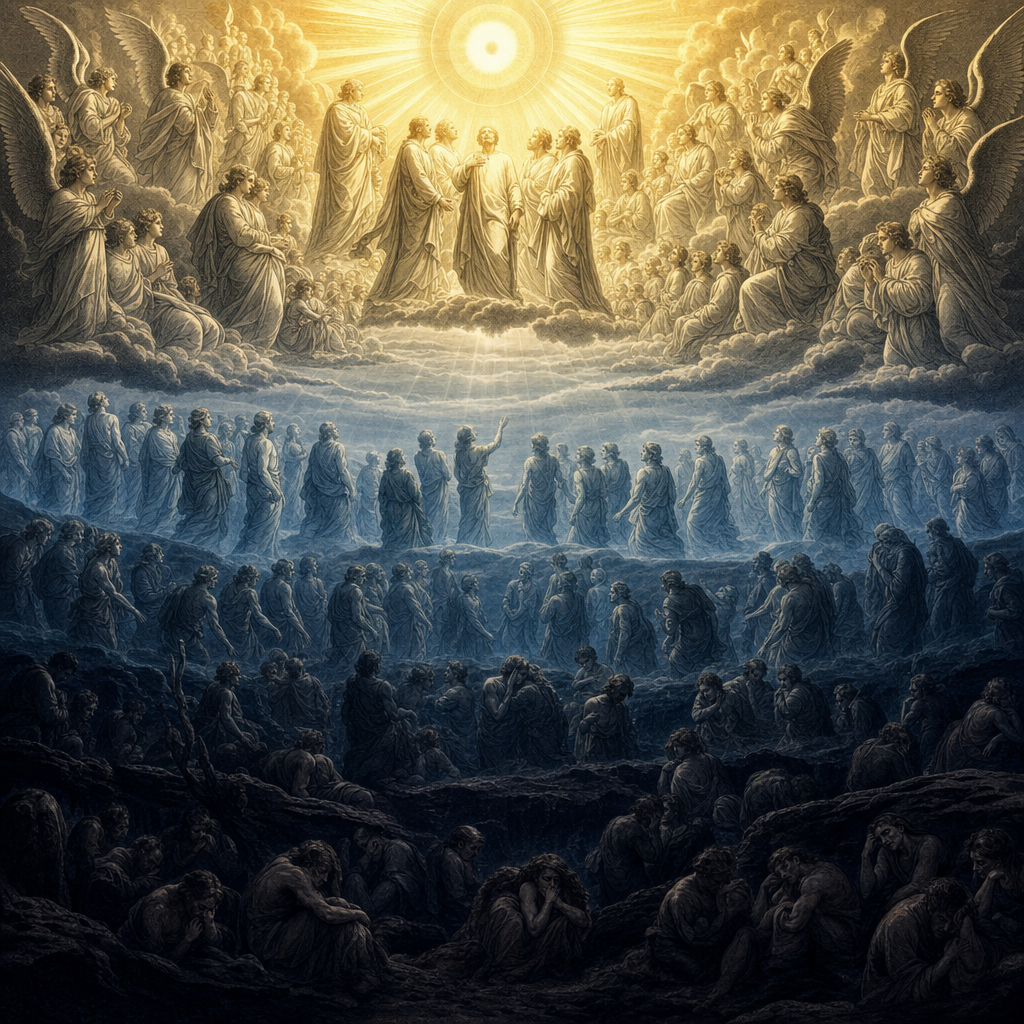
The second principle is the light of divine love — the same fire that, when it shines outward rather than consuming inward, becomes the life-giving warmth of the Son. It is associated with paradise, with the inner ground of the regenerated soul, with the transparency of creatures to their divine source. The second principle does not annihilate the first; it transfigures it, allowing the dark fire to become light without ceasing to be fire.
Third Principle: The Outer World
The third principle is the outer, material world of creation — the visible expression of the first two principles in space and time. Nature is not fallen or illusory; it is a genuine expression of the divine life, but one in which the inner principles are partially concealed. The task of the philosopher and the mystic is to read back through the outer world to the two inner principles that sustain it — to see creation as sacrament rather than mere mechanism.
Böhme's three principles should not be conflated with the Christian Trinity, though they are related. The Father corresponds roughly to the first principle, the Son to the second. But Böhme insists the three principles are also present in every creature and in nature as a whole, not only in the divine persons.
Related Concepts