Humanity as Cosmic Agent
In Lurianic Kabbalah, human beings are not merely recipients of divine grace but active agents of cosmic repair. The divine sparks scattered throughout the material world can be elevated and returned to their source only through human action — specifically, through Torah observance performed with the right mystical intention (kavvanah). Each commandment, each prayer, each ethical act has a specific cosmic correlate: it elevates a specific configuration of sparks and contributes to the gradual restoration of the cosmic order. Human beings are thus indispensable to the completion of creation.
Kavvanah and Mystical Intention
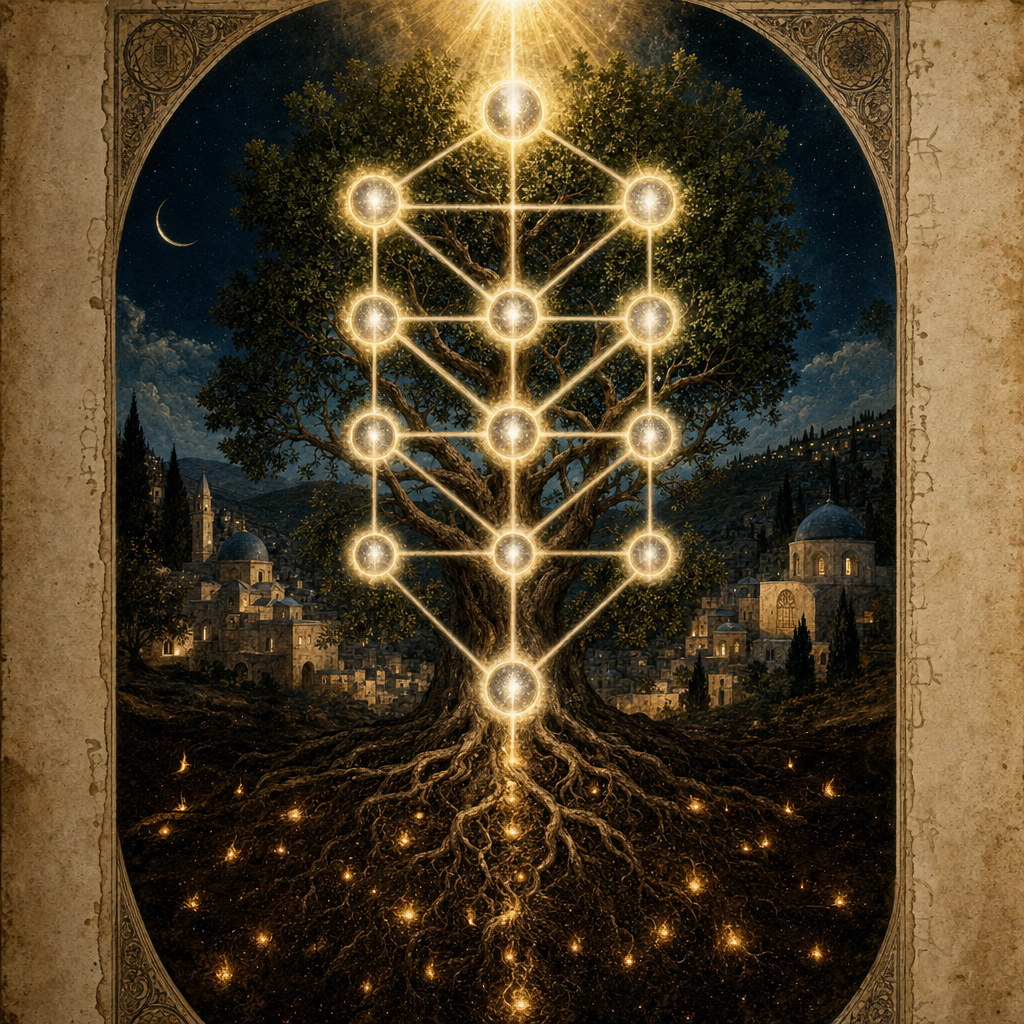
The effectiveness of tikkun depends on kavvanah — the directed mystical intention that accompanies ritual action. It is not enough to perform the commandments mechanically; each act must be accompanied by the conscious intention to repair a specific aspect of the cosmic damage. Luria developed elaborate systems of kavvanot — meditations specifying which sefirot, which divine names, and which cosmic configurations should be held in mind during each prayer, each Shabbat observance, each performance of a commandment. These kavvanot transformed every moment of Jewish religious life into an act of cosmic surgery.
Tikkun and the Messianic Age
When the tikkun is complete — when all the scattered sparks have been returned to their source — the messianic age will arrive. This gives Lurianic Kabbalah an intense messianic urgency: every individual act of Torah observance contributes to hastening the redemption, and collective Israel bears a specific cosmic responsibility. Luria himself was believed by his disciples to be a messianic figure — one in whom the tikkun was especially concentrated — and the Safed community he led understood itself as a redemptive avant-garde, performing the cosmic repair on behalf of the entire Jewish people. The tragic messianism of Shabbatai Zvi (1666) was in part a product of the intense messianic expectation generated by Lurianic Kabbalah.
Tikkun olam in Luria's original sense is a technical kabbalistic concept quite different from its contemporary usage as "social justice." The transformation of the term into a general ethical imperative occurred primarily in twentieth-century Reform and liberal Jewish thought.
Related Concepts