The Excellence of the Low Place
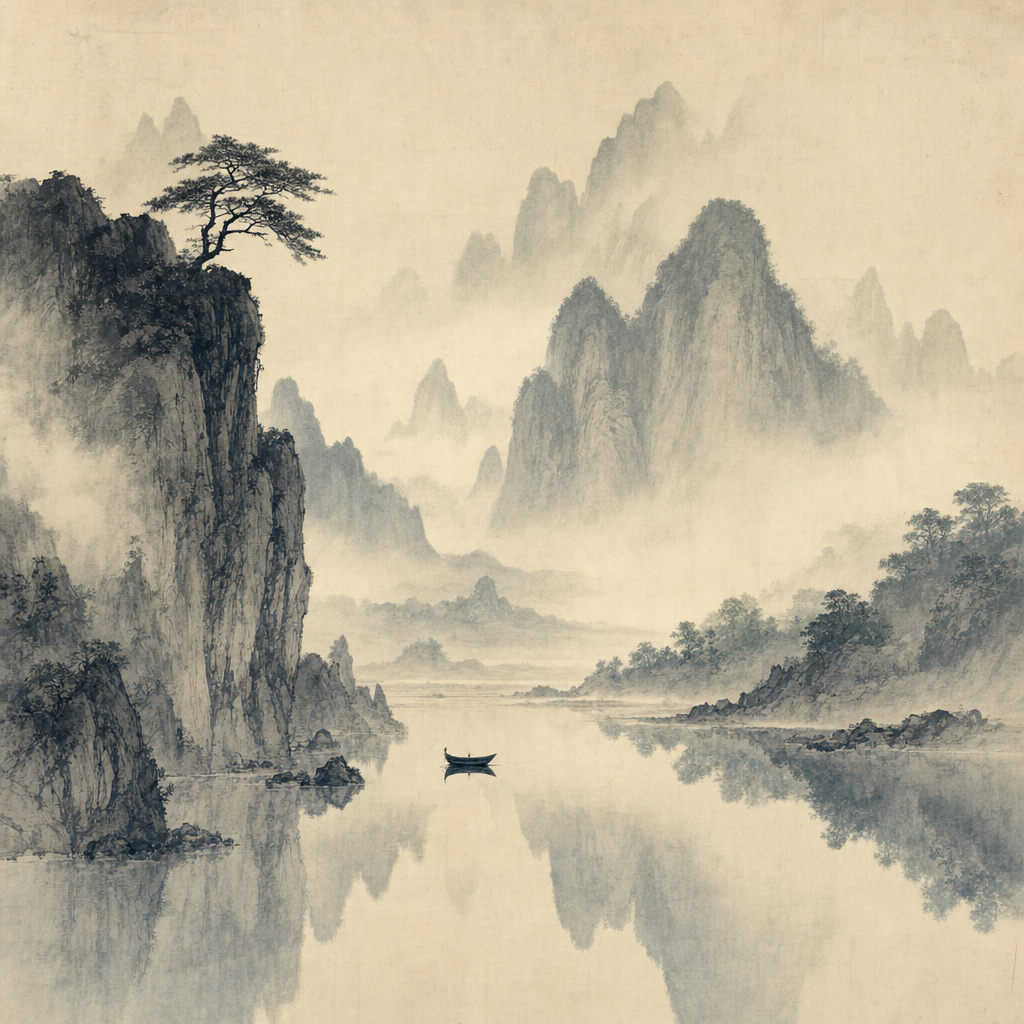
Verse 8 begins with a declaration that the highest excellence resembles water. This is counterintuitive in a world that prizes height, force, and domination. Water does the opposite: it sinks, it spreads, it fills the hollows that others overlook. And yet every living thing depends on it. In going to the low place that all men dislike, water demonstrates a form of power that has no rivals — the power of indispensability without ambition.
The highest excellence is like (that of) water. The excellence of water appears in its benefiting all things, and in its occupying, without striving (to the contrary), the low place which all men dislike. Hence (its way) is near to (that of) the Tao.
Excellence in Every Domain
Laozi extends the water metaphor across every domain of human life. The excellent residence is one suited to its place, not one that imposes itself on it. The excellent mind is abyssmally still — capable of reflecting things as they are rather than projecting its own agendas onto them. Excellent governance secures good order without strife. In each case, the pattern is the same: fit yourself to the situation rather than forcing the situation to fit you.
Soft Overcomes Hard
Verse 78 returns to the image: there is nothing in the world more soft and weak than water, and yet for attacking things that are firm and strong there is nothing that can take precedence of it. Everyone knows this, Laozi says — but no one can carry it out in practice. The knowledge that yielding overcomes force is easy to grasp and almost impossible to embody, because every human instinct runs the other way.
Verse 8 of the Tao Te Ching (James Legge translation, 1891). The water image returns most forcefully in verses 66 and 78.
Related Concepts