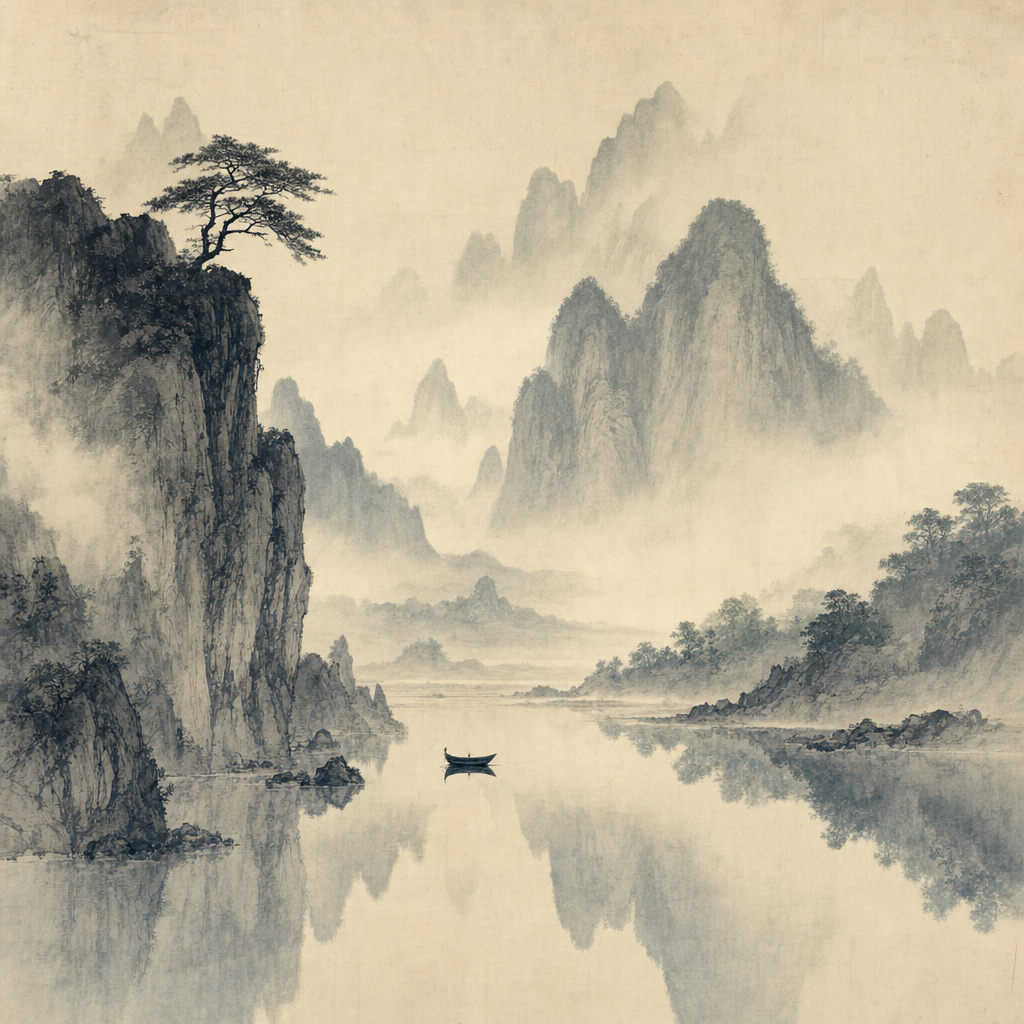
The foundational text of Daoism, attributed to the sage Laozi. Composed of eighty-one brief verses, the Tao Te Ching explores the nature of the Tao — the unnameable Way that underlies all existence — and its counterpart Te, the virtue or power that flows from living in harmony with it. James Legge's 1891 translation renders the classical Chinese with scholarly precision, preserving the text's characteristic paradox: the Tao that can be spoken of is not the eternal Tao.
2 chapters · Public domain