Avoiding Strength, Striking Weakness
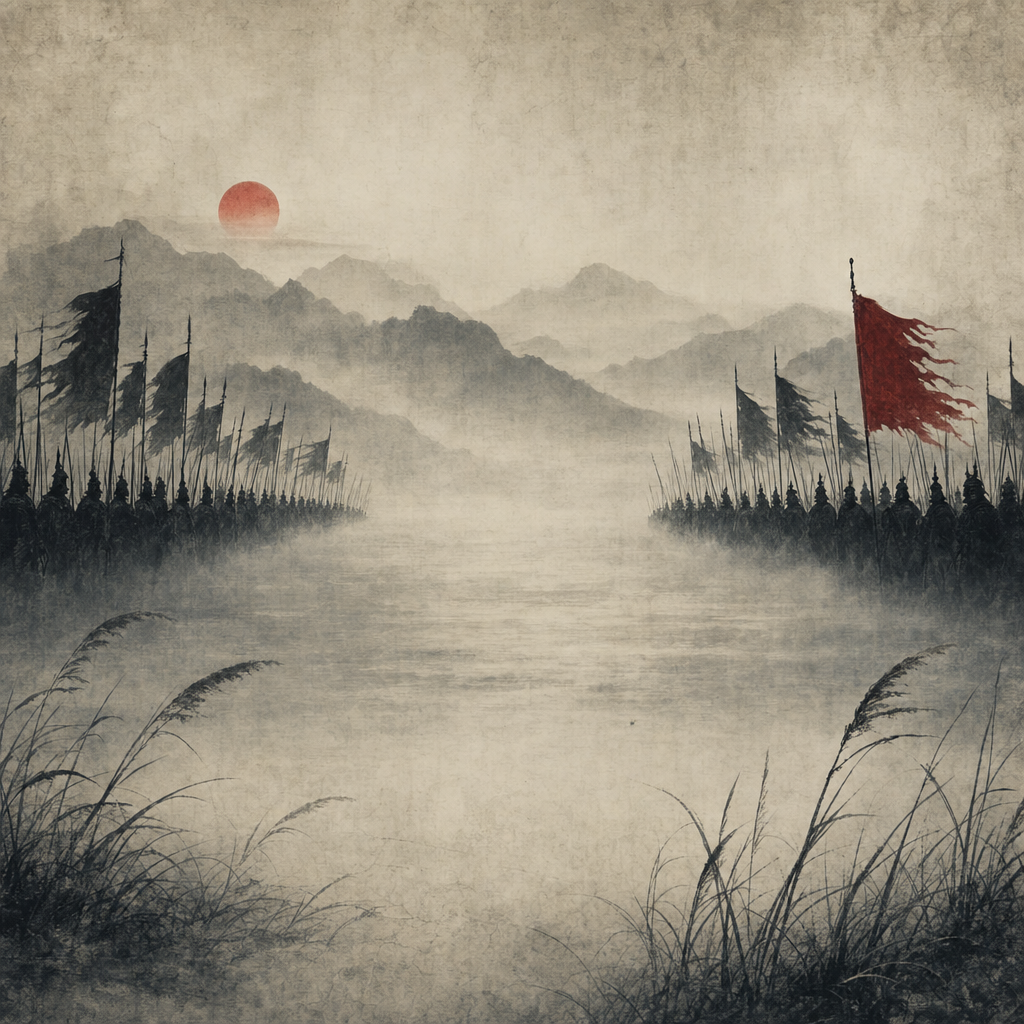
Chapter VI develops the principle of striking at weak points not as opportunism but as the natural logic of force. Water always runs away from high ground and toward low ground. In the same way, military force should never attack where the enemy is concentrated and strong but always seek the hollow, the flank, the undefended approach. This is not timidity — it is the conservation of energy toward decisive effect. The army that batters itself against strength will exhaust its power before it reaches the objective.
Military tactics are like unto water; for water in its natural course runs away from high places and hastens downwards.
Responding to the Ground
The water metaphor also describes the commander's relationship to circumstance. A river does not choose its course by consulting a fixed plan; it reads the terrain continuously and responds to it. Sun Tzu refuses to offer universal rules because there are none — only the capacity to read what is in front of you and adapt. Tactics that achieved victory once must not be repeated, because the enemy will have adjusted. What is required is not a repertoire of moves but a quality of attention that keeps the commander's response permanently in accord with reality.
Water shapes its course according to the nature of the ground over which it flows; the soldier works out his victory in relation to the foe whom he is facing.
The final implication of the water principle is that there are no constants — not even in nature. The five elements alternate in dominance; the seasons succeed each other; days lengthen and shorten; the moon waxes and wanes. Constancy belongs only to change itself. The commander who accepts this does not seek to impose his preferred reality on the battlefield; he learns to move with it.
The water metaphor appears in Chapter VI, §§ 29–31, "Weak Points and Strong," which Sun Tzu himself describes as the most difficult of his teachings to master.
Related Concepts