The Tao Does Nothing and Leaves Nothing Undone
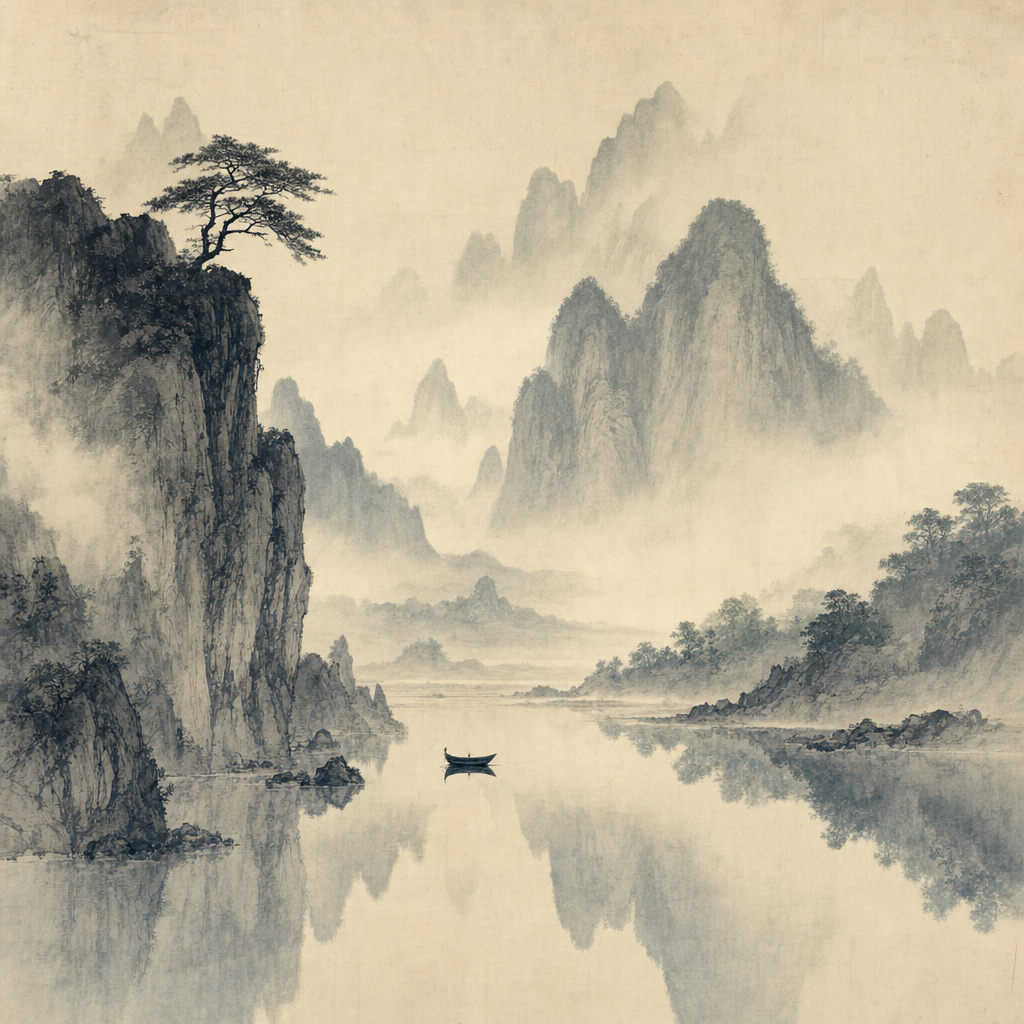
Verse 37 states the paradox of wu wei with perfect economy: the Tao does nothing for the sake of doing it, and yet nothing is left undone. This is not a claim about magic or mystical causation. It is an observation about how the natural order works. Rivers reach the sea without trying. Seeds become trees without effort. The Tao does not impose itself on the world — it is the world's own tendency, and that tendency accomplishes everything.
The Tao in its regular course does nothing (for the sake of doing it), and so there is nothing which it does not do.
The Sage and Transformation
If rulers could embody this principle, Laozi says, all things would of themselves be transformed by them. The most effective governance is almost invisible — a gentle alignment with the natural order rather than a constant imposition of will. When rulers do not interfere, people develop according to their own natures. When they do interfere — through laws, punishments, and forced virtue — they generate resistance, cunning, and decay.
Nameless Simplicity
The verse closes with an image of what happens if even the sage's non-action becomes infected with desire: then you point toward it with the 'nameless simplicity' — the uncarved block, the undifferentiated potential before any particular shape is imposed. Simplicity without a name is free from all external aim. This is the state that wu wei aims at — not an achievement but a return.
Verse 37 of the Tao Te Ching (James Legge translation, 1891). Wu wei appears throughout the text — notably in verses 2, 3, and 48, where Laozi says that the sage diminishes doing day by day until arriving at non-action, at which point there is nothing he does not accomplish.
Related Concepts