Four Segments, Four States
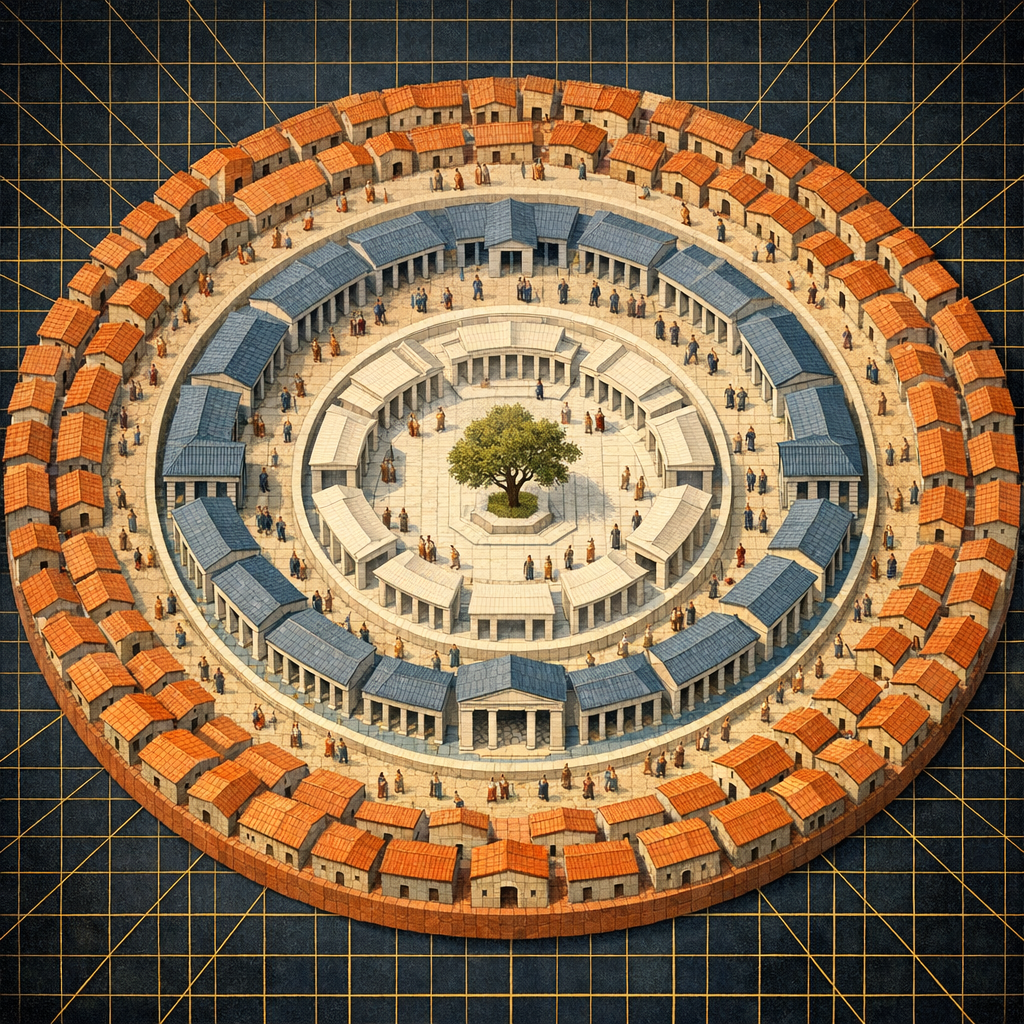
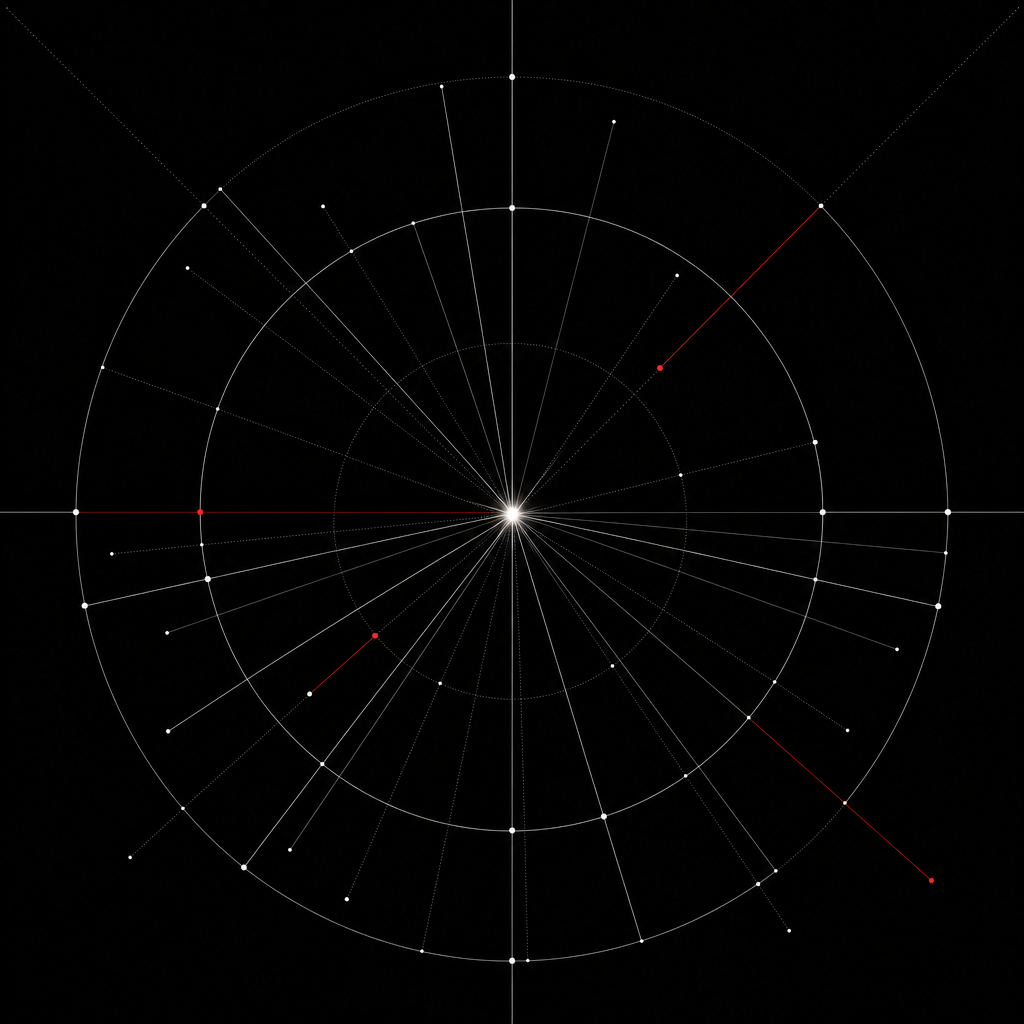
Divide a line into two unequal parts: the larger represents the intelligible world, the smaller the visible world. Divide each part again in the same ratio. In the visible world, the lowest segment is images — shadows, reflections. The cognitive state is imagination (eikasia). Above it are actual visible things; the cognitive state is belief (pistis).
In the intelligible world, the lower segment is mathematics. Geometers use diagrams as aids and argue from hypotheses to conclusions — this is understanding (dianoia). The highest segment is the Forms themselves, grasped by dialectic alone: pure reason that uses no images, rises from hypotheses to the unhypothetical first principle, and descends again. This is intellect (noesis).
You would say, would you not, that the sun is not only the author of
visibility in all visible things, but of generation and nourishment and
growth, though he himself is not generation?
Reality and Clarity Together
The line encodes a double claim: higher segments are both more real and more clearly known. Shadows are less real than the objects casting them; visible objects are less real than the Forms they imitate; mathematical objects are less real than the Forms of which they are instances. Truth and being always rise together.
The Divided Line appears in Book VI of The Republic. Plato's tripartite epistemology — imagination, belief, understanding, intellect — maps directly onto the four segments.
Related Concepts