The Terms of the Offer
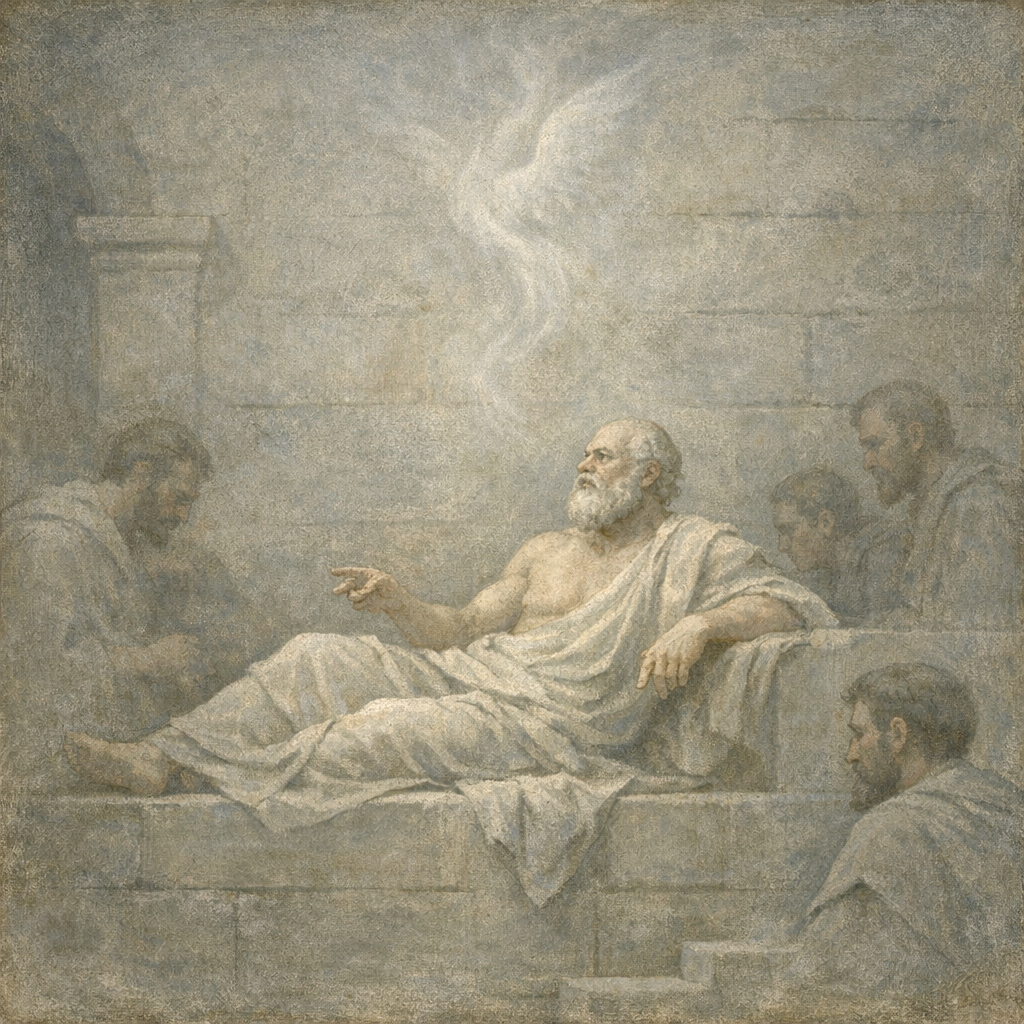
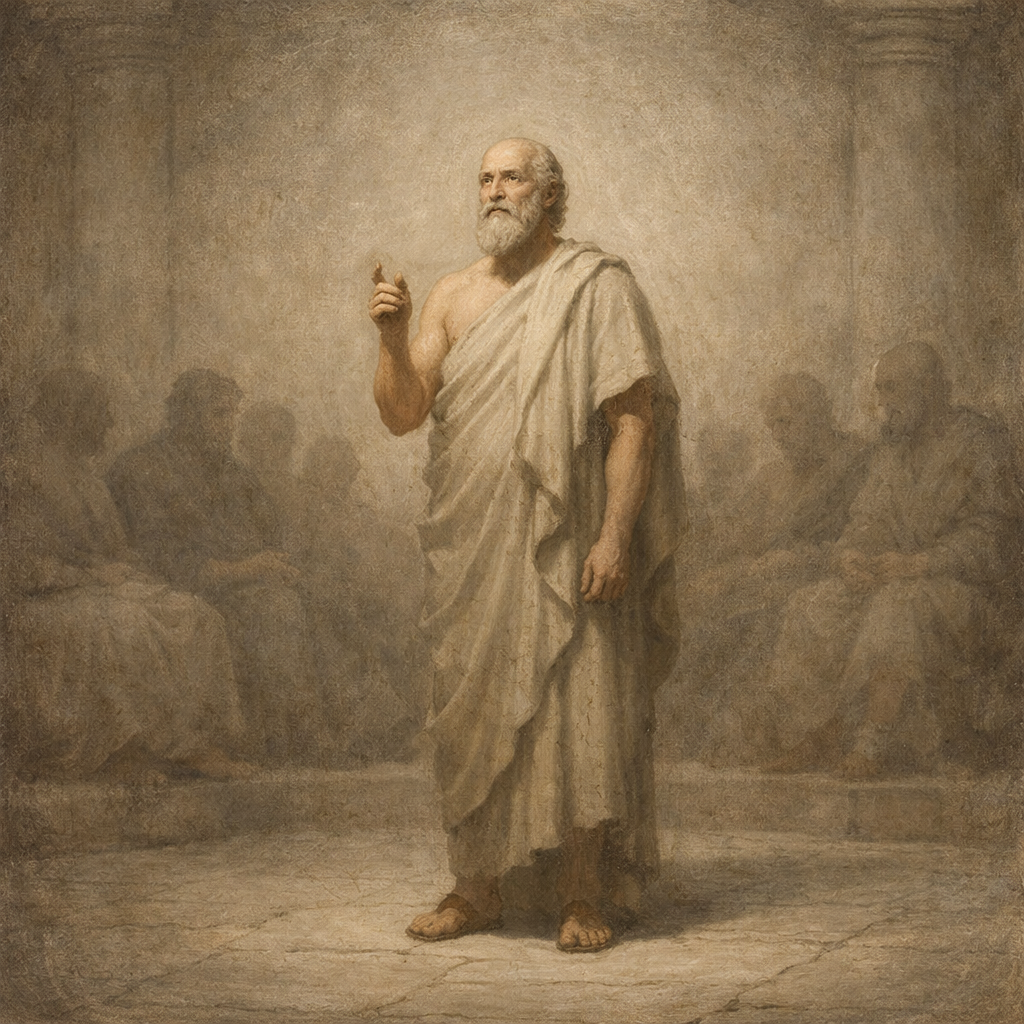
After his conviction, Socrates imagines the jury offering him acquittal on the condition that he give up philosophy. He refuses. The refusal is not obstinacy: it is the logical consequence of everything he has argued and lived. His philosophical mission comes from the god; to abandon it would be to disobey the divine command. But his deeper claim is that a life without philosophical examination would not merely be wrong — it would not be worth having.
the unexamined life is not worth living
What Examination Means
Socratic examination is not mere introspection or self-reflection. It is a rigorous, often uncomfortable process of testing beliefs by dialogue — questioning what one takes for granted, exposing the gap between what one claims to know and what one can actually justify, and following the argument wherever it leads. The targets are not abstract philosophical questions alone but the immediate moral convictions that govern how people live: what courage is, what piety is, what justice is, whether virtue can be taught.
The examination is perpetual. There is no point at which it is complete, no moment at which one can declare all the questions resolved and the work done. The person who thinks they have arrived at certainty has probably only arrived at complacency. This is why Socrates examines not only his own convictions but those of every person he meets — generals, poets, craftsmen, politicians. Each is an occasion to test whether human wisdom is capable of what it claims.
Why It Is Worth Living
Socrates does not argue that the examined life is pleasant or comfortable or socially rewarded — his own trial is evidence to the contrary. He argues that it is what makes a life genuinely human, as opposed to a life merely biological or merely social. The unexamined life is, in a sense, not fully lived by a person at all: it is lived by habit, convention, and unreflective desire, with no one at the helm. The examined life is the one in which a person is actually present in their own existence, responsible for what they choose and capable of understanding why.
The declaration that 'the unexamined life is not worth living' appears in Chapter 1 of the Apology. It is one of the most frequently cited lines in philosophy, though its context — a refusal of clemency in a capital trial — gives it a weight that quotation often strips away. The claim should be understood alongside Socrates's account of his divine mission and his practice of cross-examination, both of which give content to what 'examination' actually involves.
Related Concepts