The Limits of Mechanism
Newtonian mechanics posited a universe of material particles governed by mathematically precise laws. This model was extraordinarily successful for two centuries, and its success bred a conviction that it captured the ultimate truth about nature. But mechanism rests on assumptions — the simple location of matter in space and time, the passivity of the material, the absence of intrinsic value — that twentieth-century physics has undermined. Electrons do not have simple locations; energy is not a passive stuff; quantum events exhibit features that look more like decision than mechanism.
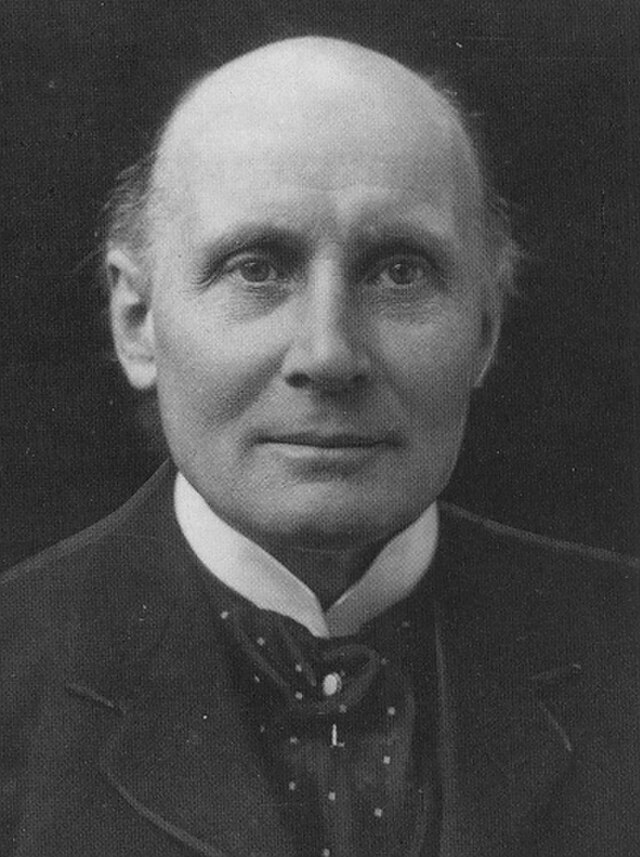
The concrete enduring entities are organisms, so that the plan of the whole influences the very characters of the various subordinate organisms which enter into it.
The Organic Alternative
An organism is defined not by its parts in isolation but by the relations between its parts, by its history, and by its orientation toward a future. Whitehead argues that reality at every scale exhibits this organic structure: each actual occasion prehends its environment, integrates it into a synthesis, and becomes part of the environment for subsequent occasions. This is not vitalism — Whitehead does not posit a special life-force — but a claim that the relational, self-organising character of living things is a more fundamental feature of nature than the mechanistic model acknowledged.
Science is taking on a new aspect which is neither purely physical, nor purely biological. It is becoming the study of organisms. Biology is the study of the larger organisms; whereas physics is the study of the smaller organisms.
Science Enlarged
The organic model does not abandon the achievements of mechanistic science but contextualises them. The regularities that mechanism describes are real and important; they represent the deeply habitual patterns of nature's creative advance. But they are habits, not iron necessities — expressions of the way actual occasions have typically synthesised their experience in this corner of the universe, at this stage of cosmic history. Science enlarged by the organic model can accommodate both the regularities and the genuine novelties without forcing either into a framework too small for both.
Whitehead's argument for the organic model runs throughout Science and the Modern World and is developed systematically in Process and Reality. The claim that quantum mechanics requires something like an organic model of nature influenced philosophers of physics, though the specific connection remains contested.
Related Concepts