The Paradox Stated
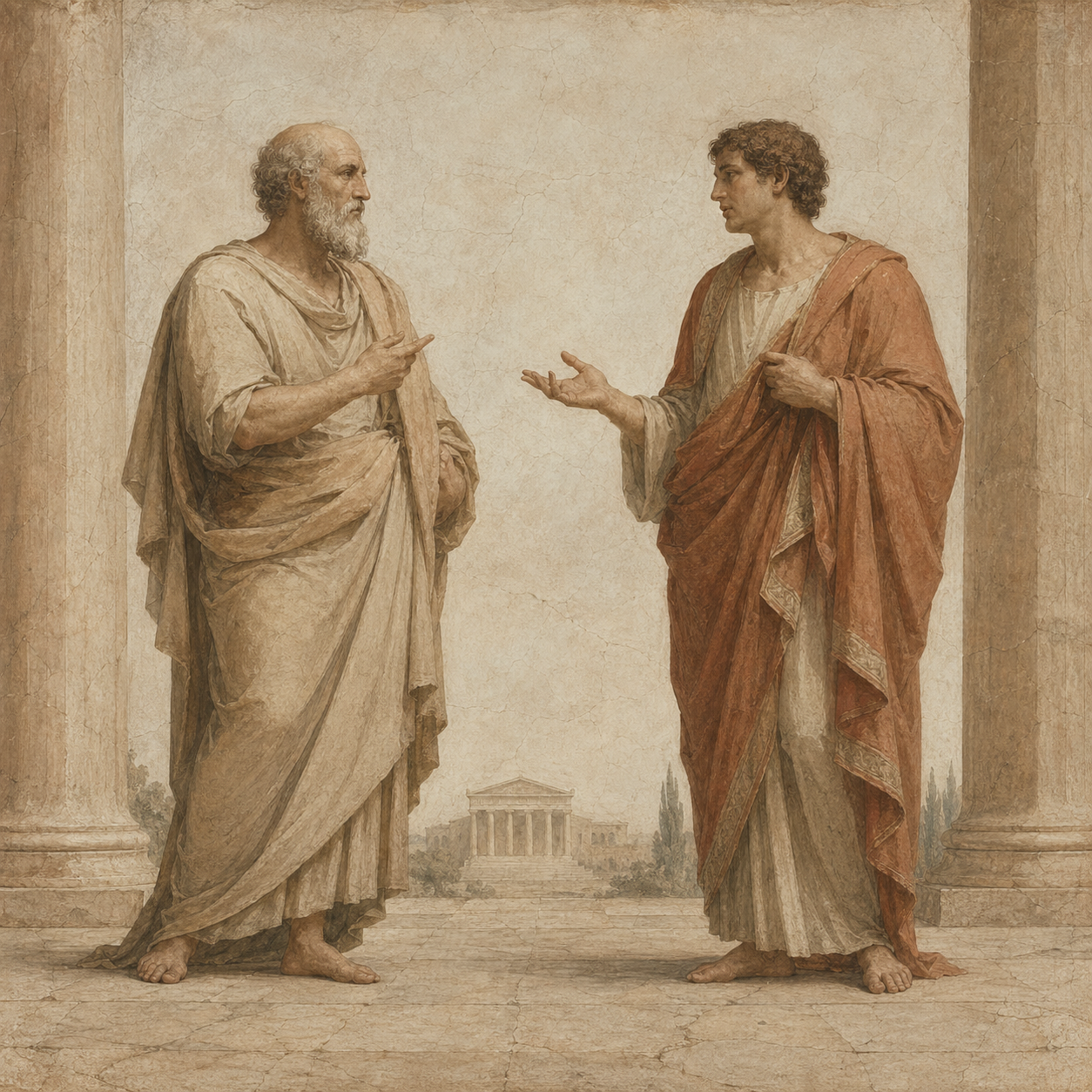
After several failed attempts to define virtue, Meno raises what he thinks is a knock-down objection to the whole Socratic enterprise: "And how will you enquire, Socrates, into that which you do not know? What will you put forth as the subject of enquiry? And if you find what you want, how will you know that this is the thing which you did not know?" The argument has a sharp logical structure: to search, you need to know what you're looking for; if you know what you're looking for, you've already found it; if you don't know, you won't recognise success.
Why It Matters
The paradox is not just a sophistic trick. It points to a genuine problem about conceptual knowledge and its acquisition. How do we come to understand something genuinely new — not just rearrange what we already know? This is what philosophers call the problem of the learning paradox, and versions of it reappear in Kant (how synthetic a priori knowledge is possible), in Wittgenstein (how we follow a rule for the first time), and in philosophy of science (how hypotheses are formed before the evidence that would confirm them).
Socrates's Answer
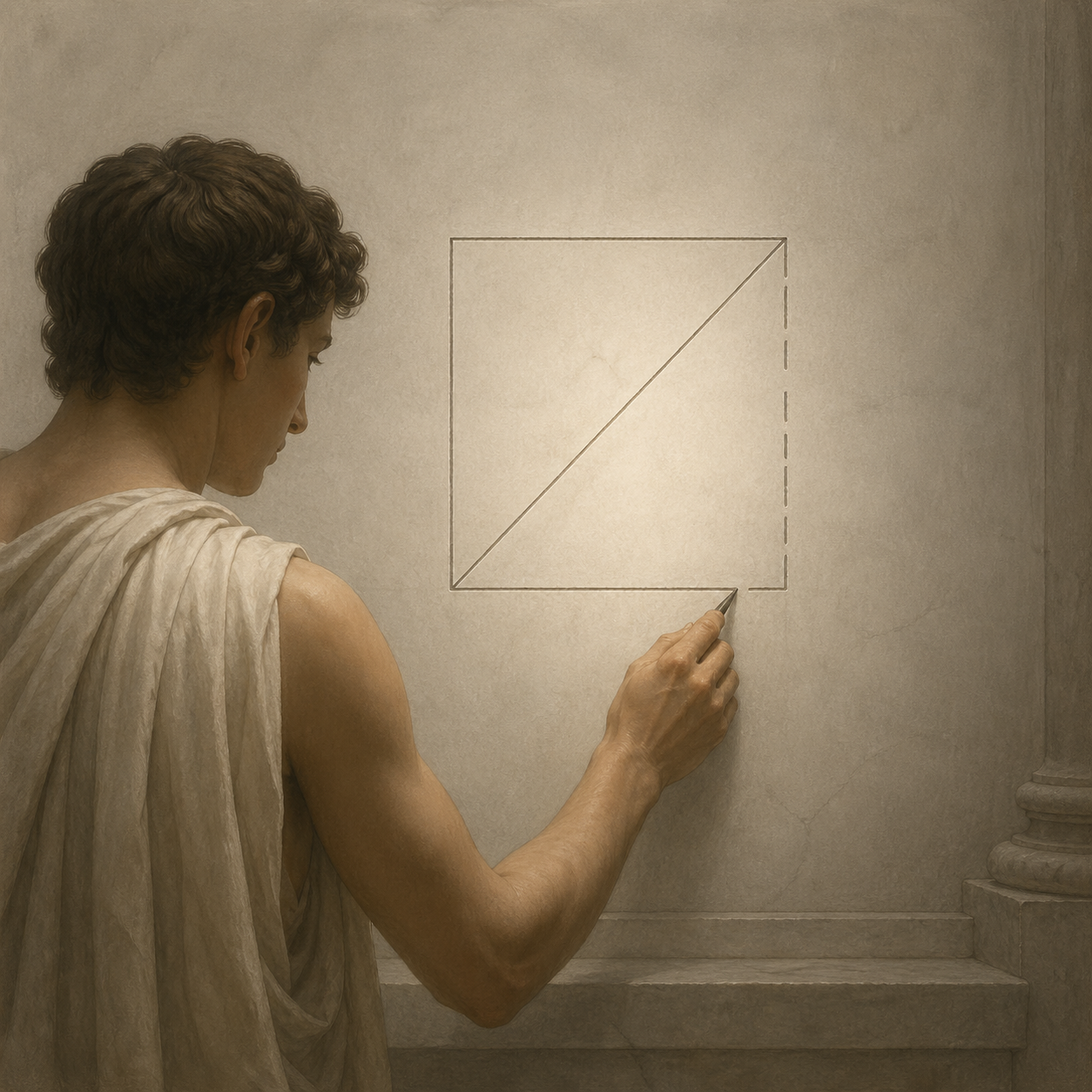
Socrates's response is the theory of recollection: we can enquire because we already know, in some latent form, everything we need to know. Learning is not the acquisition of entirely new content but the recovery — through questioning — of knowledge the soul possessed before birth. This dissolves the paradox: we neither know nor don't know what we're looking for; we have it in a dormant form that enquiry can bring to conscious articulation. The slave boy demonstration is designed to show this empirically.
The Philosophical Cost
The theory of recollection solves the paradox but at a price: it commits Socrates to the pre-existence of the soul and to an innate knowledge that the soul acquires in a pre-natal existence. This is metaphysically demanding. Later philosophers have tried to retain the insight — that there is something non-empirical in our conceptual knowledge — without the mythological apparatus. Kant's a priori categories and Chomsky's universal grammar are both, in different registers, attempts to capture what Plato was gesturing at without invoking transmigrating souls.
The paradox appears at Meno 80d–e. It is sometimes called the "Meno's paradox" or the "paradox of inquiry." Contemporary philosophers of cognitive science have revisited it in discussions of concept acquisition: if concepts must be learned from experience but experience presupposes concepts to interpret it, how does conceptual learning begin? Jerry Fodor's provocative conclusion that all concepts are innate is, in spirit, a Platonic one.
Related Concepts