The Oracle and Its Riddle
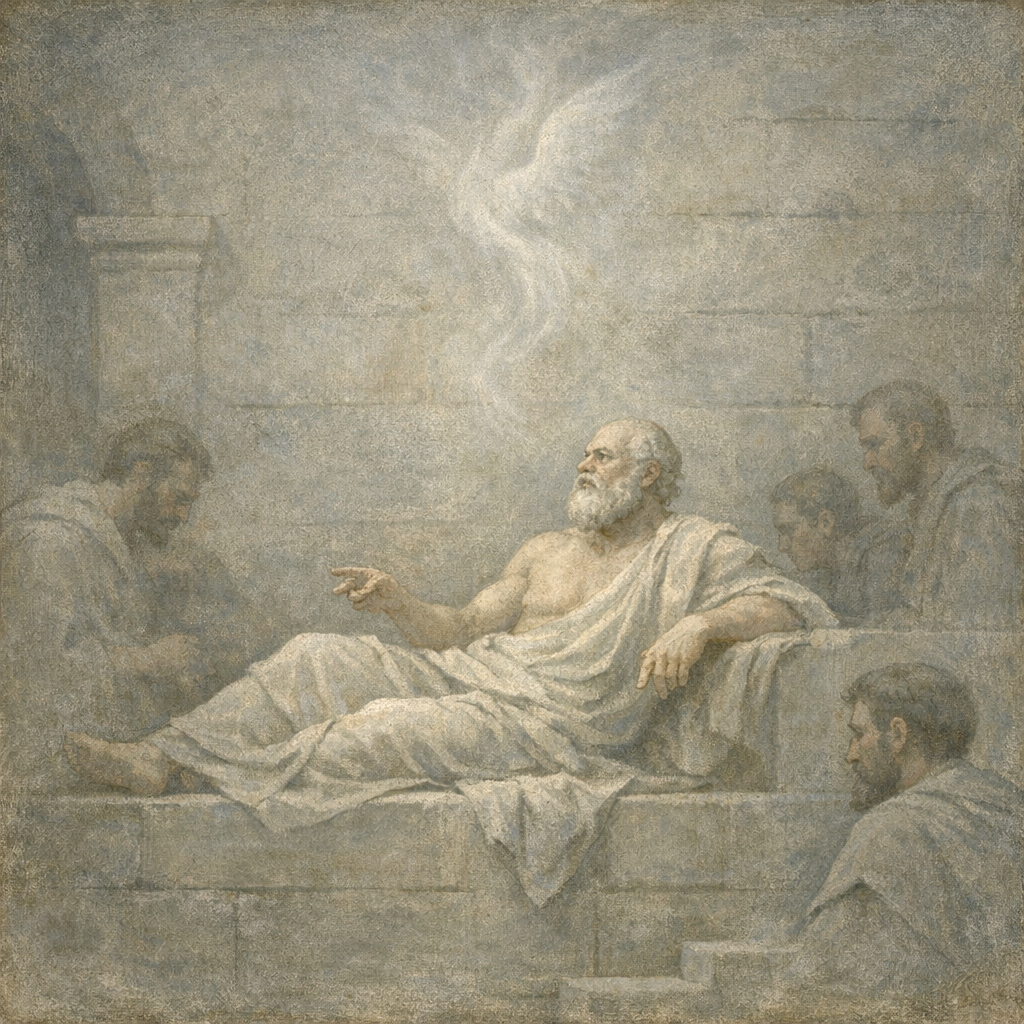
Chaerephon went to the Delphic oracle and asked whether anyone was wiser than Socrates. The oracle replied that no one was. Socrates took this as a riddle: it could not mean that he had great wisdom, because he knew he had none. His method of investigation was systematic: he would find people reputed to be wise, examine them, and see whether they were wiser than he was. If so, the oracle could be refuted. If not, he would understand what the god meant.
he knows nothing, and thinks that he knows; I neither know nor think that I know.
The Pattern of Inquiry
The results were consistent. He went to politicians, who were considered wise and considered themselves wiser still. He found they did not know what they claimed to know. He went to poets, who had composed beautiful and profound works — surely they had wisdom? But when questioned, they could not explain their own poems; they composed by inspiration, not understanding. He went to craftsmen, who did have genuine knowledge of their craft — but then assumed this expertise extended to other matters where it did not.
Each encounter produced the same conclusion: the person had a kind of knowledge but falsely believed this extended further than it did. Socrates, by contrast, had no such knowledge but also held no false beliefs about possessing it. His ignorance was, in this precise sense, superior: it was accurate self-knowledge rather than false self-knowledge.
Ignorance as a Starting Point
Socratic ignorance is not the end of inquiry but its precondition. You cannot learn what you already believe you know. The person who confidently holds false beliefs about wisdom is unable to investigate: they have no motive. The person who knows they do not know is free to question, to follow arguments wherever they lead, to revise their views. This is why Socrates's ignorance is not paralysing: it is liberating. It opens a space for genuine inquiry that dogmatic confidence closes.
Socratic ignorance is developed throughout the Apology, with the investigative narrative in Chapter 1. The phrase 'I know that I know nothing' — though not verbatim in Plato — captures the spirit of Socrates's position. The concept is closely related to the Delphic maxim 'know thyself', which Socrates interpreted as a demand for accurate self-assessment rather than metaphysical self-knowledge.
Related Concepts