How Misology Arises
Misology arises the same way misanthropy does. The misanthrope once trusted people uncritically, was repeatedly deceived, and concluded that no one can be trusted. The pattern of naive confidence followed by disappointment breeds a generalised contempt for humanity. The misologist follows the same path with arguments: once trusting them too confidently, then finding them refuted or reversed, concluding that no argument can be trusted.
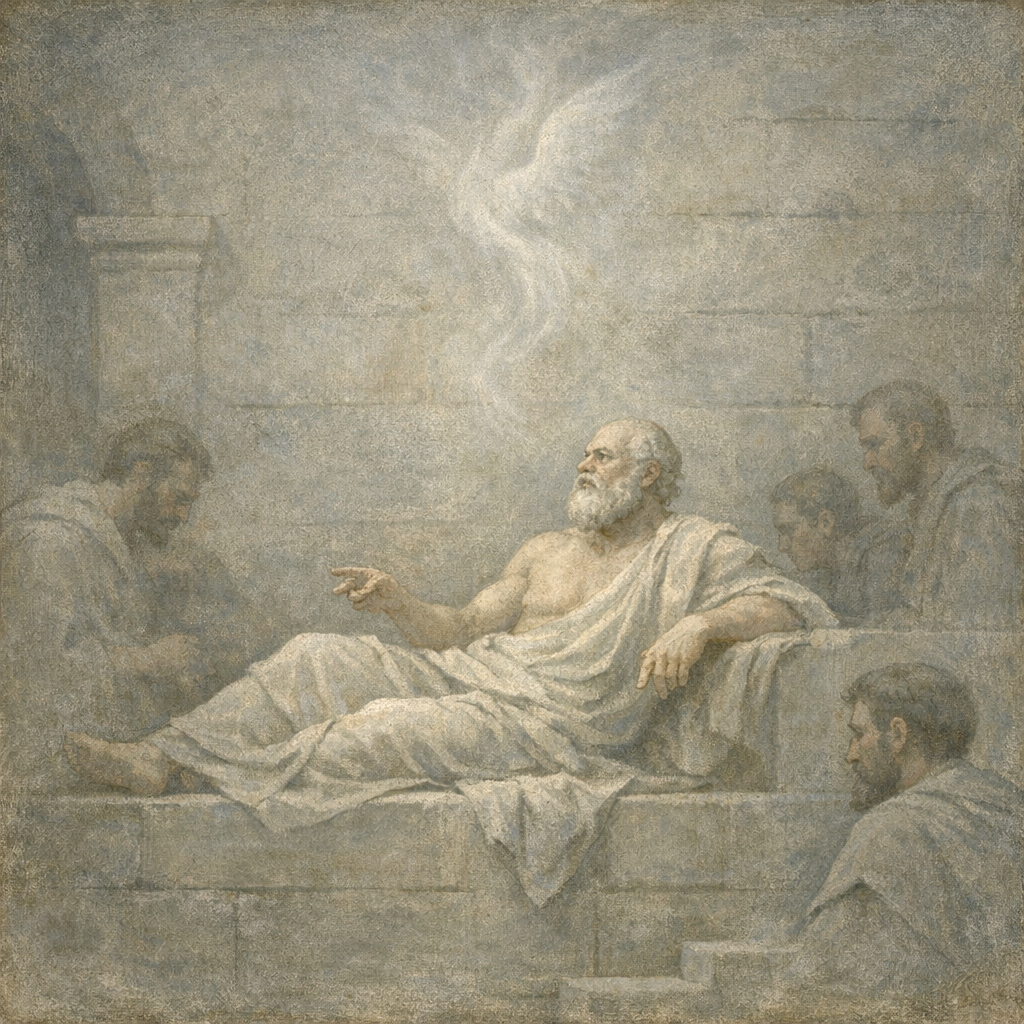
Lest we become misologists, he replied, no worse thing can happen to a man than this. For as there are misanthropists or haters of men, there are also misologists or haters of ideas, and both spring from the same cause, which is ignorance of the world.
The Deeper Error
Socrates locates the problem not in argument itself but in how we approach it. The misanthrope was wrong to trust people blindly without attending to their individual characters. The misologist was wrong to trust arguments without attending to their actual quality — accepting them as true because they seemed compelling rather than because they were sound. When the arguments later collapsed, the blame was placed on argument in general rather than on the carelessness that had accepted weak arguments in the first place.
The Remedy
The remedy is not scepticism about argument but better skill in reasoning. We should not trust an argument because it happens to convince us at a given moment, and we should not reject it because we once found a refutation. We should examine arguments carefully, attend to their quality, distinguish sound from specious reasoning, and adjust our confidence to the actual strength of the evidence. This requires patience, intellectual humility, and a genuine desire to follow the argument wherever it leads — which is precisely the disposition the philosopher cultivates.
The timing of this warning is significant. Socrates raises it immediately after the objections of Simmias and Cebes have shaken the earlier arguments for immortality. His friends might be tempted, at this difficult moment in the discussion, to conclude that the soul's immortality simply cannot be proved. Socrates redirects their attention: the task is not to give up but to reason more carefully.
The misology passage appears in Chapter 2 of the Phaedo. It is one of Plato's most direct statements about philosophical method and the virtue of intellectual tenacity. The word 'misology' does not appear elsewhere in the Platonic corpus with the same emphasis, though the concern for rigorous reasoning runs throughout.
Related Concepts