The Function of Irritation
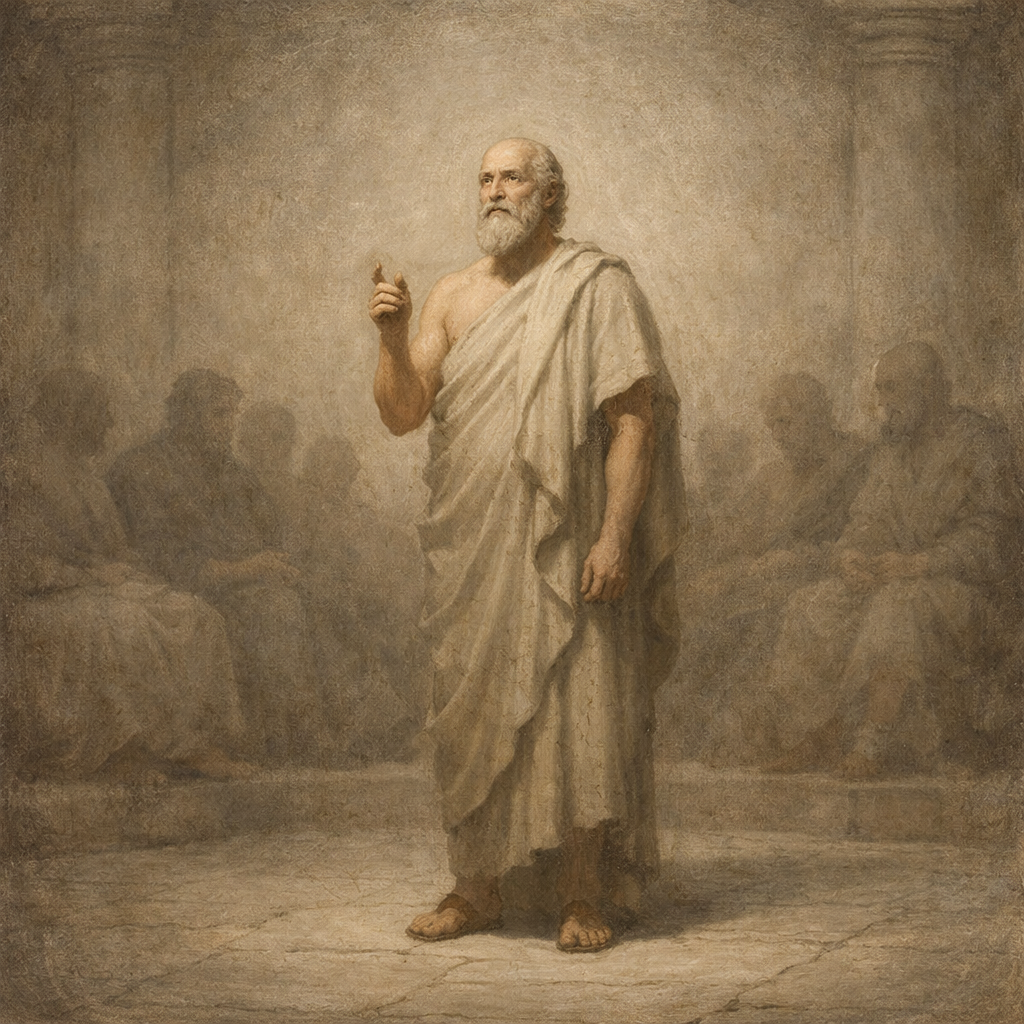
The gadfly's value is precisely its irritation. It does not build, legislate, command troops, or accumulate wealth. It stings. The sting is what produces motion in an animal that would otherwise stand still. Athens, Socrates says, is inclined toward sleep — toward the comfortable assumption that it already knows what virtue is, that its current arrangements are just, that its citizens are wise. Socrates's questioning disturbs this sleep.
am a sort of gadfly, given to the state by God; and the state is a great and noble steed who is tardy in his motions owing to his very size, and requires to be stirred into life. I am that gadfly which God has attached to the state, and all day long and in all places am always fastening upon you, arousing and persuading and reproaching you.
The Political Stakes
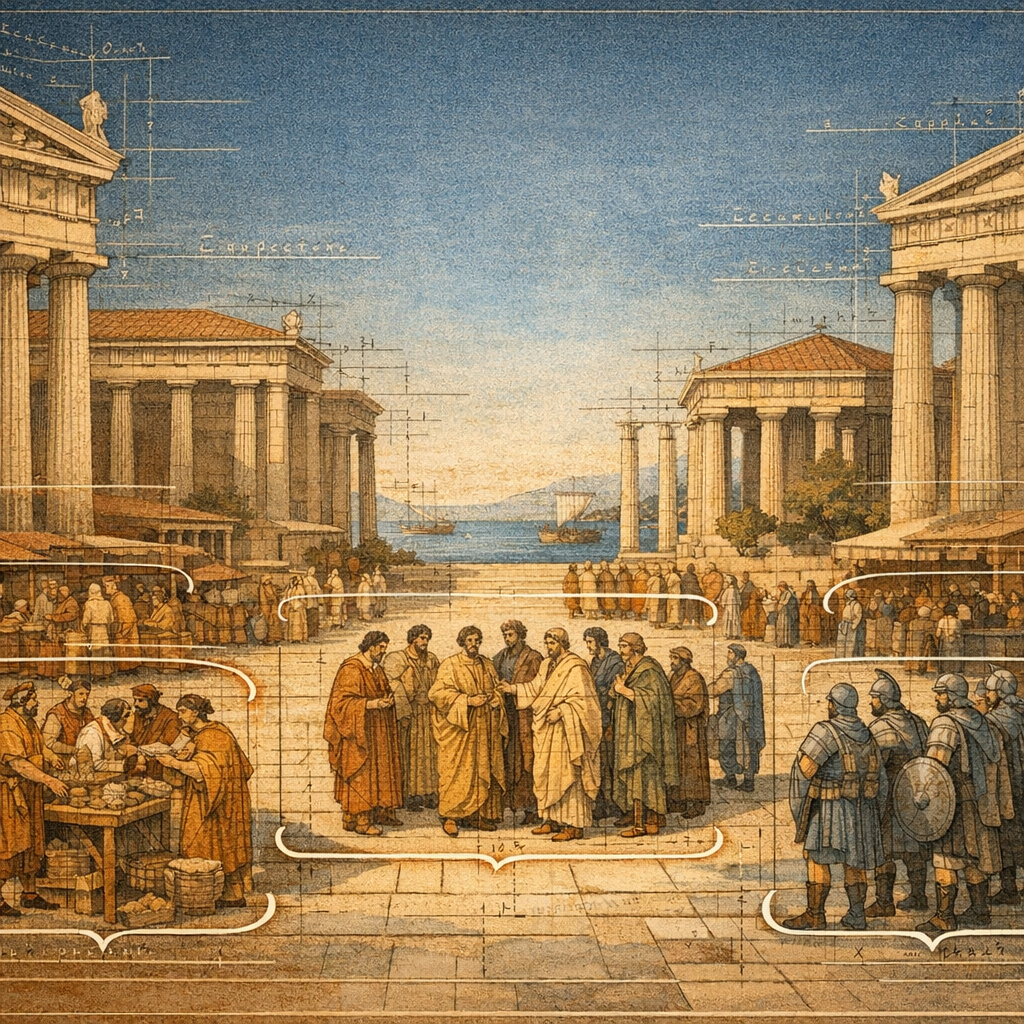
The argument has sharp political teeth. Socrates is not claiming a private benefit but a public one: Athens needs him. To execute him is not merely unjust to Socrates — it is self-harm for the city. A city without philosophical challenge is a city whose self-understanding is never tested, whose moral assumptions calcify into dogma, and whose leaders believe they are wiser than they are. The trial of Socrates is, in this reading, itself a symptom of the disease his presence was meant to treat: the city is demonstrating exactly the unreflective confidence he was sent to question.
Philosopher as Gift, Not Employee
Socrates frames his role as a divine gift — not a service rendered in exchange for payment, not a position conferred by civic authority. This framing has consequences. A gift cannot be dismissed by the recipient at will without ingratitude; and an ungrateful city that destroys the philosopher-gadfly will not easily find another. The claim is a challenge: if Athens kills him, it is not punishing a criminal but squandering a rare resource that the god provided for its benefit. Whether the jury believed this is a different question; Socrates's calm delivery suggests he was less interested in persuading them than in stating what he took to be true.
The gadfly metaphor appears in Chapter 1 of the Apology. It is Plato's most striking image of the philosopher's political role: not a statesman or legislator but an irritant whose function is to prevent civic self-satisfaction. The image influenced later accounts of the philosopher's relationship to political power, from Nietzsche's portrait of the free spirit to modern discussions of public intellectuals and the role of dissent in democratic life.
Related Concepts