The Enclosed Will
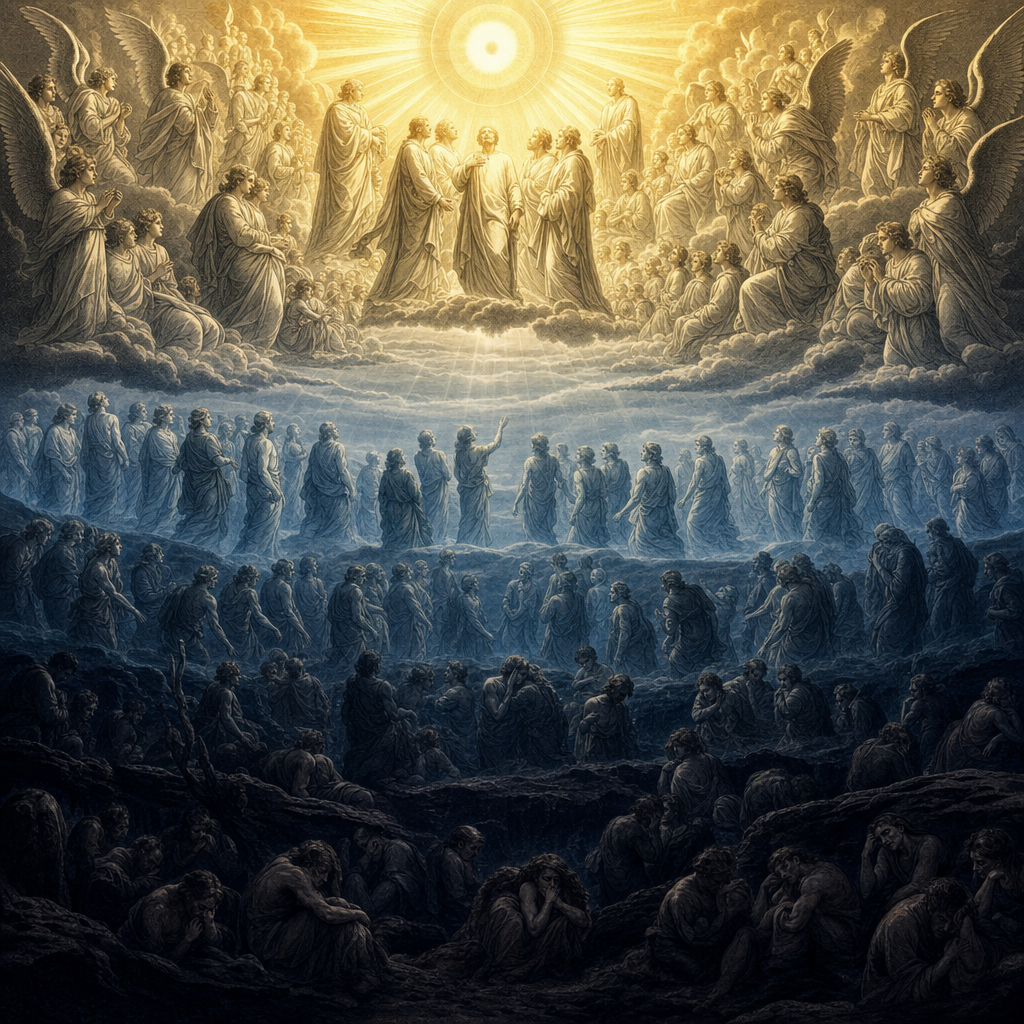
Böhme's account of the Fall treats it not as a contractual violation but as an ontological inversion. Adam and Eve, created in the image of the three principles, were originally transparent to the second principle — the light and love of God shone through them. The Fall consisted in the soul's contraction into the first principle alone: the will turned back on itself, seeking to be its own ground rather than finding its ground in God. This self-enclosure is what Böhme means by pride, and it is the root of all subsequent evil.
The Fire That Does Not Shine
The consequence of self-will is that the soul's fire, which should illuminate and vivify, turns inward and consumes. The self-willed soul burns with passion, desire, and resentment — all variants of the same darkening fire. It cannot receive the light of the second principle because it has closed itself off from the divine source. Böhme calls this condition the "awakened wrath" — the first principle operating without the restraint and illumination of the second.
Against Moralism
What makes Böhme's account distinctive is that it is not fundamentally moralistic. He does not describe sin primarily as rule-breaking or ingratitude; he describes it as a structural disorder in the soul's constitution. Correspondingly, salvation is not primarily forgiveness of a debt but the restoration of the soul's proper orientation — the reopening of the inner ground to the light that was always there, waiting. The Way to Christ is essentially a manual for this reorientation.
Böhme's account of self-will influenced later German philosophy significantly. Schopenhauer's concept of the self-affirming will and Schelling's notion of radical evil in human freedom both draw, directly or indirectly, on Böhme's framework.
Related Concepts