Death Before Birth
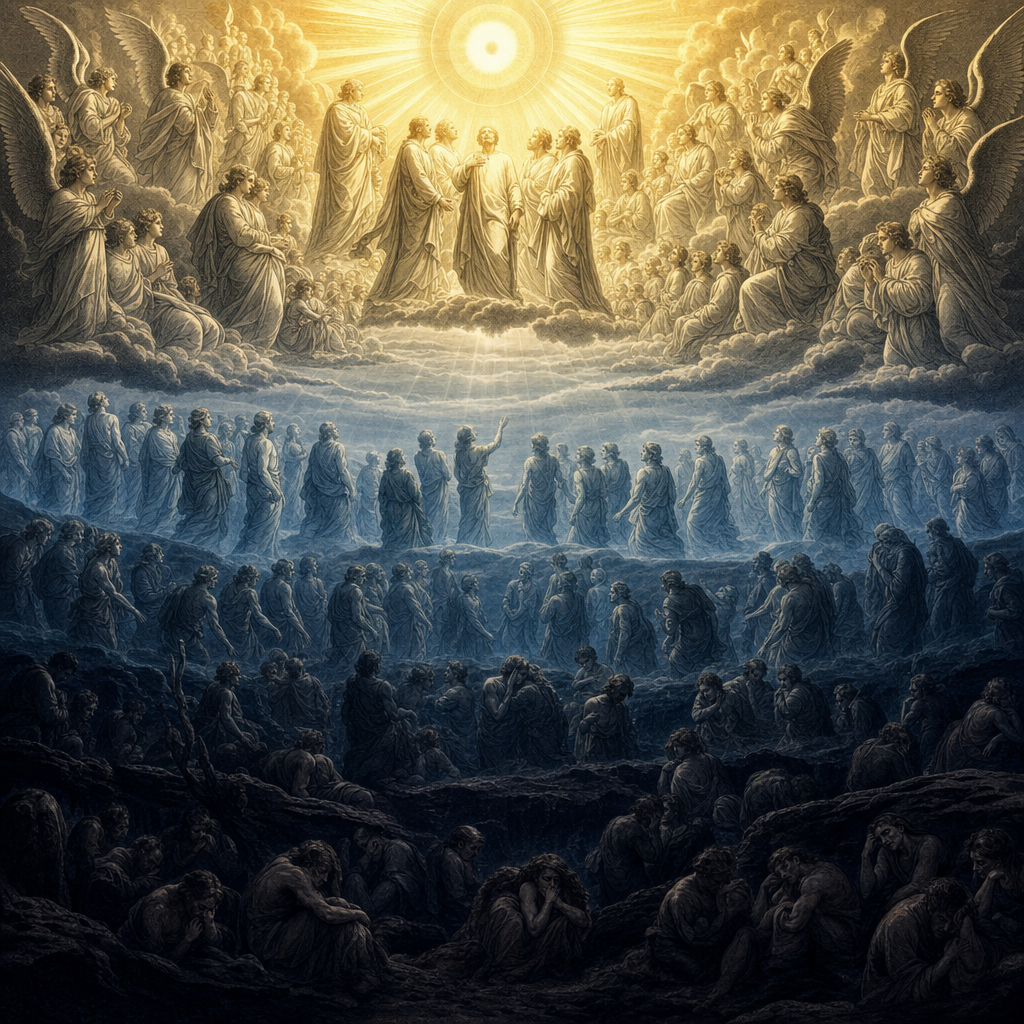
The Way to Christ opens with an account of repentance that is deliberately radical. True repentance is not remorse for past acts; it is the death of the self-will itself. The soul must be willing to sink into nothing before God — to surrender entirely the creaturely sense of itself as a self-grounding, self-sufficient entity. This is not annihilation but preparation: only from this nothing can the new birth occur. The soul must become empty before it can be filled.
The Inner Ground Reopened
In the new birth, the inner ground of the soul — the spark of divine life that was always there but buried under the self-will — is re-ignited. Böhme's imagery is consistently that of fire: the dark fire of self-will is pierced by the light-fire of divine love, not destroyed but transformed. The new being is still the same individual soul but oriented differently: no longer self-enclosed but open, transparent, and alive to the second principle.
Gradual and Real
Unlike some mystical traditions that describe illumination as sudden and total, Böhme emphasises that the new birth is a process — laborious, often painful, subject to relapse and resistance. The soul works through what he calls the "fire-trial" — a sustained confrontation with its own darkness that gradually gives way to light. This gradualism makes Böhme's spirituality unusually psychologically realistic, closer to a phenomenology of transformation than a theology of sudden conversion.
Böhme's new-birth theology influenced the Pietist movement significantly, particularly Johann Arndt and Philip Jakob Spener, and through them shaped the broader tradition of Protestant experiential piety. William Law's translations brought these ideas to John Wesley and the early Methodist movement.
Related Concepts