The Body as Obstacle
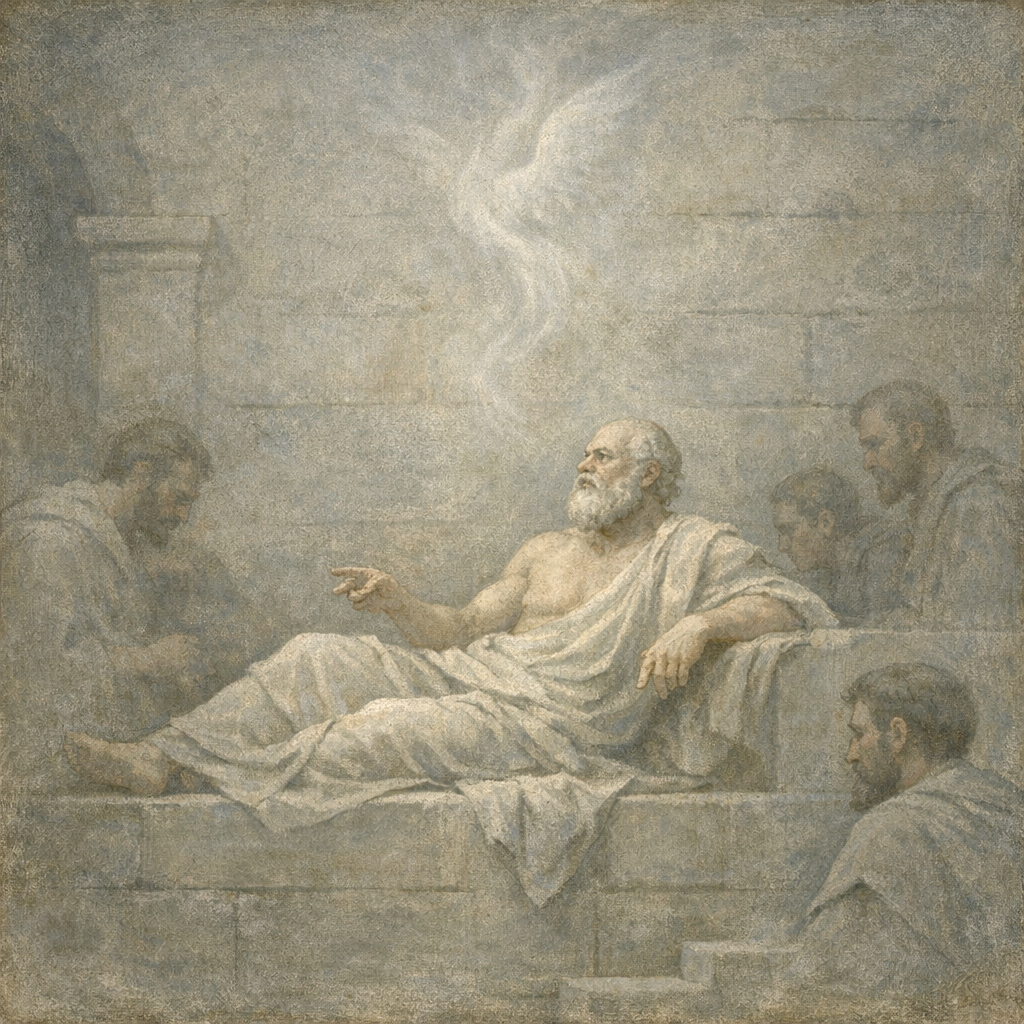
Socrates begins with the philosopher's relationship to the body. The body is not neutral: it interferes. It floods the soul with desires, fears, and pleasures that distort perception and corrupt judgment. It provides the senses, which give us the appearances of things but not their essences. And it occupies the philosopher's time with its maintenance — illness, appetite, the endless demands of physical existence. The person who wants to know truth is perpetually hindered by having a body.
Philosophy, on this account, is the practice of separating the soul from the body as much as possible while still alive: refusing to be governed by appetite, withdrawing from sensory engagement to pursue intellectual contemplation, learning to perceive with the soul alone rather than through the body's instruments. Every act of genuine philosophical attention is a partial death — a withdrawal of the soul from its bodily entanglement.
the true philosophers, Simmias, are always occupied in the practice of dying, wherefore also to them least of all men is death terrible.
Wisdom as the Only True Currency
Socrates presses the argument against a superficially similar view. Some people live courageously, but only because they fear something worse than what they endure — they exchange one fear for another. Some are temperate, but only to gain greater pleasures elsewhere. This is not virtue, Socrates says. It is the appearance of virtue purchased with counterfeit coins. The only genuine currency is wisdom, and everything else has value only through its exchange with wisdom.
is there not one true coin for which all things ought to be exchanged?--and that is wisdom; and only in exchange for this, and in company with this, is anything truly bought or sold, whether courage or temperance or justice.
Why Death Is Not Feared
The conclusion is not that philosophers welcome death out of despair or indifference to life, but that they have already been doing in life what death does completely. The philosopher is not going somewhere alien. He is arriving at a destination he has been moving toward all along — the condition of the soul separated from bodily interference, able to contemplate the Forms in their purity. To fear this would be irrational: it would mean wishing to continue an exercise whose purpose was preparation for exactly this.
The argument that philosophy is the practice of death appears in Chapter 1 of the Phaedo. The idea — that philosophical practice is a kind of spiritual discipline involving detachment from bodily concerns — influenced Neoplatonist asceticism, Stoic exercises, and later monastic traditions. It should be read alongside Socrates's calmness at his death, which the Phaedo presents as the living proof of the argument.
Related Concepts