Two Possibilities, Both Good
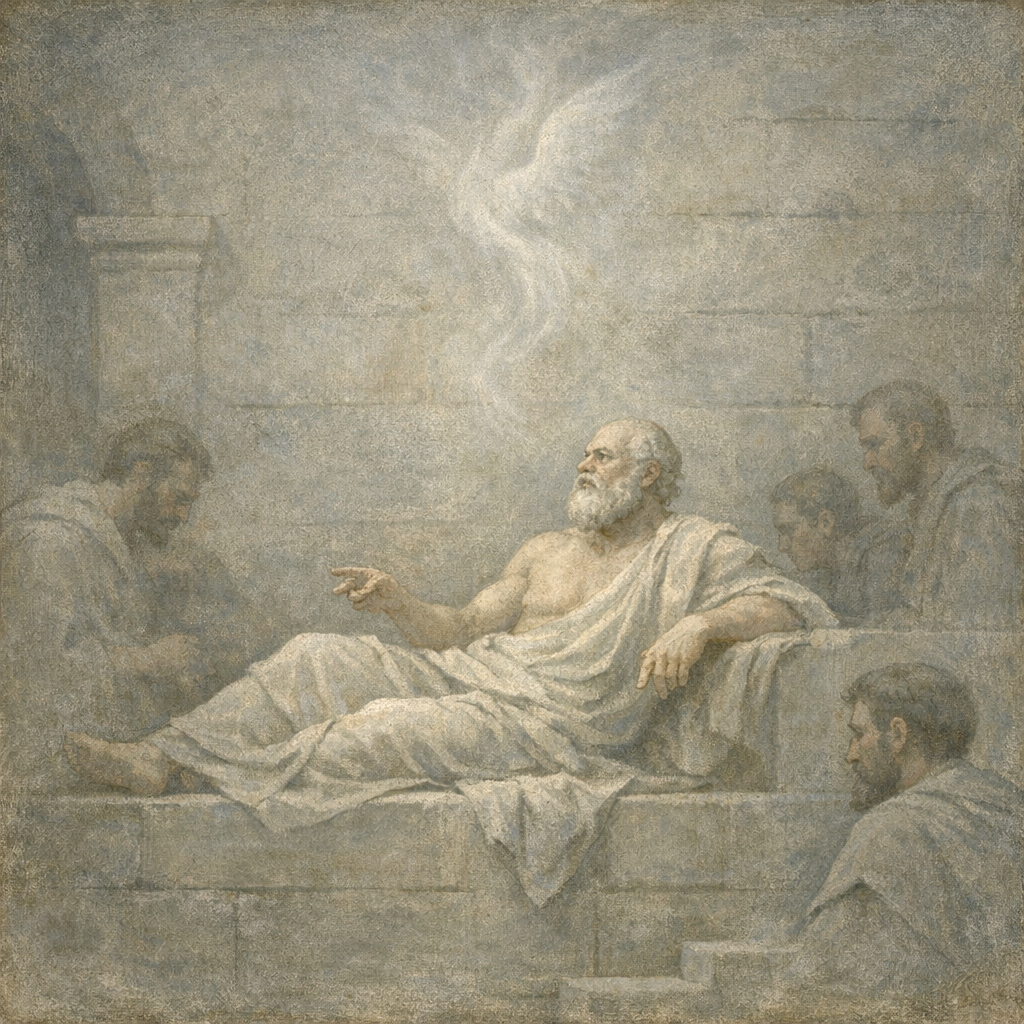
Socrates presents the structure of death as a simple disjunction. Either the soul is annihilated — consciousness simply ceases, as in dreamless sleep — or the soul survives and migrates to another realm. He treats both possibilities with genuine equanimity rather than forced cheerfulness. The unconsciousness scenario is, he says, actually desirable: survey your life and count the nights of dreamless sleep against the days of waking suffering. The nights win. Permanent unconsciousness would be the longest untroubled night imaginable.
one of two things—either death is a state of nothingness and utter unconsciousness, or, as men say, there is a change and migration of the soul from this world to another.
The Other World as Philosophical Paradise
The second possibility is even better. If there is a world below where the dead abide — the traditional Greek underworld, recast by Socrates as a place of continued inquiry — then he will be able to do what he has always done, but without the constraints that limit philosophy in Athens. He will be able to question Minos, Rhadamanthus, Achilles, Odysseus. He will test the supposed wisdom of great figures of the past. And in that world, he adds with dry humour, they do not put men to death for asking questions.
No Evil to a Good Man
The argument closes with a principle that is also a rebuke: no evil can happen to a good man, in life or after death. Socrates does not mean that good people are immune from physical harm. He means that harm to the soul — the only genuine harm — cannot be inflicted on the person who is genuinely just. The condemnation of Socrates by Athens cannot damage Socrates; it can only damage Athens, which has voted to kill a man the god sent for its benefit.
no evil can happen to a good man, either in life or after death. He and his are not neglected by the gods
The meditation on death appears at the end of Chapter 1 of the Apology. The closing line — 'The hour of departure has arrived, and we go our ways—I to die, and you to live. Which is better God only knows' — is among the most celebrated endings in ancient literature. The equanimity Socrates displays here is developed at much greater length in the Phaedo, where the argument for immortality is pursued systematically.
Related Concepts