One Law, One Reason
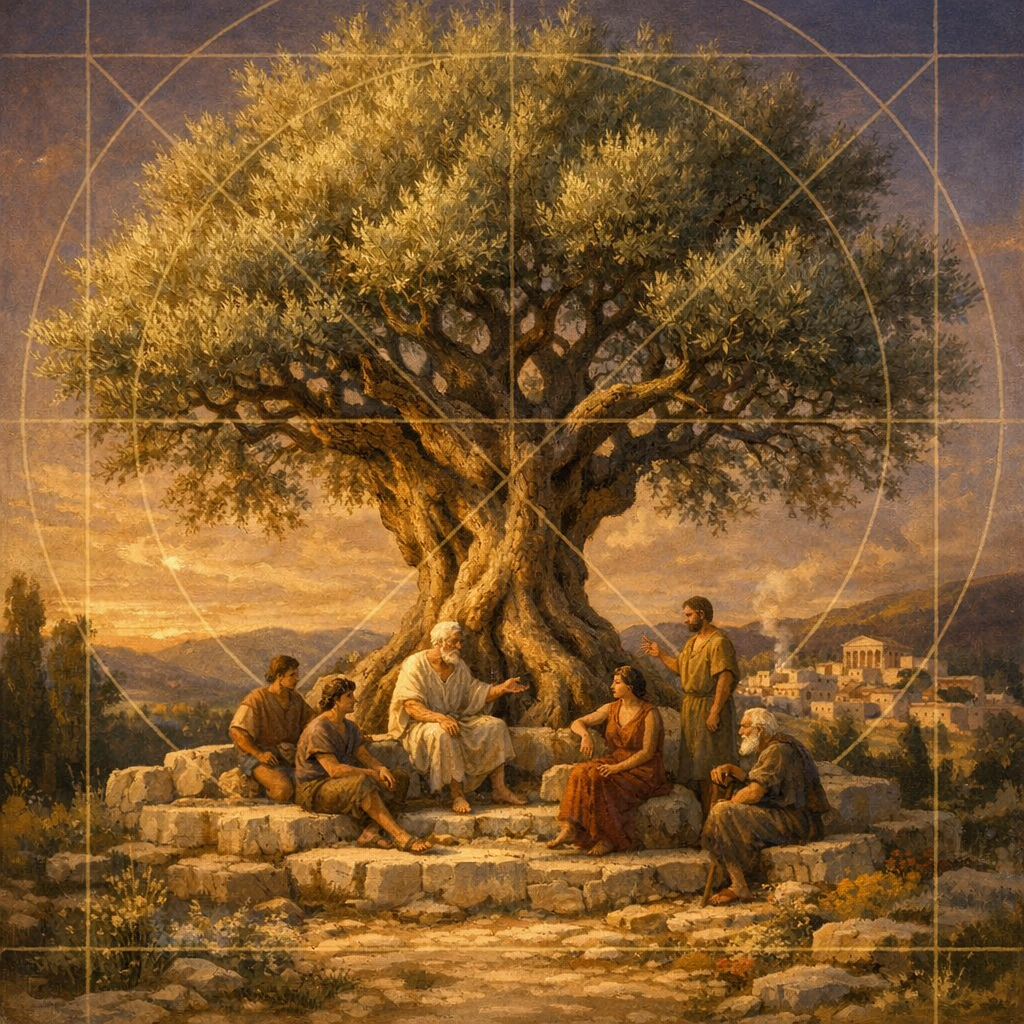
The Stoic cosmos is a living whole, bound together by sympathy and rational order. Marcus returns to this again and again in the Meditations: not as reassurance, but as orientation. To see the world as ordered — as knitted together by a single law — is to understand why nothing that happens is truly alien to you, and why your own reason is not separate from but continuous with the reason of the universe.
There is one common reason, and one common truth, that
belongs unto all reasonable creatures, for neither is there save one
perfection of all creatures that are of the same kind, and partakers of
the same reason.
Form Returns to Reason
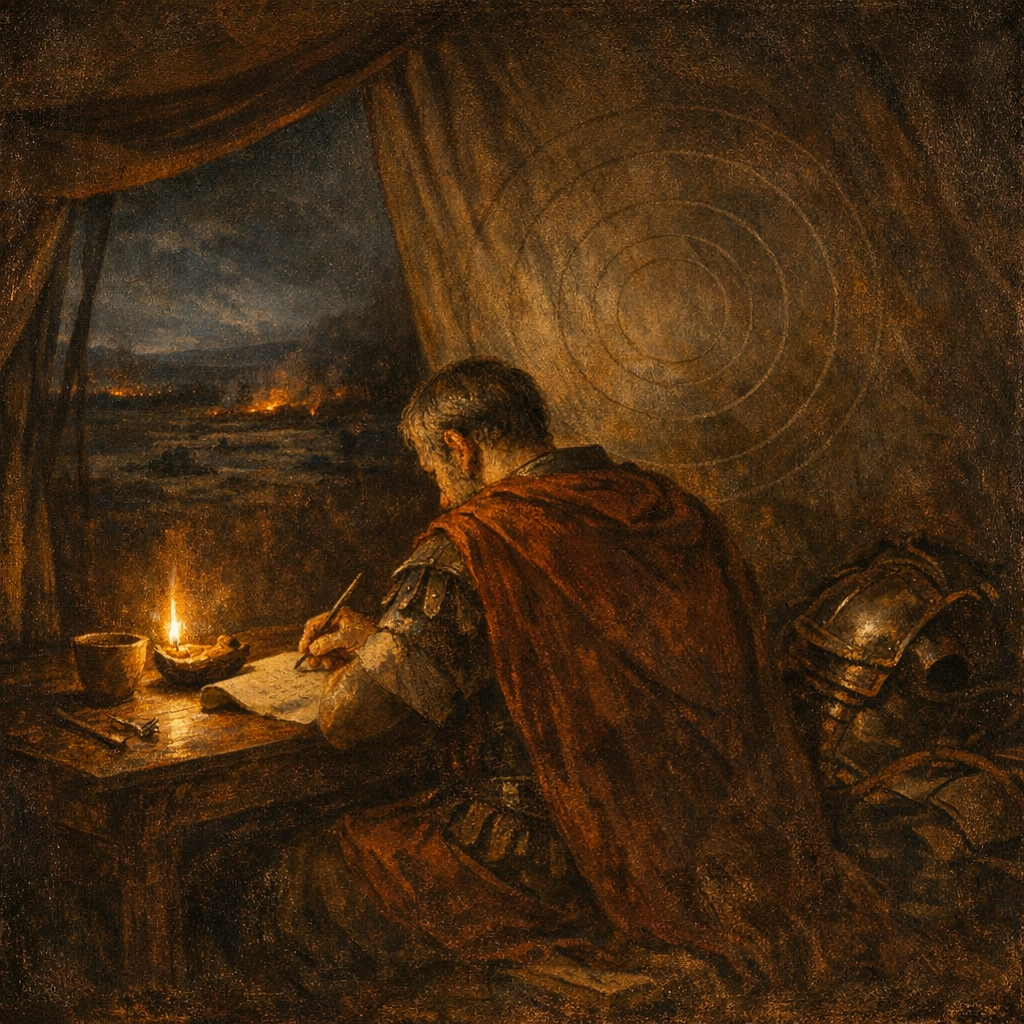
Marcus is not merely making a metaphysical claim. The Logos gives him equanimity in the face of death and dissolution. Material things pass away into the common substance; what gives them shape and life returns to the common reason. Memory, reputation, the very sense of individual identity — all are swallowed by time. And yet this is no cause for despair: it is the way the rational whole sustains itself, constantly taking back what it gave.
To a reasonable creature, the same action is both according
to nature, and according to reason.
Living by the Logos
For Marcus the point is always practical. Knowing that one common reason underlies all things tells you how to act: seek the common good, yield not to passion, do what your rational nature requires. The Logos is not something to contemplate from a distance. It is what you are, insofar as you are rational. To live against it is to live against yourself.
The Stoic logos owes a debt to Heraclitus, who first named the rational principle underlying all change. Marcus absorbed this via Epictetus and the tradition stretching back to Zeno of Citium. The Greek word κόσμος (kosmos) that appears in Book VII — often translated "world" — carries the sense of orderly arrangement, beauty arising from structure. Marcus uses it precisely: the world is not merely there, it is composed.
Related Concepts