Absolute and Ordained Power
Ockham distinguishes between God's absolute power (potentia absoluta) and ordained power (potentia ordinata). God's absolute power is everything God could do without contradiction — a set of possibilities vastly larger than what God has actually done. God's ordained power is what God has actually chosen to do and established as the current order of things: the moral law, the means of salvation, the natural order. By God's absolute power, things could have been otherwise — God could have chosen different means of salvation, different moral commandments, a different natural order. By ordained power, the actual order is fixed and binding. The distinction does not undermine the established order; it clarifies its contingency.
The Voluntarist Consequence
The implication of this position is voluntarism: the moral law is what it is because God wills it, not because it flows necessarily from God's nature or from the nature of things. Aquinas had argued that God cannot command murder or adultery because these are intrinsically evil — their evil is a feature of the act itself, which God's goodness prevents him from sanctioning. Ockham denies this: the acts are evil because God has forbidden them, not forbidden because they are evil. Had God commanded otherwise, the currently forbidden would have been obligatory. This is not arbitrary, because God's actual will is fixed and knowable; but it radically subordinates reason's deliverances about ethics to divine command.
The Theological Stakes
The doctrine of absolute divine power was controversial precisely because it made the connection between God's nature and God's actions contingent — and if God could have made the moral law otherwise, it becomes harder to argue that reason can deliver knowledge of moral truth independently of revelation. Ockham's position pushes toward a sharp separation between what reason can know and what faith must accept, and between the God known through natural theology and the God of revealed religion. This gap became one of the defining tensions of late medieval theology and would open into the Reformation debates about grace, justification, and the nature of the divine will.
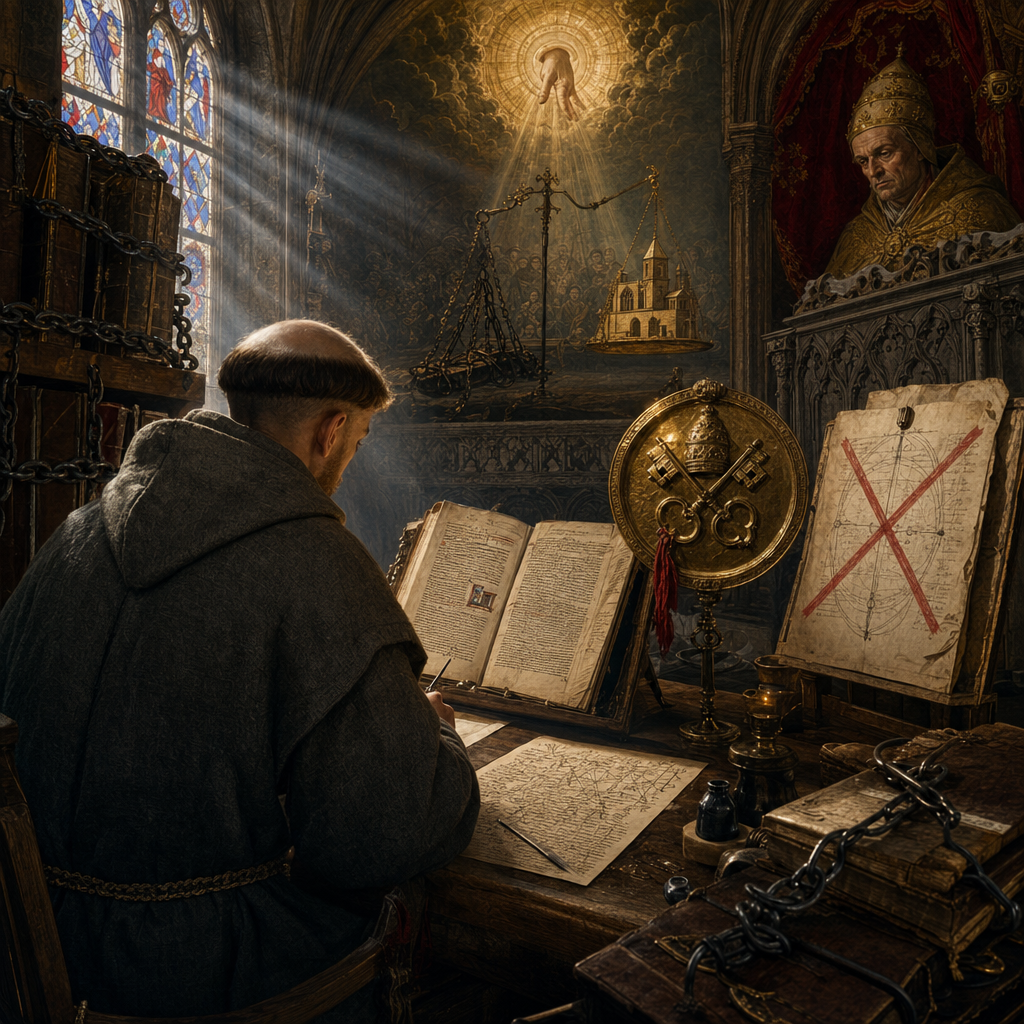
The distinction between absolute and ordained divine power was not invented by Ockham — it appears in earlier scholastic theology — but his use of it was more radical than his predecessors'. It was specifically his application of divine omnipotence to moral theology — the claim that God could have ordained hatred of God as meritorious — that drew condemnation from the Avignon pope and led to Ockham's summons in 1324.
Related Concepts