Against Realism About Universals
The realist tradition held that when we say "Socrates is a man" and "Plato is a man," the predicate "man" picks out a real property shared by both — humanity, existing in each of them as a universal instantiated in a particular. Ockham's objection is ontological: if humanity is a real thing existing in Socrates, is it the same thing as the humanity in Plato? If yes, then when Socrates dies, the thing that was in him (humanity) is destroyed, which seems to destroy the humanity in Plato too — absurd. If no, then there are two humanities, one in each individual, and universality becomes mysterious: what makes them both "humanity"? The realist account generates puzzles it cannot solve.
The Mental Term as Universal
For Ockham, the universal is not a thing in the world but a concept in the mind — a mental term that functions as a natural sign of many things at once, in the way that a spoken word functions as a conventional sign of many things. When I form the concept "horse," I do not grasp a universal entity called horseness; I form a mental representation that stands for all individual horses and enables me to think and talk about them collectively. This concept resembles all individual horses because it was formed from encounters with them; it refers to all of them by natural similarity, not by participating in a common nature that they all instantiate.
The Consequences for Science and Theology
Ockham's nominalism had profound consequences for both natural science and theology. In science, it undermined the Aristotelian account of natural kinds as metaphysically grounded in real shared natures; species and genera became classifications useful for inquiry, not descriptions of the deep structure of reality. In theology, it severed the connection between God's essence and God's attributes: if universals are not real, then the properties we attribute to God (goodness, wisdom, justice) are not real things in God but names we apply by analogy from our experience of creaturely goods. This made natural theology far more difficult and pushed theology toward voluntarism: God's goodness consists in whatever God wills, not in God's instantiation of a universal property.
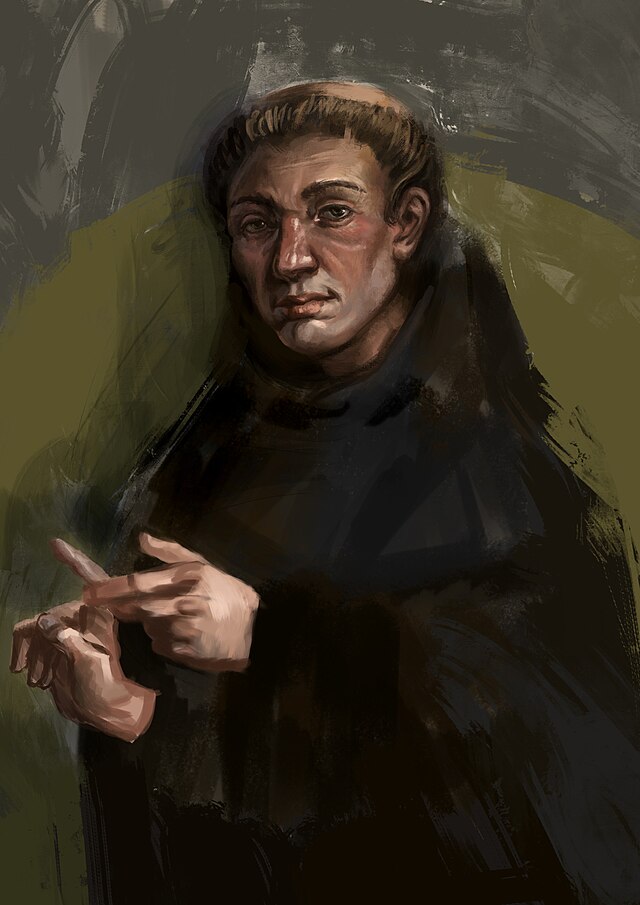
Ockham's nominalism was not the first of its kind — Abelard had defended a related position (conceptualism) in the twelfth century — but the Summa Logicae provides the most rigorous and detailed technical defence of the view. Ockham was dubbed the "Venerable Inceptor" (Venerabilis Inceptor) by his contemporaries, probably because he never completed his doctorate at Oxford before the controversy surrounding his views led to his summons to Avignon.
Related Concepts